Padel Etiquette: Unwritten Rules of the Court
Padel is one of the most social sports in the world, and on-court etiquette plays a role no less important than shot technique. Knowing the unwritten rules of behaviour will help you integrate quickly into the community and get the most enjoyment out of every match.
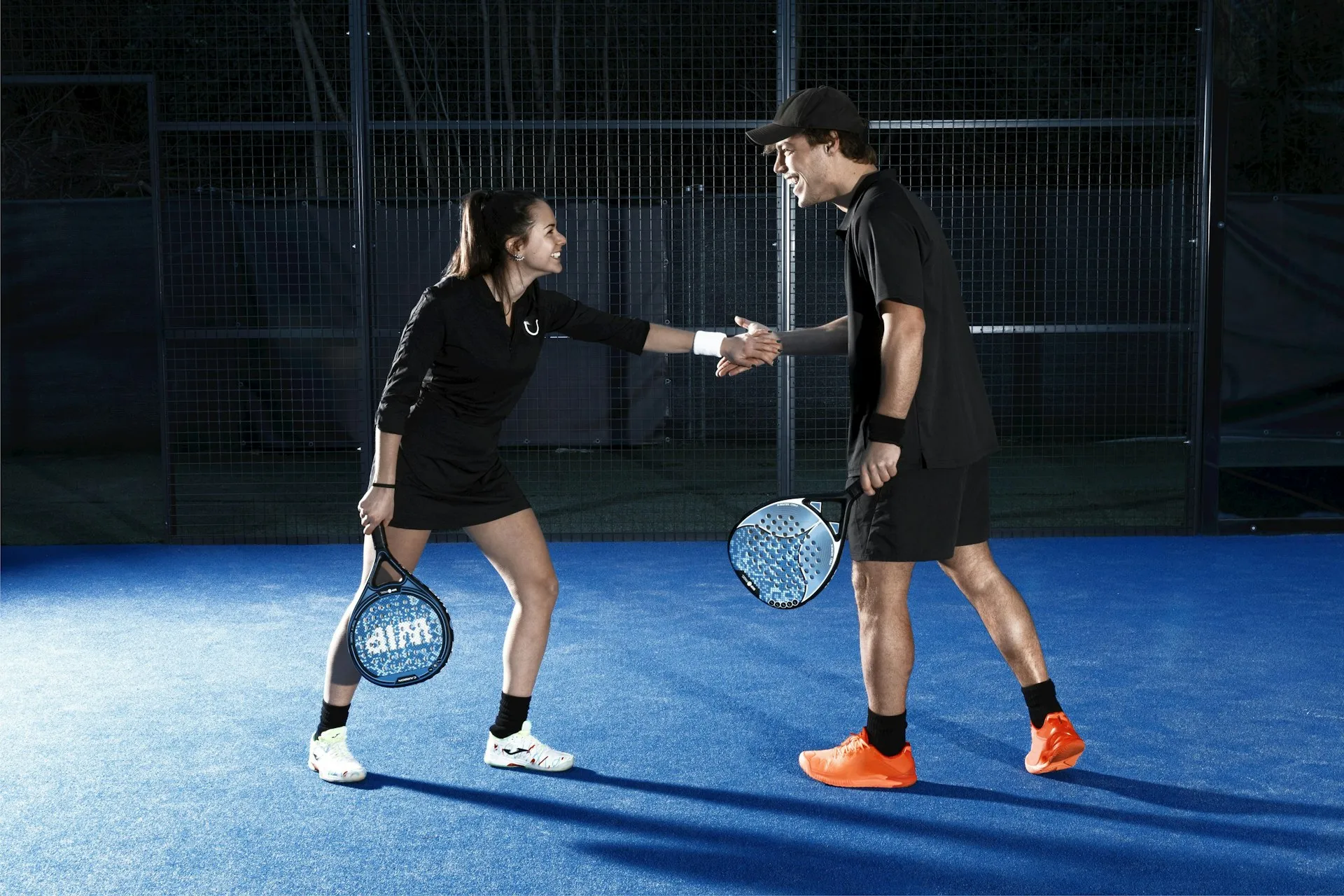
Photo: Vincenzo Morelli / Unsplash / Unsplash License
Before the Match
Good manners in padel begin well before the first rally.
- Punctuality. Arrive at the court 5-10 minutes before your booked time. Courts are typically rented for 90-minute slots, and one player’s tardiness shortens the playing time for all four.
- Booking responsibility. If you have reserved a court but cannot attend, cancel well in advance. At popular clubs, available slots are scarce, and an empty booked court is disrespectful to other players waiting to play.
- Balls. Bring new or reasonably fresh balls. The common practice: each pair brings one can of balls, or costs are split evenly. Playing with flat, depressurised balls is not only uncomfortable but detracts from the experience for everyone.
- Attire. Wear proper sports clothing and shoes with court-appropriate soles (typically herringbone or “omni” tread). Shoes that leave black marks can damage the surface and will rightly upset club owners.
The Warm-Up
Before the match, a joint warm-up of 5-10 minutes is customary. The warm-up is preparation, not competition.
- Control your shots. Warm-up rallies should be played at a comfortable pace. Do not hit smashes or try to “kill” the ball – the goal is for all four players to get warmed up.
- Play to your partner, not past them. Direct the ball so it is convenient to return, not into corners and walls.
- Take turns. Give every player the chance to practise shots from both sides: forehand, backhand, volley, lob.
- Finish on time. When everyone is ready, suggest starting the match. Do not let the warm-up eat into playing time.
During the Match
Amateur padel is almost always played without a referee. This means that honesty and self-regulation rest entirely on the players’ shoulders.
- Honest line calls. If a ball lands on or near the line and you are unsure, give the point to your opponent. In padel, the accepted principle is: “If in doubt, the ball is in.” This is especially important for balls landing in the service box.
- Disputed calls. If the sides cannot agree, the standard practice is to replay the point. Do not turn a disagreement into a conflict: one point is not worth spoiling the mood of four people.
- Announcing the score. The server calls out the score before each serve. This prevents confusion and shows respect for the opponents.
- Pace of play. Do not drag out pauses between rallies. If the ball has gone far, quickly get a new one. Constant delays frustrate everyone involved.
- Do not distract opponents. Avoid loud conversations, movements, or gestures while an opponent is striking the ball. This is considered a serious breach of etiquette.
Partnership Conduct
Communication within a pair is important not only tactically but also ethically.
- Support your partner. An encouraging word after an error matters more than congratulations after a winner. “No worries, next one!” is a phrase you will hear on every padel court in the world.
- Do not show frustration. Eye-rolling, heavy sighs, and demonstrative gestures after your partner’s miss are among the worst etiquette violations in padel. Your partner is already disappointed; do not make it worse.
- Discuss tactics constructively. If you want to suggest a change in strategy, do so at a changeover, calmly and respectfully: “Maybe we could try more lobs?” rather than “You always hit it into the net!”
- Adjust to your partner’s level. If you are playing with a less experienced partner, calibrate your expectations accordingly. Patience and encouragement in this situation are your responsibility.
Neighbouring Courts
Padel clubs typically have several courts situated close together. Mutual respect between neighbouring courts is an important part of the culture.
- Do not interfere with other matches. If a ball from your court lands on an adjacent court, wait until their rally ends before asking for it back.
- Return balls politely. If a ball from another court comes to you, pick it up and toss or roll it back gently. Do not smash it back at full force – that is not a display of skill, it is rude.
- Mind the volume. Emotions on court are natural, but constant shouting and loud arguments disturb neighbouring courts.
- Walk behind courts, not in front. If you need to pass an occupied court, walk behind the back wall rather than along the net to avoid distracting the players.
After the Match
How you finish the game is just as important a part of etiquette as the game itself.
- Handshake. At the end of the match, all four players approach the net and shake hands. This is a universal tradition inherited from tennis and obligatory in padel.
- Say thank you. Thank your opponents for the game, regardless of the result. A simple “thanks for the match” or “good game” is the standard courtesy.
- Score discussion. If you lost, do not make excuses. If you won, do not gloat. A brief exchange of impressions – “Great lob in the third set!” – is appropriate and welcome.
- Clean up the court. Collect all the balls, pick up your water bottles and any rubbish. Leave the court in the condition you would want to find it.
The Social Culture of Padel
Padel is more than a sport. In many countries, especially Spain, Argentina, and Portugal, padel is an integral part of social life.
After a match, it is customary to spend time together: have a coffee or a beer at the club bar, discuss the game, and arrange the next session. This tradition is so deeply rooted that many clubs purposefully design lounge areas with a bar and terrace.
The padel court is a place where friendships and business connections are made. Many venues have messenger groups where players find partners and organise matches. Do not hesitate to join: openness to meeting new people is one of the core values of the padel community.
[EXPERT OPINION] It is precisely this social dimension that makes padel one of the fastest-growing sports in the world. People come for the sport and stay for the community.
The light is on for free. But someone has to clean the lantern.
☕ Support on Ko-fi