From Tennis to Padel: 10 Habits That Hold You Back
Tennis experience is both a blessing and a curse when transitioning to padel. Reaction speed, coordination, and ball-reading help, but habits around swing length, power, and mentality work against you.
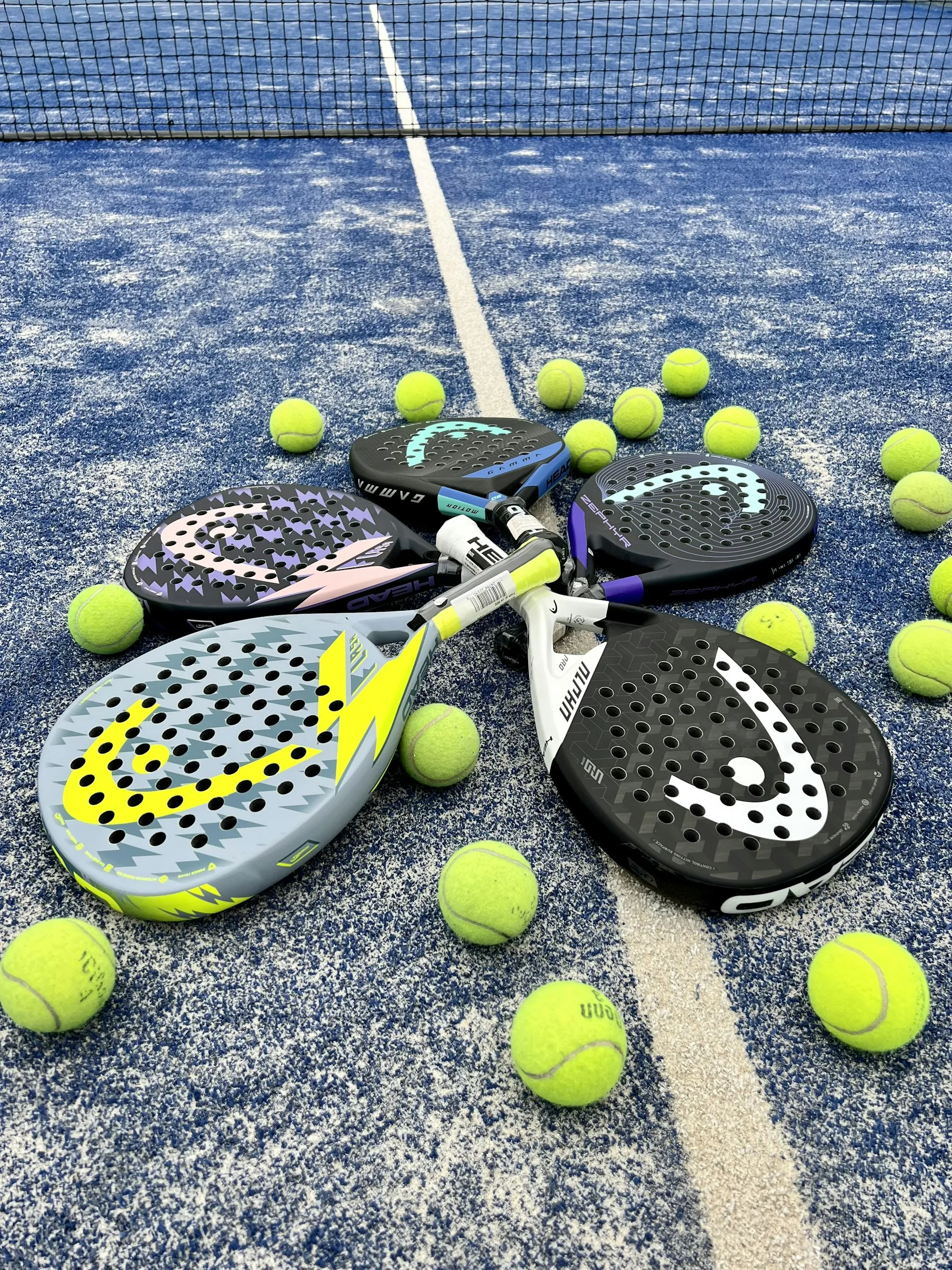
Photo credit
Photo by Sergio Contreras on Unsplash
Why Tennis Players Struggle
Padel looks similar to tennis: a racket, a net, a ball. But it is a different sport with a different philosophy. In tennis, the player who hits harder and more precisely wins. In padel, the pair that makes fewer errors and controls court position wins.
The problem: tennis habits have been reinforced over years. Your brain automatically launches familiar movements — long backswing, powerful shot, attempting to pass the opponent. In padel, all of this works against you.
10 Habits You Need to Change
1. Overpowering Every Shot
Problem: In tennis, a powerful shot wins the rally. In padel, a hard shot bounces off the glass and returns to your opponent at a comfortable height.
Solution: Aim for placement, not power. A soft shot at the opponent’s feet is more effective than a hard drive.
2. Ignoring the Walls
Problem: Tennis players try to hit the ball before it touches the wall. In padel, the wall is your friend: it gives you extra time.
Solution: If the ball is heading for the wall — let it bounce. Step back 1–2 metres and play after the rebound.
3. Tennis Grip
Problem: The eastern or semi-western grip limits versatility. It is awkward for volleys, the bandeja, and wall play.
Solution: Switch to the continental grip — the “hammer.” It covers 90% of situations in padel.
4. Long Backswing
Problem: On a 10×20 m court with four players, there is no time for a big swing. The ball will be past you before you finish your backswing.
Solution: Short, compact racket movements. The volley — the most frequent shot in padel — is executed with minimal backswing.
5. Attempting Passing Shots
Problem: In tennis, a passing shot wins the point. In padel, the court is small and the walls limit angles — passing shots are nearly impossible.
Solution: Use the lob to push opponents away from the net. The lob is not a weak shot — it is the primary tactical weapon in padel.
6. The “Domination” Mentality
Problem: In tennis, you hold the initiative until the end of the rally. In padel, both pairs switch between attack and defence multiple times in a single rally.
Solution: Patience. Work the rally, wait for the right ball to finish the point. Do not try to end every rally with one shot.
7. Two-Handed Backhand
Problem: In padel, space is limited; the ball often arrives close to your body and near the wall. A two-handed backhand is awkward in these conditions.
Solution: Develop a one-handed backhand with the continental grip. It is more compact and allows you to play in tight spaces.
8. Powerful Serve
Problem: In padel, the serve is hit underhand; the ball must bounce on the floor before being struck. An overhead tennis serve is not allowed under the rules.
Solution: Work on accuracy and placement of your serve. The padel serve starts the rally — it is not an ace weapon.
9. Standing Behind the Baseline
Problem: In tennis, the baseline is the default position. In padel, that is the defensive zone, not the attacking one. The pair controlling the net dominates.
Solution: Aim for the net position. Play from defence to attack: chiquita or lob → move to the net.
10. Playing as an Individual
Problem: Tennis singles is an individual sport. Padel is exclusively a doubles game. If you do not communicate with your partner, you lose.
Solution: Talk on court: “Mine!”, “Yours!”, “Switch!”. Move with your partner as if connected by an invisible rope.
What Tennis Skills Help
Not everything from tennis is useless. These skills accelerate your progress:
- Ball reading — anticipating trajectory from the opponent’s swing
- Footwork — lateral movement, split-step
- Touch — controlling power and direction
- Net reflexes — reactions for volleys
- Competitive experience — performing under pressure
[EXPERT OPINION] A 5.0-rated tennis player can expect a starting level of 2.5–3.5 in padel. Tennis experience accelerates progress but does not replace padel-specific technique training.
Adaptation Plan
- Weeks 1–2: Forget about power. Every shot — soft and controlled. Goal: keep the ball in play.
- Weeks 3–4: Master the continental grip and a compact swing. Practise volleys.
- Weeks 5–6: Wall work. Spend 15 minutes each session observing rebounds without hitting.
- Weeks 7–8: Tactics. The lob as a weapon, the chiquita for net approaches, and partner communication.
The light is on for free. But someone has to clean the lantern.
☕ Support on Ko-fi