10 Essential Rules for Padel Beginners
Padel is a friendly and dynamic sport, but it has its own unique characteristics that are important to know before your first match. These ten rules will help you feel confident on court from your very first game.
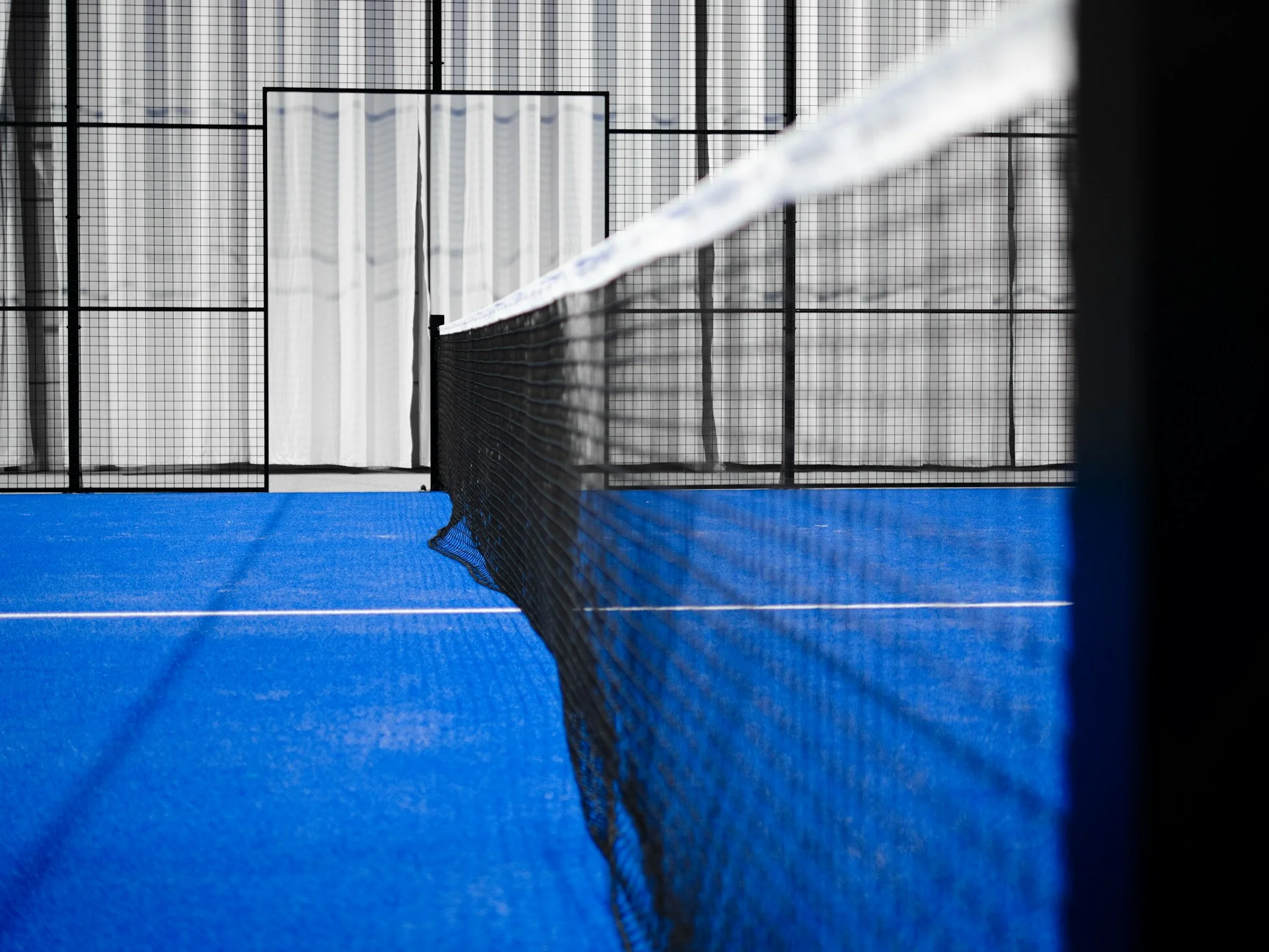
Photo: Oskar Hagberg / Unsplash
Photo: Oskar Hagberg / Unsplash / Unsplash License1. Padel is always a doubles game
There are always four players on court: two versus two. Unlike tennis, padel has no singles format — the game is designed as a team sport. This means you always need a partner, and teamwork within your pair is one of the key skills to develop. If you show up with just one friend, simply find another pair — this is part of padel culture, and meeting new people on court happens easily and naturally.
2. The serve is underhand
The padel serve is fundamentally different from a tennis serve. You must hit the ball with your racket below waist level, after bouncing it on the ground. The serve is played diagonally — from the right service box to the opponent’s left service box (and vice versa). This rule levels the playing field: a powerful overhead serve offers no advantage here, and a beginner can comfortably return the serve of an experienced player.
3. The ball must bounce on the floor first
Before the ball touches a wall, it must first bounce on the floor on your side of the court. If the ball hits the wall without bouncing on the floor first, the point is lost. This rule applies to receiving: you cannot play a ball that flies directly into the wall without touching the floor. After the ball bounces off the floor, it may then hit the wall, and you can play it off the wall.
4. The walls are part of the game
This is arguably the defining feature of padel. After the ball has bounced off the floor, it can hit the glass wall — and you have every right to play it after such a rebound. In fact, the ability to read wall bounces and play the ball off them is one of the most important skills in padel. Do not be afraid of the walls: over time, you will learn to use them as your ally.
5. Scoring works just like tennis
The scoring system in padel is identical to tennis: 15, 30, 40, game. Six games won (with a two-game lead) make a set. A match is played as best of three sets. At 40:40 (deuce), you need to win two consecutive points, although some amateur tournaments use the “golden point” — a single deciding point. If you are familiar with tennis scoring, you will adapt in minutes.
6. The ball can leave the court — and play continues
The padel court is enclosed by walls and metal fencing, but above the fence on the sides there are open sections. The ball can fly out through them beyond the court boundaries. In this case, play does not stop: you have the right to run outside the court through the side door and return the ball, as long as it has not bounced on the ground twice. These rallies are among the most spectacular moments in padel.
7. You cannot touch the net or cross to the opponent’s side
As in tennis, the net divides the court and is untouchable. You cannot touch the net with your racket, body, or clothing. You are also prohibited from reaching over to the opponent’s side with your racket when hitting the ball. If the ball clips the net during a serve but lands in the correct service box, the serve is replayed (a let). This rule rarely causes confusion, but it is important to remember during fast exchanges at the net.
8. Communication with your partner is essential
Padel is a team sport, and communication within your pair is critically important. Before every shot, make sure to let your partner know who is taking the ball: call “mine!” or “yours!” This is especially important for balls hit down the middle of the court, where zones of responsibility overlap. [EXPERT OPINION] Experienced pairs agree on strategy before the match and constantly encourage each other. Even a simple “nice shot!” after your partner’s good play strengthens team spirit.
9. Return to your position after every shot
In padel, positioning matters more than power. After each rally, return to your position and maintain your formation with your partner. The fundamental principle: both players in a pair move in sync, as if connected by an invisible rope. If one moves forward to the net, the other follows. If one retreats, the partner retreats as well. This allows you to cover the entire court and avoid leaving gaps in your defence.
10. Have fun — padel was made for it
Padel is one of the most social sports in the world. It was conceived as a game for friends and family, and that spirit endures to this day. Do not fixate on results, especially in your first matches. Mistakes are a natural part of learning. Laugh at your mishits, praise great shots (yours and everyone else’s), and get to know your opponents after the game. It is precisely this atmosphere of friendliness and enjoyment that makes padel one of the fastest-growing sports on the planet.
Summary
You do not need to memorise all the rules at once — they sink in quickly through playing. The essentials for your first matches: serve underhand, let the ball bounce on the floor before the wall, communicate with your partner, and remember that the walls are your friends, not obstacles. Everything else will come with practice.
If this article was useful — help us write the next one.
☕ Support on Ko-fi