What is Padel
Padel (pádel) is a racket sport that combines elements of tennis and squash. It is played on an enclosed court in doubles format and is known for its accessibility, dynamic gameplay, and strong social appeal.
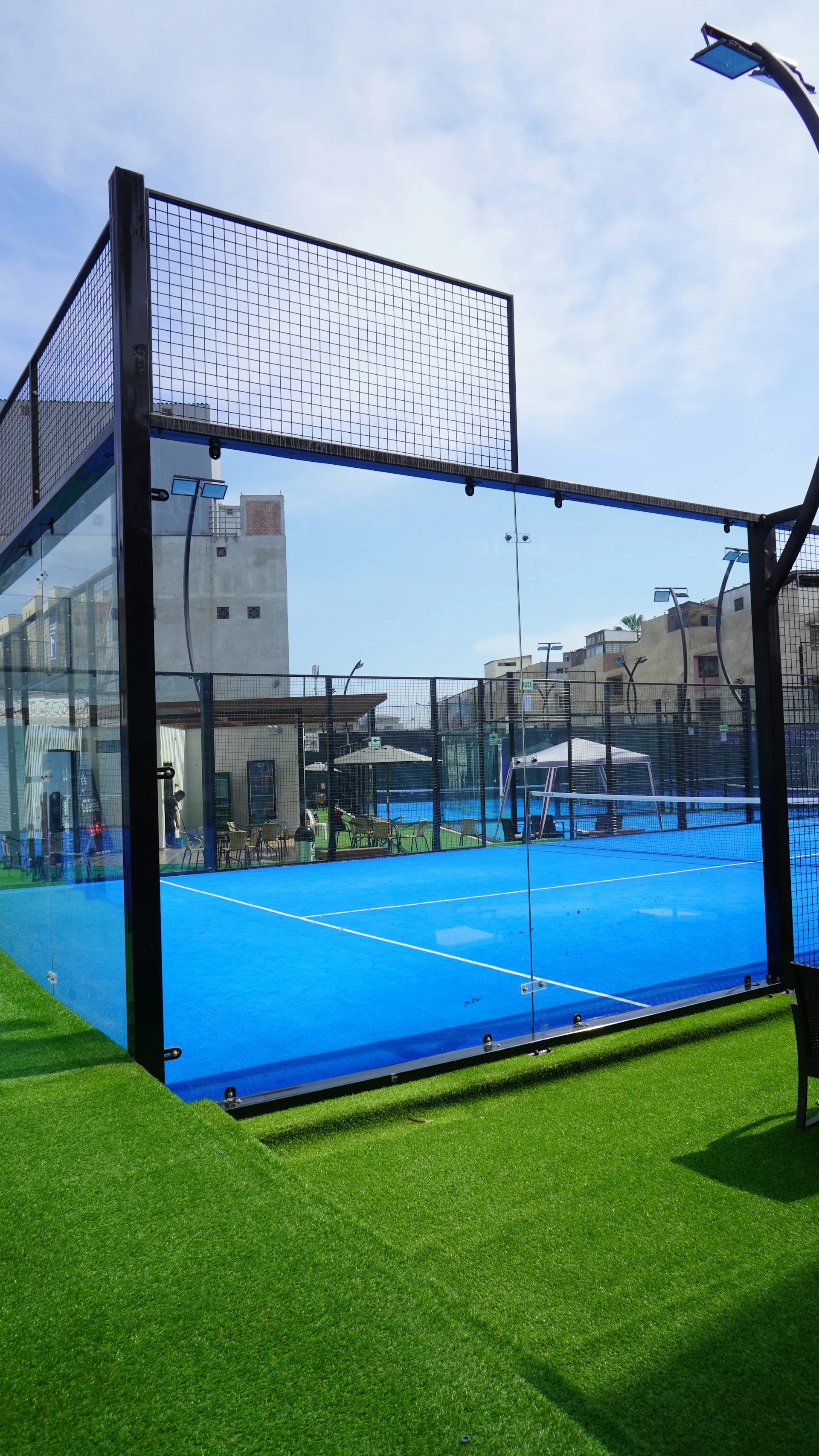
Photo: Bruno Vaccaro Vercellino / Unsplash
Photo: Bruno Vaccaro Vercellino / Unsplash / Unsplash LicenseDefinition
Padel is a team racket sport in which two players face off against two others on a compact court surrounded by walls made of glass and metallic mesh. Unlike tennis, the ball can bounce off the walls and remain in play, adding strategic depth and dynamics reminiscent of squash. The padel racket is solid (no strings), with a perforated surface, which makes ball control more predictable for beginners.
Padel combines the tactical thinking of tennis, the wall play of squash, and the social atmosphere characteristic of team sports. It is this unique combination that makes it one of the fastest-growing sports in the world.
Brief History
Padel was invented in 1969 by Mexican entrepreneur Enrique Corcuera in Acapulco, Mexico. Corcuera enclosed a playing area at his home with walls, creating the first padel court. He adapted tennis rules to the new format: a compact space, underhand serve, and wall play.
In 1974, Alfonso de Hohenlohe-Langenburg, having visited Mexico and discovered padel, built the first two courts in Spain at the Marbella Club on the Costa del Sol. Spain became the main hub for padel’s development and remains so to this day.
In 1991, the International Padel Federation (FIP) was founded. It now unites approximately 100 national federations and organizes world championships.
Learn more about the origins of padel.
Key Characteristics
Padel has several defining features that set it apart from other racket sports:
- Doubles format. Padel is played exclusively as 2 vs 2. This makes the sport inherently social and team-oriented.
- Enclosed court with walls. The court is surrounded by a combination of glass walls and metallic mesh. A ball that bounces off the wall after hitting the floor remains in play.
- Underhand serve. Unlike tennis, the serve must be hit from below waist height. This lowers the barrier to entry and levels the playing field between players of different skill levels.
- Solid racket. The padel racket has no strings — it is made from composite materials with a perforated surface.
- Scoring system. Scoring follows the tennis system: 15, 30, 40, game, set, match.
- Strategy and positioning. Due to the walls and compact court, positional play and tactics matter more than raw hitting power.
The Padel Court
The padel court is a rectangular playing area measuring 10 by 20 meters, divided by a net into two equal halves.
Key court specifications:
- Dimensions: 10 m wide, 20 m long
- Walls: back walls 4 m high (typically glass), side walls — a combination of glass (3 m) and metallic mesh (1 m on top)
- Surface: artificial grass with sand infill or concrete
- Net: 88 cm high at the center, up to 92 cm at the posts
- Service boxes: similar to tennis, positioned diagonally
The court is significantly smaller than a tennis court (which measures 10.97 by 23.77 m for doubles), reducing the physical endurance requirements and allowing players to enjoy the game from the very first session.
Why Padel is Growing
Padel is experiencing explosive growth in popularity worldwide. Several factors contribute to this trend:
- Low barrier to entry. Thanks to the underhand serve, compact court, and solid racket, beginners start enjoying the game after their very first session. Years of training are not required to reach a basic level.
- Social nature. The 2 vs 2 format makes padel an ideal way to spend time with friends, colleagues, or family. The atmosphere on the court is less formal than in tennis.
- Accessibility. A compact court requires less space and investment to build than a tennis court. Padel clubs are appearing in urban areas where a full-size tennis facility would be impossible.
- Physical activity without excessive strain. Padel provides a solid cardio workout and develops coordination while being gentler on joints than tennis, thanks to the smaller court and less aggressive movements.
- Entertainment value. Fast-paced rallies, wall play, and team dynamics make padel engaging both for players and spectators.
Padel by the Numbers
The scale of padel’s spread is impressive (FIP World Padel Report 2025):
- Over 35 million active players worldwide
- Approximately 100 national federations within FIP
- More than 77,000 courts in 150 countries
- Padel is recognized as the fastest-growing sport in Europe by the rate of new player growth
- Premier Padel and World Padel Tour are the largest professional tours, broadcast internationally
Where Padel is Most Popular
Padel’s development is uneven across the globe, but its geographic reach is expanding rapidly:
- Spain — the undisputed leader: over 6 million players, padel is the second most popular sport after football
- Argentina — home to many top professional players, padel is deeply rooted in the country’s sports culture
- Italy — one of the fastest-growing markets in Europe, with the number of courts doubling every few years
- Sweden — the Scandinavian leader, padel is popular in both indoor and outdoor formats
- UAE and Qatar — actively investing in padel infrastructure and hosting international tournaments
- Russia and CIS — an early-stage market, but the number of clubs and players is growing
[UNVERIFIED] Among the new regions of active growth are the United Kingdom, Germany, the Netherlands, Belgium, and Asian countries including Japan, South Korea, and India.
How to Get Started
Getting started with padel requires minimal preparation:
- Find a nearby club with padel courts
- Rent a racket (most clubs provide equipment for beginners)
- Wear athletic shoes with non-slip soles
- Find partners — you need 4 people for a full game
- Start with basic strokes and the serve — an instructor can teach you the fundamentals in a single session
Learn more about getting started with padel and the top rules for beginners.
All our knowledge is free. Creating it is not.
☕ Support on Ko-fi