Padel Court Dimensions and Markings
A padel court is an enclosed space measuring 10 × 20 metres, surrounded by glass walls and metal fencing. Understanding exact dimensions and markings helps you grasp the logic behind the rules and improve your positional play.
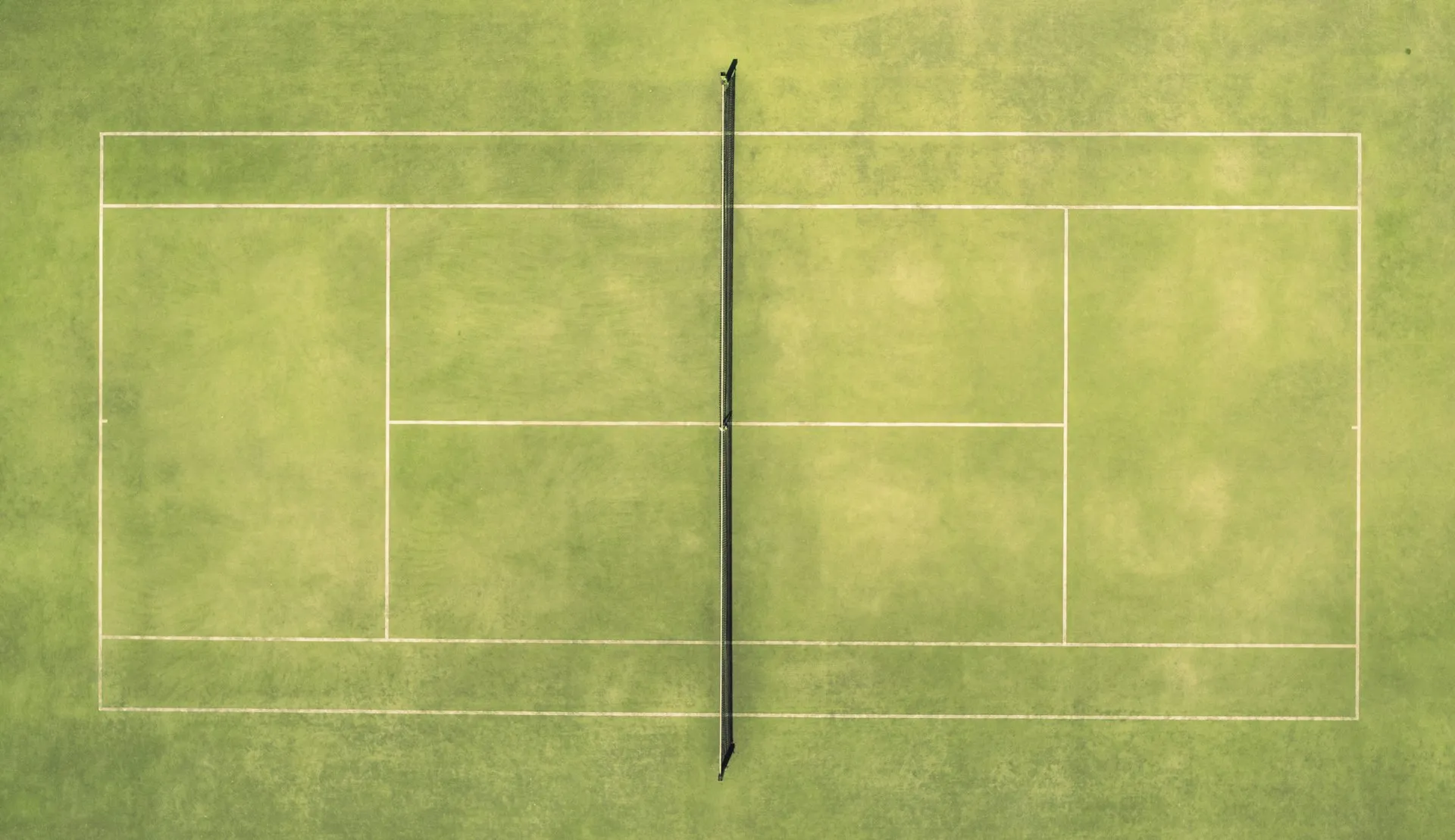
Click a zone to learn more
Overall Dimensions
According to the FIP (International Padel Federation) rules, a standard padel court has strictly defined dimensions:
| Parameter | Size |
|---|---|
| Length | 20 m |
| Width | 10 m |
| Total area | 200 m² |
| Each half | 100 m² (10 × 10 m) |
The FIP standard allows a tolerance of ±0.5% from the specified dimensions. The court is divided into two equal halves by the net.
Court Markings
All lines on the court must be white or light-coloured, with a width of 5 cm. Lines are considered part of the zone they delimit.
Service Lines
On each half of the court:
- Centre service line — runs perpendicular to the net from the back wall to the service line, dividing the service area into two boxes (left and right)
- Service line — runs parallel to the net at a distance of 6.95 m from it (3.05 m from the back wall)
Each service box therefore measures 5 × 6.95 m. The server stands behind the service line on the appropriate side, and the serve is hit diagonally.
The Net
| Parameter | Size |
|---|---|
| Length | 10 m (wall to wall) |
| Height at centre | 88 cm |
| Height at posts/walls | 92 cm (maximum) |
| Overhang beyond posts | up to 0.5 m on each side |
The net is strung between two posts (or attached to the side walls). The upper edge is covered with a white tape 5–6.3 cm wide.
Walls and Fencing
The court walls are the defining feature of padel, setting it apart from tennis. According to FIP rules, walls are classified as follows:
Back Walls (fondo)
- Height: 4 m across the full width of the court (10 m)
- Lower section: solid material (glass or concrete) 3 m high
- Upper section: metal fencing 1 m high (from 3 to 4 m)
- A ball hitting the fencing remains in play under the wall play rules
Side Walls (lateral)
Side walls have a stepped construction:
- Rear section (near back wall): solid material 3 m high, 2 m long
- Middle section: solid material 2 m high, 2 m long
- Remaining section to the net: metal fencing 3–4 m high
Overall Fencing Height
The entire structure (walls + fencing) reaches 4 m around the court perimeter.
Construction Materials
Glass
Tempered glass panels 10–12 mm thick are used for the walls. Glass provides:
- Visibility for spectators and coaches
- Predictable ball bounce
- Aesthetic appearance
Metal Fencing
Galvanised fencing with a maximum mesh size of 7.08 × 7.08 cm (square side). The fencing must be rigid enough for a predictable ball rebound.
Floor Surface
The floor may be made of various materials. For more details on surface types, see Padel Court Surface Types.
Safety Zone
FIP standards require a clear zone around the court:
- Behind back walls: minimum 2 m (for exiting through the door — salida por la puerta)
- Behind side walls: minimum 1 m
- Ceiling height: minimum 6 m (for indoor courts)
Doors
Each side of the court has 1 or 2 entrances placed symmetrically. Standard door:
- Size: 1.05 × 2 m (or 2 × 0.72 × 2 m for double doors)
- Positioned at the centre of the side wall or symmetrically on either side
Lighting
For tournament courts, FIP recommends:
- Minimum 400 lux at playing surface level (for recreational use)
- 500–1,000+ lux for television broadcasts
- Even distribution with no blinding spots
Frequently Asked Questions
Can you play on a non-standard court? For official tournaments, the court must strictly comply with FIP standards. For recreational play, minor deviations are acceptable, but they affect gameplay quality and tactical decisions.
Why are the walls made of glass? Glass provides better visibility for spectators and a more predictable ball bounce compared to concrete walls. Some club courts still use concrete for the lower wall sections.
How does a padel court differ from a tennis court? A padel court is four times smaller in area (200 m² vs 648 m²), fully enclosed by walls, and has no doubles alleys. For a detailed comparison, see Padel vs Tennis.
All our knowledge is free. Creating it is not.
☕ Support on Ko-fi