Court

Court

Dimensions, markings, surfaces and construction of a padel court

Everything about the padel court: dimensions, markings, surface types, glass walls, and construction.

Subsections of Court

Padel Court Dimensions and Markings

• All levels
4 min read
Last updated: 13.03.2026

A padel court is an enclosed space measuring 10 × 20 metres, surrounded by glass walls and metal fencing. Understanding exact dimensions and markings helps you grasp the logic behind the rules and improve your positional play.

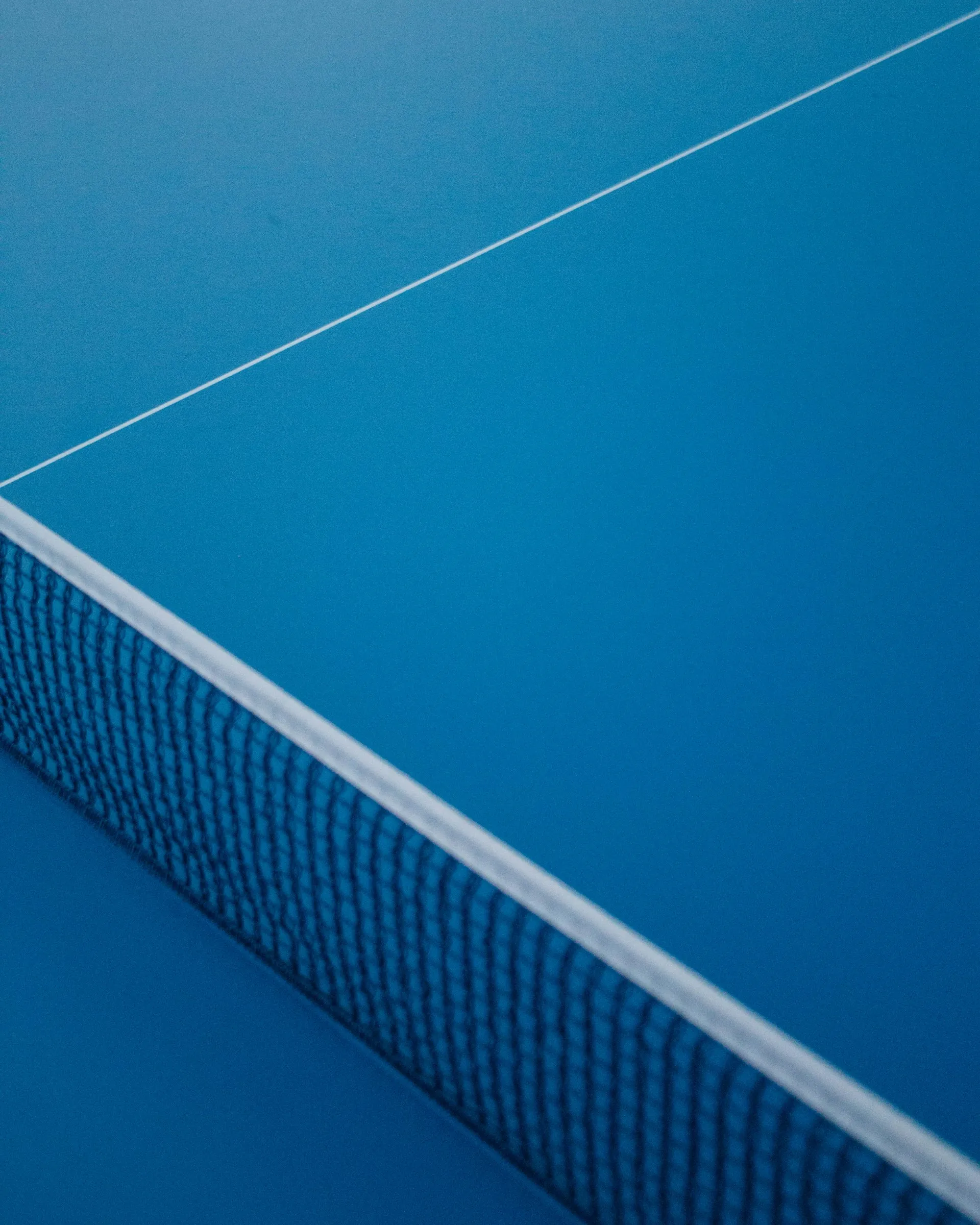
Padel court with markings and glass walls Padel court with markings and glass walls

Photo: Simone Viani / UnsplashPhoto: Simone Viani / Unsplash / Unsplash License
Interactive Court Zone Map

Click a zone to learn more

Back Zone (El Fondo)No Man's Land (Tierra de Nadie)Net Zone (La Red)Back Wall (Pared de Fondo)Side Wall (Pared Lateral)Side Wall (Pared Lateral)Net Zone (La Red)The T (La T)No Man's Land (Tierra de Nadie)Back Zone (El Fondo)Back Wall (Pared de Fondo)
Net Zone (La Red) No Man's Land (Tierra de Nadie) Back Zone (El Fondo) Back Wall (Pared de Fondo) Side Wall (Pared Lateral)

Overall Dimensions

According to the FIP (International Padel Federation) rules, a standard padel court has strictly defined dimensions:

ParameterSize
Length20 m
Width10 m
Total area200 m²
Each half100 m² (10 × 10 m)

The FIP standard allows a tolerance of ±0.5% from the specified dimensions. The court is divided into two equal halves by the net.

Court Markings

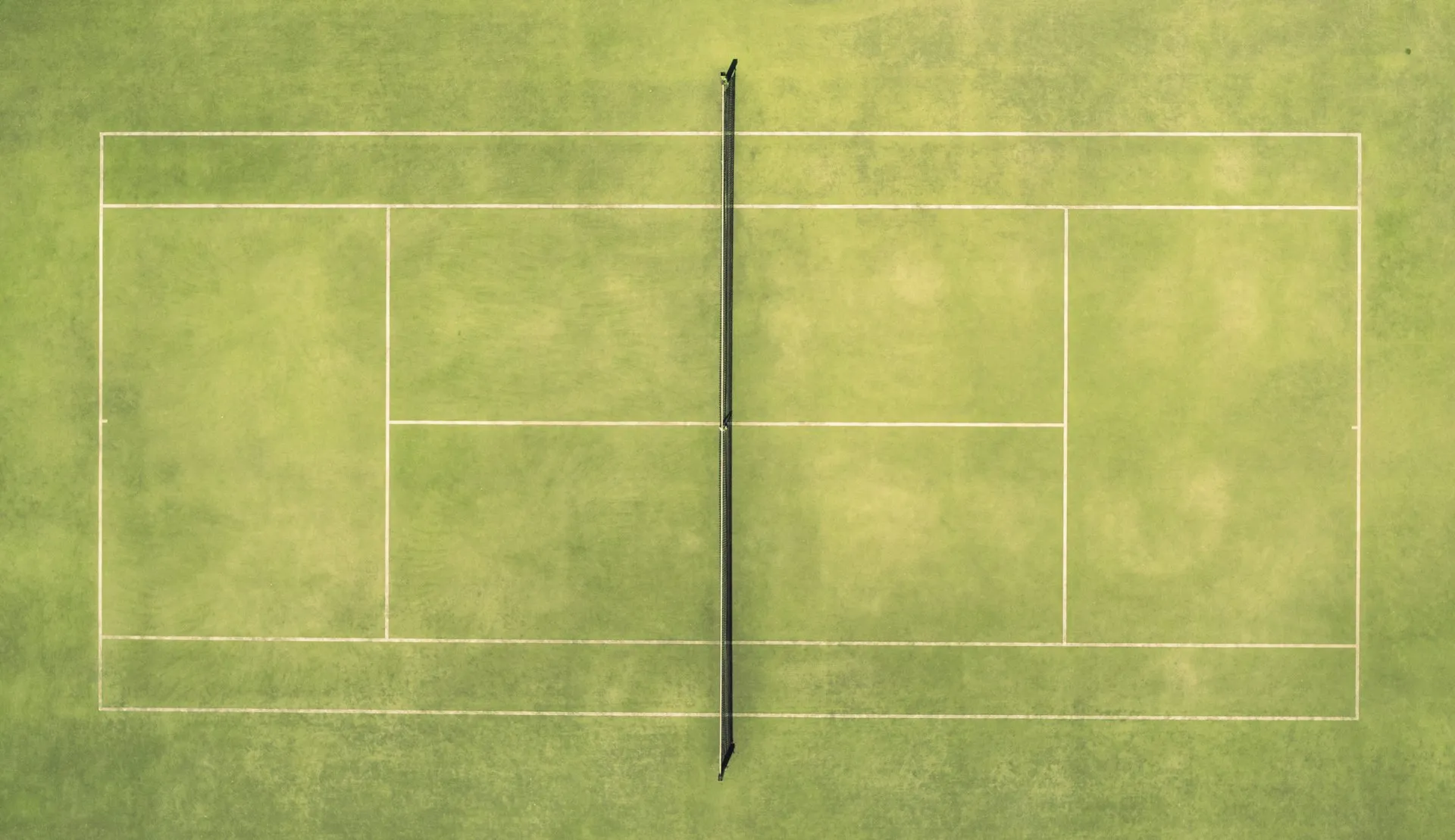
All lines on the court must be white or light-coloured, with a width of 5 cm. Lines are considered part of the zone they delimit.

Service Lines

On each half of the court:

  • Centre service line — runs perpendicular to the net from the back wall to the service line, dividing the service area into two boxes (left and right)
  • Service line — runs parallel to the net at a distance of 6.95 m from it (3.05 m from the back wall)

Each service box therefore measures 5 × 6.95 m. The server stands behind the service line on the appropriate side, and the serve is hit diagonally.

The Net

ParameterSize
Length10 m (wall to wall)
Height at centre88 cm
Height at posts/walls92 cm (maximum)
Overhang beyond postsup to 0.5 m on each side

The net is strung between two posts (or attached to the side walls). The upper edge is covered with a white tape 5–6.3 cm wide.

Walls and Fencing

The court walls are the defining feature of padel, setting it apart from tennis. According to FIP rules, walls are classified as follows:

Back Walls (fondo)

  • Height: 4 m across the full width of the court (10 m)
  • Lower section: solid material (glass or concrete) 3 m high
  • Upper section: metal fencing 1 m high (from 3 to 4 m)
  • A ball hitting the fencing remains in play under the wall play rules

Side Walls (lateral)

Side walls have a stepped construction:

  • Rear section (near back wall): solid material 3 m high, 2 m long
  • Middle section: solid material 2 m high, 2 m long
  • Remaining section to the net: metal fencing 3–4 m high

Overall Fencing Height

The entire structure (walls + fencing) reaches 4 m around the court perimeter.

234
Standard padel court dimensions: 10 × 20 m, service line 6.95 m from the net

Construction Materials

Glass

Tempered glass panels 10–12 mm thick are used for the walls. Glass provides:

  • Visibility for spectators and coaches
  • Predictable ball bounce
  • Aesthetic appearance

Metal Fencing

Galvanised fencing with a maximum mesh size of 7.08 × 7.08 cm (square side). The fencing must be rigid enough for a predictable ball rebound.

Floor Surface

The floor may be made of various materials. For more details on surface types, see Padel Court Surface Types.

Safety Zone

FIP standards require a clear zone around the court:

  • Behind back walls: minimum 2 m (for exiting through the door — salida por la puerta)
  • Behind side walls: minimum 1 m
  • Ceiling height: minimum 6 m (for indoor courts)

Doors

Each side of the court has 1 or 2 entrances placed symmetrically. Standard door:

  • Size: 1.05 × 2 m (or 2 × 0.72 × 2 m for double doors)
  • Positioned at the centre of the side wall or symmetrically on either side

Lighting

For tournament courts, FIP recommends:

  • Minimum 400 lux at playing surface level (for recreational use)
  • 500–1,000+ lux for television broadcasts
  • Even distribution with no blinding spots

Frequently Asked Questions

Can you play on a non-standard court? For official tournaments, the court must strictly comply with FIP standards. For recreational play, minor deviations are acceptable, but they affect gameplay quality and tactical decisions.

Why are the walls made of glass? Glass provides better visibility for spectators and a more predictable ball bounce compared to concrete walls. Some club courts still use concrete for the lower wall sections.

How does a padel court differ from a tennis court? A padel court is four times smaller in area (200 m² vs 648 m²), fully enclosed by walls, and has no doubles alleys. For a detailed comparison, see Padel vs Tennis.

All our knowledge is free. Creating it is not.

☕ Support on Ko-fi
Content licensed under CC BY-SA 4.0. When copying or republishing, a link to the original article is required.

Padel Court Surface Types

• All levels
3 min read
Last updated: 13.03.2026

The court surface directly affects game speed, ball bounce, injury risk, and player comfort. The most common type is artificial grass with silica sand, but other options exist.

Padel court surface close-up Padel court surface close-up

Photo: Jon McCallon / UnsplashPhoto: Jon McCallon / Unsplash / Unsplash License

FIP Requirements

According to the FIP rules, a padel court surface must:

  • Provide a uniform and predictable ball bounce
  • Be non-slip in both dry and wet conditions
  • Offer adequate cushioning to reduce joint stress
  • Have a uniform colour (blue or green recommended)

FIP permits several surface types but sets standards for bounce speed and friction coefficient.

Surface Types

1. Artificial Grass with Sand (Standard)

The most common surface on professional and recreational courts.

Construction:

  • Synthetic pile 12–15 mm high
  • Infill: silica sand (2–3 kg/m²)
  • Base: concrete slab with drainage

Characteristics:

ParameterRating
SpeedMedium
BouncePredictable, medium
CushioningGood
ComfortHigh
MaintenanceModerate
Lifespan5–8 years
CostMedium

Pros:

  • Comfortable play, good cushioning
  • Reduced joint stress
  • Allows controlled sliding
  • Suits any outsole type

Cons:

  • Requires regular maintenance (sand top-ups, cleaning)
  • Sand can distribute unevenly
  • Pile wears over time

2. Artificial Grass without Sand

Similar to the above but without the sand infill.

Characteristics:

  • Taller pile (15–20 mm)
  • Speed: high (ball bounces faster)
  • Less maintenance
  • Poorer cushioning
  • Less predictable bounce

Used less often, primarily on temporary courts.

3. Concrete / Cement

Found on older courts and in regions with hot climates.

ParameterRating
SpeedHigh
BounceHigh, sharp
CushioningLow
ComfortLow
MaintenanceMinimal
Lifespan15–20+ years
CostLow

Pros:

  • Minimal maintenance
  • Durability
  • Low cost

Cons:

  • High joint stress — increased injury risk
  • Fast, aggressive play
  • No cushioning
  • Hard and uncomfortable surface
  • Herringbone outsole footwear is essential

4. Rubber-Crumb Surface

A rare type found on select courts.

  • Good cushioning
  • Medium speed
  • Unpredictable bounce when worn
  • Difficult to maintain

5. Carpet Surface (Indoor)

Used at some indoor venues.

  • Fast surface
  • Low bounce
  • Good uniformity
  • Requires specific footwear

Surface Colour

Under FIP standards for television broadcasts:

  • Blue — the primary colour for Premier Padel tournaments
  • Green — the classic colour, popular in clubs
  • Terracotta — found in Spain and Argentina

Colour does not affect playing characteristics, but blue provides the best contrast with the yellow ball for spectators and cameras.

Surface Maintenance

For Artificial Grass with Sand

TaskFrequency
Clearing debris and leavesDaily
Levelling the sand (rake / machine)Weekly
Checking sand levelsMonthly
Sand top-up1–2 times a year
Deep clean (anti-moss treatment)Once a year
Surface replacementEvery 5–8 years

Weather Impact

  • Rain: artificial grass with drainage allows play in light rain. Concrete becomes slippery.
  • Heat: the surface heats up, causing the ball to bounce higher. Watering is recommended for cooling.
  • Frost: play is not recommended — the surface becomes hard and slippery.

How the Surface Affects Play

SurfaceSpeedPlaying Style
Grass with sand (standard)MediumVersatile, tactical
ConcreteHighAggressive, fast
Grass without sandHighQuick exchanges

On slower surfaces (grass with sand), rallies are longer, reaction time is greater, and tactics and positioning matter more. On fast surfaces (concrete), attacking players with powerful shots have the advantage.

Frequently Asked Questions

Which surface is best for beginners? [EXPERT OPINION] Artificial grass with sand is the clear best choice. It forgives mistakes, allows more reaction time, and is gentler on the joints.

Does the surface affect shoe choice? Yes. For grass with sand, omni or herringbone outsoles are suitable. For concrete, only herringbone. See Padel Shoes for details.

The light is on for free. But someone has to clean the lantern.

☕ Support on Ko-fi
Content licensed under CC BY-SA 4.0. When copying or republishing, a link to the original article is required.

Indoor vs Outdoor Padel Courts

• All levels
3 min read
Last updated: 13.03.2026

Choosing between an indoor and outdoor court affects not just comfort but also playing technique, ball speed, and strategy. Understanding the differences helps you adapt your game to any conditions.

Padel court with net Padel court with net

Photo: Dima Khudorozhkov / Unsplash / Unsplash License

Overview

Padel was born on outdoor courts in Mexico and Argentina, where warm climates allow year-round play. As the sport spread to Europe, indoor facilities emerged. [UNVERIFIED] In Spain, a significant share of courts are outdoor, while in Sweden and Finland the vast majority are indoor.

Comparison

ParameterIndoorOutdoor
Weather dependenceNoneHigh
WindNoneSignificant factor
LightingStable, artificialNatural + artificial
TemperatureControlledClimate-dependent
Construction costHighMedium
Operating costsHighLow
SeasonalityYear-roundLimited by climate

Indoor Courts

Advantages

  • Weather-independent — rain, snow, and wind don’t affect play
  • Consistent conditions — predictable ball bounce every session
  • No wind — the ball flies predictably, crucial for lobs
  • Sound insulation — less noise impact on residential areas
  • Year-round operation — no downtime in cold regions

Disadvantages

  • Higher construction cost — building, roofing, HVAC add to the budget
  • Operating expenses — heating, air conditioning, ventilation
  • Minimum ceiling height — FIP requires 6 m minimum, 8 m recommended for new facilities
  • Ventilation — poor airflow makes surfaces slippery

Outdoor Courts

Advantages

  • Lower construction cost — no building or roof needed
  • Minimal operating expenses — no heating required
  • Natural lighting — comfortable and free
  • Fresh air — pleasant atmosphere

Disadvantages

  • Weather-dependent — rain and strong wind make play impossible
  • Wind — significantly affects ball trajectory
  • Sun — glare during serves and overhead shots
  • Surface wears faster under UV, rain, and temperature changes
  • Seasonal — 3–6 months of downtime in cold climates

Weather Impact on Play

Wind

Wind speedImpact
Light (up to 10 km/h)Minimal
Moderate (10–25 km/h)Lobs and bandejas need adjustment
Strong (25+ km/h)Play becomes unpredictable

[EXPERT OPINION] Above 25 km/h, match quality drops significantly. Many clubs cancel bookings on outdoor courts.

Temperature

  • Heat (30°C+): ball bounces higher and faster. Extra hydration is essential.
  • Cold (0–10°C): ball becomes heavy and slow. Thorough warm-up is mandatory.

Rain

On artificial grass with drainage, light drizzle is tolerable but increases injury risk. Moderate to heavy rain — play not recommended.

Lighting

  • Indoor: minimum 500 lux for training, 750–1000 for competition. LED systems are standard.
  • Outdoor: floodlights on 6–8 m poles. North–south court orientation minimises sun glare.

Hybrid Solutions

  • Canopy roof without walls — rain protection, but wind passes through
  • Retractable roof — flexibility at a premium price
  • Seasonal tent structures — installed for winter, removed in summer
RegionIndoor shareReason
Spain~40%Warm climate
Sweden, Finland~90%Cold climate
Italy~50%Mixed climate
UAE, Qatar~70%Extreme heat
Argentina~30%Mild climate

See also

All our knowledge is free. Creating it is not.

☕ Support on Ko-fi
Content licensed under CC BY-SA 4.0. When copying or republishing, a link to the original article is required.

Building a Padel Court: Complete Guide

• All levels
3 min read
Last updated: 13.03.2026

Building a padel court is an investment that requires understanding FIP standards, material selection, and infrastructure planning. This guide helps clubs, investors, and municipalities make informed decisions.

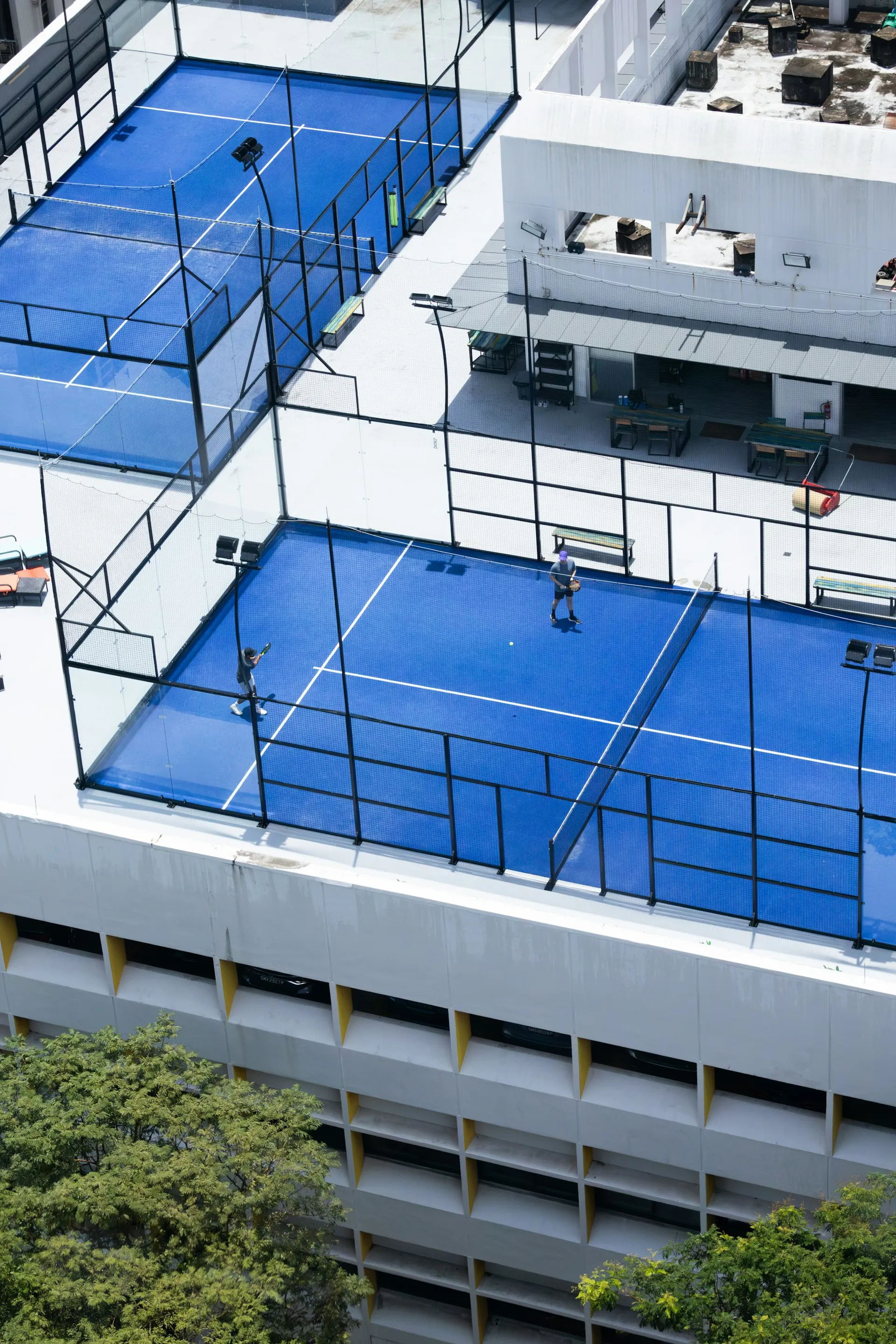
Padel courts on a building rooftop Padel courts on a building rooftop

Photo: Jacek Janiczak / Unsplash / Unsplash License

Construction Stages

1. Design and Permits

  • Site selection: flat surface, minimum 15 × 25 m per court (including safety zones)
  • Soil testing: bearing capacity, groundwater level
  • Permits: building permission, environmental assessment, noise regulations
  • Orientation: north–south court axis to minimise sun glare

2. Foundation

ParameterRequirements
TypeMonolithic concrete slab
Thickness15–20 cm
ReinforcementWelded mesh
Slope0.5–1% for drainage (outdoor)
FlatnessMax 3 mm deviation per 3 m

3. Steel Frame

  • Material: galvanised steel (corrosion protection)
  • Height: 4 m around the perimeter
  • Mounting: bolted to foundation through anchors

4. Walls

Per FIP standards:

  • Back walls: glass 3 m + metal mesh 1 m
  • Side walls: stepped design (glass 3 m × 2 m, glass 2 m × 2 m, mesh to the net)
  • Glass: tempered, 10–12 mm thick
  • Mesh: galvanised, cell size max 7.08 × 7.08 cm

5. Surface

See Surface Types for details.

  • Standard: artificial grass with silica sand (12–15 mm)
  • Base: concrete slab with drainage
  • Alternatives: concrete (cheaper but harder), rubber crumb

6. Net and Posts

  • Height: 88 cm at centre, up to 92 cm at posts
  • Length: 10 m (wall to wall)
  • White tape along the top edge (5–6.3 cm)

7. Lighting

Court typeMinimumRecommended
Recreational400 lux500 lux
Competition500 lux750–1000 lux
Television1000 lux1500+ lux

LED floodlights: 4–8 per court, 200–400 W each.

Construction Costs

[UNVERIFIED] Approximate prices (Europe, 2025–2026):

ComponentOutdoorIndoor
Foundation€5,000–10,000€5,000–10,000
Frame + glass€15,000–25,000€15,000–25,000
Surface€5,000–12,000€5,000–12,000
Lighting€3,000–8,000€5,000–12,000
Building / roof€40,000–80,000
HVAC€10,000–25,000
Total€20,000–45,000€80,000–165,000

Additional costs: utility connections, landscaping, changing rooms, parking.

Return on Investment

[EXPERT OPINION] At an average court rental of €30–60/hour and 60–70% utilisation:

  • Outdoor court: payback in 2–4 years
  • Indoor court: payback in 4–7 years
  • Multi-court facility (4+): economies of scale reduce cost by 15–20%

Drainage

For outdoor courts:

  • Slab slope 0.5–1% towards drainage channels
  • Perimeter drainage channels
  • Connection to stormwater system
  • Artificial grass with perforated backing

Noise Control

Padel generates 70–85 dB (ball striking glass). For residential areas:

  • Acoustic barriers around the perimeter
  • Sound-absorbing ceiling panels (indoor courts)
  • Operating hour restrictions (typically 8:00–22:00)

Tips for Investors

  1. Start with market analysis — player count within 15 km, competition
  2. Minimum 2 courts — a single court doesn’t create a club atmosphere
  3. Plan infrastructure — changing rooms, café, shop, parking
  4. FIP standards — compliance enables hosting official tournaments
  5. Consider hybrid solutions — canopy roof as a compromise

FAQ

How much space is needed for one court? Minimum 15 × 25 m (10 × 20 m court + 2.5 m safety zones). See Court Dimensions.

Can a court be built on a rooftop? Yes, provided sufficient load-bearing capacity (minimum 500 kg/m²). Vibration-isolating base required.

How long does construction take? Outdoor court: 4–8 weeks. Indoor court: 3–6 months (including building).

See also

The light is on for free. But someone has to clean the lantern.

☕ Support on Ko-fi
Content licensed under CC BY-SA 4.0. When copying or republishing, a link to the original article is required.

Padel Clubs in Setúbal District

• All levels
7 min read
Last updated: 13.03.2026

The Setúbal District and its neighbours on the south bank of the Tagus offer more than a dozen padel venues — from premium indoor centres with WPT-grade courts to affordable municipal facilities. This guide lists every club we could verify, grouped by city.

[UNVERIFIED] Prices and court counts were gathered from club websites, Playtomic, and AirCourts in February 2026. They may have changed — always confirm with the club before visiting.

Setúbal

Dream Padel Center

Dream Padel Center
DetailInfo
AddressEstrada Nacional N.º 10, Logradouro 3, ImaPark — Pontes, 2910-828 Setúbal
Phone+351 914 337 272
Emailgeral@dreampadel.pt
Websitedreampadel.pt
Courts8 (7 indoor + 1 outdoor panoramic)
SurfaceMondo Supercourts XN (Premier Padel official)
Hours09:00 – 23:00
BookingAirCourts

Prices (per court):

Slot60 min90 min
09:00 – 17:00€22€28
17:00 – 23:00€30€40

Racket rental €2/game · Balls €7.50/pack

Amenities: bar & lounge, free parking (24/7 surveillance), changing rooms with lockers, pro shop, racket rental. The club has hosted FIP Bronze Setúbal tournaments.


Academia de Padel de Setúbal

Academia de Padel de Setúbal
DetailInfo
AddressParque Verde de Vanicelos, 2900-634 Setúbal
Phone+351 919 631 814
Emailgeral@academiadepadeldesetubal.pt
Websiteacademiadepadel.com
Courts6 (4 outdoor + 2 covered)
SurfaceArtificial grass
Hours09:00 – 00:00
BookingTiePadel

Prices (per person, league format 1h30):

SlotPrice
Mon–Fri before 17:00€6.00
Mon–Fri after 17:00 & weekends€8.00

Amenities: bar with terrace (Terra Café), changing rooms, 230 m² fitness studio (GoodVibes classes), padel school for youth and adults. Open since June 2018.


NovoPadel Club

NovoPadel Club
DetailInfo
AddressRua Alexandre O’Neill 34, 2910-713 Setúbal (Novotel grounds)
Phone+351 932 633 521
Website
Courts4 padel + 2 pickleball
SurfaceMondo WPT
Hours09:00 – 00:00
BookingTiePadel

Amenities: 3 covered courts + 1 outdoor panoramic, Novotel pool and gym access for members, bar & restaurant (hotel), parking. Founded by two certified coaches, open since May 2023.


Azeitão

Arrábida Padel

Arrábida Padel
DetailInfo
AddressRua Dr. Francisco Gonçalves de Oliveira, 2925-527 Vila Nogueira de Azeitão
Phone+351 939 688 244
Emailgeral@arrabidapadel.pt
Websitearrabidapadel.pt
Courts8 (4 covered + 4 outdoor)
SurfaceArtificial grass — one outdoor court with unique red surface (only in Portugal)
Hours09:00 – 22:30
BookingTiePadel, AirCourts

Prices (per person, league 1h30):

SlotPrice
Mon–Fri before 17:00€7.00
Mon–Fri after 17:00 & weekends€9.00

Amenities: bar with terrace, changing rooms, pro shop (rackets & gear), views of Serra da Arrábida. The largest club in the area, open since March 2018.


Sesimbra

My Padel Sesimbra

My Padel Sesimbra
DetailInfo
AddressAvenida João Paulo II, n.º 40, 2970-305 Sesimbra
Phone+351 212 682 272
Emailmyfitnessclubsesimbra@gmail.com
Websitemypadelcenter.pt
Courts1–3 (sources vary; outdoor rooftop)
SurfaceArtificial grass
BookingAirCourts, Playtomic

Prices: from €5/person (gym members) to €7/person (evening). The first padel court in Sesimbra — a rooftop venue with ocean views.

Amenities: bar, free private parking, changing rooms.


SoGoodPadel Sesimbra Country Club

SoGoodPadel Sesimbra
DetailInfo
AddressCentro Desportivo de Alfarim, Estrada dos Murtinhais, 2970-377 Sesimbra
Phone+351 918 216 926
Emailsogoodpadelsesimbracountryclub@gmail.com
Courts3 (outdoor)
SurfaceArtificial grass
BookingTiePadel

[UNVERIFIED] This club opened in 2024 but had a delayed inauguration and limited online presence. We recommend calling to confirm it is currently operating before visiting.

Amenities: bar-lounge, parking, padel academy.


Palmela

Campos de Padel de Pinhal Novo

DetailInfo
AddressRua Orlando Ribeiro, 2955-211 Pinhal Novo (Municipal Swimming Pool complex)
Phone+351 212 389 900
Courts4 (2 outdoor + 2 covered, coverage expansion planned)
SurfaceArtificial grass
HoursMon–Sat 08:00 – 22:00 · Sun 08:00 – 14:00
BookingPalmela Desporto

Prices (per person/hour):

SlotUncoveredCovered
Off-peak (Mon–Fri 08:00–17:00)€4.50€5.50
Peak (Mon–Fri 17:00–22:00, weekends)€6.00€7.00

A municipal facility — the most affordable courts in the district. Inaugurated July 2024.


GRIP — Grande Indoor Padel

GRIP
DetailInfo
AddressRua do Pinhal da Salgueirinha, 2955-083 Pinhal Novo
Emailgrandeindoorpadel@gmail.com
Website
Courts10 (all indoor)
SurfaceWPT / Premier Padel standard
BookingTiePadel

Amenities: lounge & restaurant (also on Uber Eats), bar & esplanade, children’s space, padel school. The largest indoor facility in the Palmela municipality.


Padel nas Pirâmides

DetailInfo
AddressEstrada dos Quatro Castelos, 2950-536 Quinta do Conde
Phone+351 919 273 247
Emailquintadaspiramides@outlook.pt
Courts9 (5 covered + 4 outdoor)
SurfaceArtificial grass
HoursMon–Fri 09:00 – 00:00 · Sat–Sun 09:00 – 21:00
BookingAirCourts

Prices (per person, 1h30):

SlotOutdoorCovered
Mon–Fri before 17:30€5.00€7.50
Mon–Fri after 17:30 & weekends€7.50€10.00

Racket rental €1.50

Amenities: changing rooms, bar & snack bar, pro shop, free private parking.


Quinta do Anjo Padel

DetailInfo
AddressR. José Carvalho Braga, Lote 42, 2950-736 Quinta do Anjo
Phone+351 968 788 263
Facebookpadelnaquintadoanjo
Courts4 (all covered)
SurfaceCrystal / panoramic glass walls
HoursMon–Fri 09:30 – 22:30 · Sat–Sun 09:00 – 21:00
BookingPlaytomic, AirCourts

Amenities: changing rooms, bar & cafeteria, free private parking, equipment rental, lockers, Wi-Fi, disabled access.


Seixal

Best Lane Padel

Best Lane Padel
DetailInfo
AddressSeixal (exact address via booking platform)
Phone+351 212 105 703
Websitebestlanepadel.pt
Courts3 (2 indoor + 1 outdoor panoramic)
SurfaceOne court with official WPT grass
BookingAirCourts

Amenities: leisure area, changing rooms with showers and lockers, vehicle and bicycle parking. Padel school with individual and group classes.


GOAT Padel Amora

GOAT Padel Amora
DetailInfo
AddressRua Amora Futebol Clube, 2845-442 Amora
Phone+351 963 501 063
Websitegoatpadel.net
Courts3 (all covered, panoramic)
Hours09:00 – 00:00
BookingTiePadel

Amenities: snack bar, free parking.


A2N Padel Academy

A2N Padel Academy
DetailInfo
AddressComplexo Desportivo Santa Marta, Av. Vieira da Silva, 2855-578 Corroios
Phone+351 965 511 074
Emaila2npadel@gmail.com
Courts2 (both covered)
SurfaceWPT flooring
Hours09:00 – 00:00
BookingTiePadel

Amenities: bar, padel school (all levels).


Academia de Padel Pinhal Vidal (Fenómeno Padel)

Academia de Padel Pinhal Vidal
DetailInfo
AddressRua dos Sobreiros 2, Pinhal do Vidal, 2855-279 Corroios
Phone+351 910 951 809
Emailgeral.academiadepadel@gmail.com
Websiteacademiadepadel.com
Courts7 (6 indoor + 1 outdoor)
Hours08:00 – 21:00
BookingAirCourts, TiePadel

Prices (per person/hour):

Slot60 min90 min
Off-peak (08:00 – 17:00)€5.00€7.00
Peak (17:00 – 21:00)€7.00€10.00

Amenities: free private parking, bar/snack bar, pro shop, changing rooms, equipment rental, padel school. The largest club in the Seixal area.


Almada

Almada Padel Academy

Almada Padel Academy
DetailInfo
AddressAlameda de Guerra Junqueiro 11, 2810-071 Almada
Phone+351 924 257 073
Emaildirecao.almadapadel@gmail.com
Websitealmadapadelacademy.pt
Courts4 (2 covered + 2 outdoor)
SurfaceArtificial grass
BookingAirCourts, Playtomic

Amenities: bar with chef-prepared menu, covered terrace, free private parking, changing rooms with lockers, pro shop (rackets, clothing, accessories), racket and ball rental.
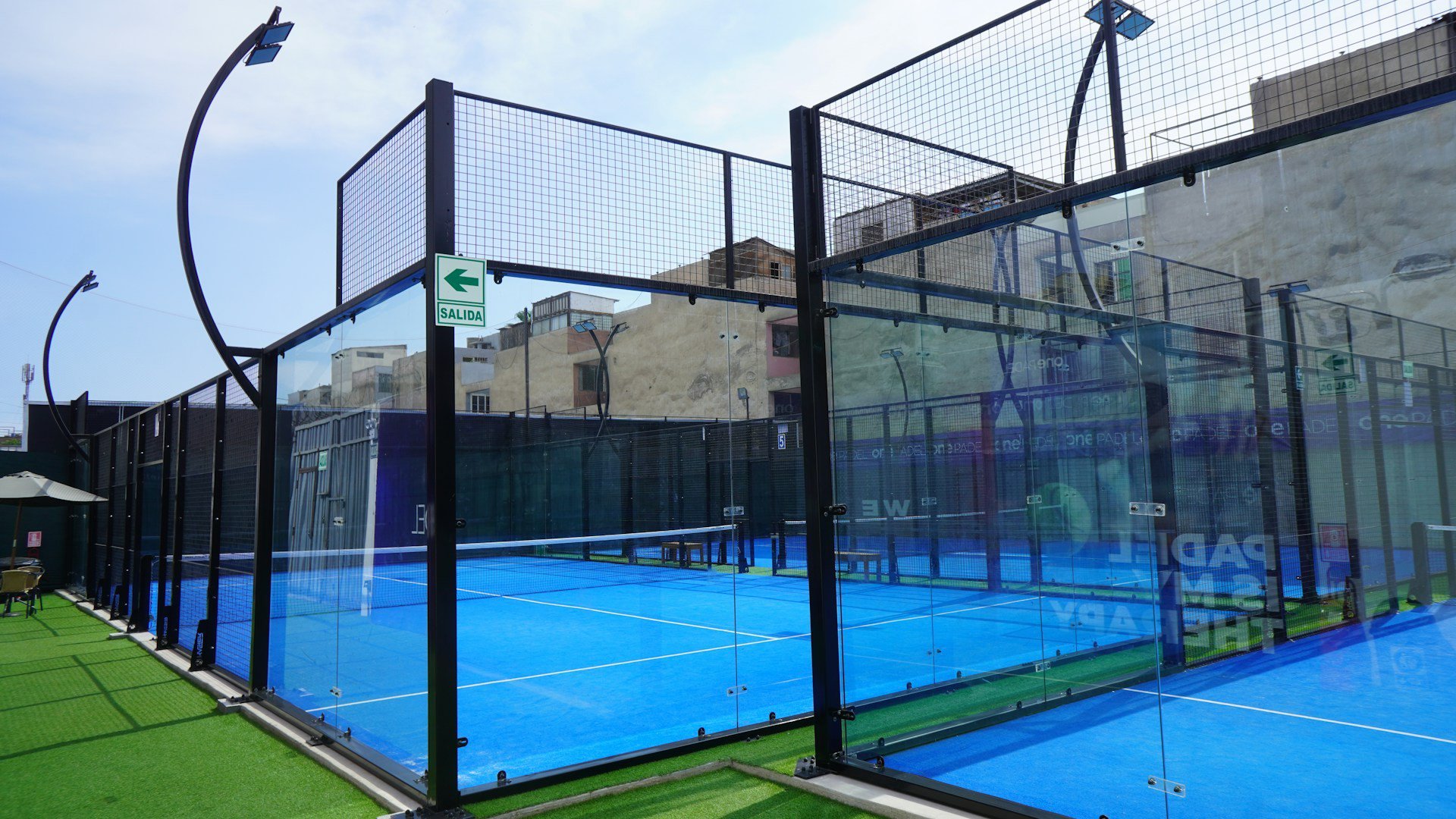
Smash Padel Almada

Smash Padel Almada
DetailInfo
AddressAvenida do Cristo Rei, n.º 5, 2800-057 Almada (at Almada Atlético)
Phone+351 916 862 324
Emailpadel.almada@gmail.com
Websitesmashpadelalmada.pt
Courts2 (both covered)
Hours08:00 – 00:00
BookingTiePadel, AirCourts

Prices (per person):

Slot60 min90 min
Mon–Fri 08:00 – 18:00€5.00€6.50
Mon–Fri 18:00 – 00:00€7.50€9.50
Weekends 09:00 – 00:00€7.50€9.50

Amenities: bar with terrace, parking, changing rooms, padel school. Open since 2023.


Quick Comparison

ClubCityCourtsIndoorPrice range
Dream Padel CenterSetúbal87€22–40/court
Academia de PadelSetúbal62€6–8/person
NovoPadel ClubSetúbal4+23
Arrábida PadelAzeitão84€7–9/person
My Padel SesimbraSesimbra1–30€5–7/person
SoGoodPadelSesimbra30
Campos de Padel PNPinhal Novo42€4.50–7/person
GRIPPinhal Novo1010
Padel nas PirâmidesQuinta do Conde95€5–10/person
Quinta do Anjo PadelQuinta do Anjo44
Best Lane PadelSeixal32
GOAT Padel AmoraAmora33
A2N Padel AcademyCorroios22
Acad. Pinhal VidalCorroios76€5–10/person
Almada Padel AcademyAlmada42
Smash Padel AlmadaAlmada22€5–9.50/person

The light is on for free. But someone has to clean the lantern.

☕ Support on Ko-fi
Content licensed under CC BY-SA 4.0. When copying or republishing, a link to the original article is required.