How to Choose a Padel Racket
A padel racket is a solid, stringless bat with a perforated surface. Choosing the right racket depends on your level, playing style, and physical build.
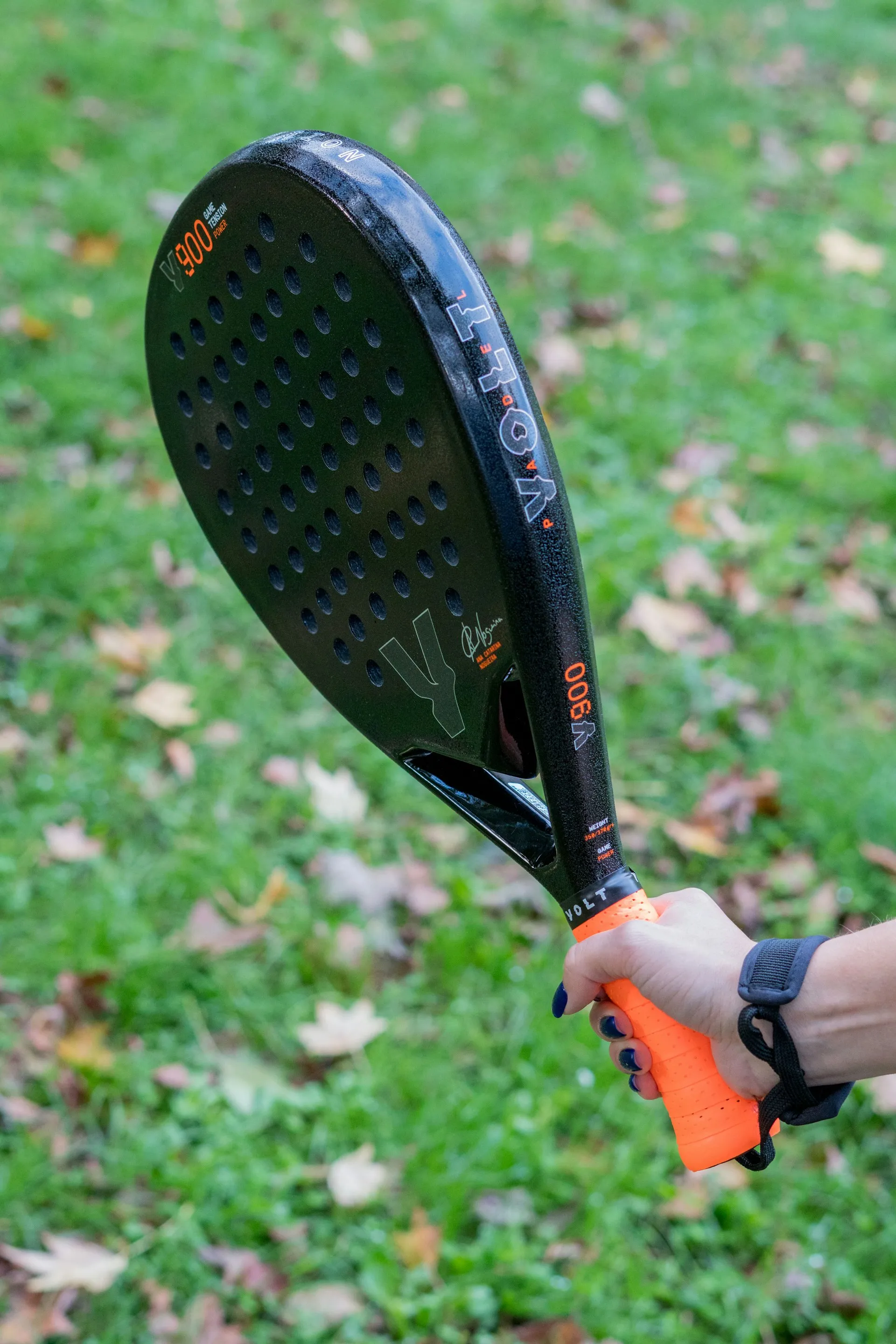
Description
Unlike tennis rackets, a padel racket (pala) has no strings. The hitting surface is solid, made of composite materials, with holes to reduce air resistance. According to FIP rules, the racket must meet strict specifications:
| Parameter | Limit |
|---|---|
| Length | up to 45.5 cm |
| Width | up to 26 cm |
| Thickness | up to 38 mm |
| Wrist strap | mandatory |
| Surface | flat, with holes |
How to Choose
Consider five key factors when selecting a racket:
1. Shape
The shape determines the balance between control and power:
| Shape | Balance | Control | Power | Best for |
|---|---|---|---|---|
| Round (redonda) | Low | ★★★★★ | ★★☆☆☆ | Beginners, control players |
| Teardrop (lágrima) | Medium | ★★★★☆ | ★★★☆☆ | Intermediate, all-rounders |
| Diamond (diamante) | High | ★★☆☆☆ | ★★★★★ | Advanced, attacking players |
Round — the most popular shape. The centre of gravity is closer to the handle, providing maximum control and forgiveness for off-centre hits. Ideal for learning grip technique.
Teardrop — a compromise between control and power. A larger sweet spot makes this shape versatile.
Diamond — the centre of gravity is shifted towards the head, delivering maximum power on smashes and aggressive shots. Requires good technique and physical fitness.
2. Core Material
- EVA (foam): soft core, more control, better vibration absorption. Better for beginners.
- FOAM: stiffer, provides more power and rebound. For intermediate and advanced players.
- Hybrid: a combination of EVA and FOAM in different zones of the racket.
3. Face Material
- Fibreglass: softer feel, more control. Recommended for beginners.
- Carbon fibre: stiffer feel, more power. For advanced players.
- Combined: one side carbon, the other fibreglass.
4. Weight
| Category | Weight | Recommendation |
|---|---|---|
| Light | 340–355 g | Women, beginners, juniors |
| Medium | 355–370 g | All-round option |
| Heavy | 370–390 g | Men, attacking players |
A heavier racket delivers more power but fatigues the arm faster and increases the risk of injuries.
5. Balance
- Low (towards handle) — control, manoeuvrability
- Medium — versatility
- High (towards head) — power, shot strength
Interactive Racket Finder
Not sure which racket to pick? Use our step-by-step wizard:
Find Your Racket
What is your playing level?
Recommendations by Level
Beginner
[EXPERT OPINION] For beginners, the optimal racket has these characteristics:
- Shape: round
- Core: soft EVA
- Face: fibreglass
- Weight: 350–365 g
- Balance: low
- Budget: €50–100
A round shape and soft core forgive mistakes and help you learn the basics faster.
Intermediate
- Shape: teardrop
- Core: medium EVA or hybrid
- Face: carbon / fibreglass
- Weight: 360–375 g
- Budget: €100–200
Advanced
- Shape: teardrop or diamond (depending on playing style)
- Core: FOAM or stiff EVA
- Face: carbon
- Weight: 365–385 g
- Budget: €150–300+
Care and Replacement
When to Replace
- When cracks or frame deformation appear
- When the core “dies” (loses its bounce) — usually after 6–12 months of regular play
- When your level or playing style changes
Care
- Store at room temperature (not in a hot car boot)
- Use a cover for transport
- Change the overgrip every 2–4 weeks
- Clean the surface with a damp cloth
If this article was useful — help us write the next one.
☕ Support on Ko-fi