A padel racket is a solid, stringless bat with a perforated surface. Choosing the right racket depends on your level, playing style, and physical build.
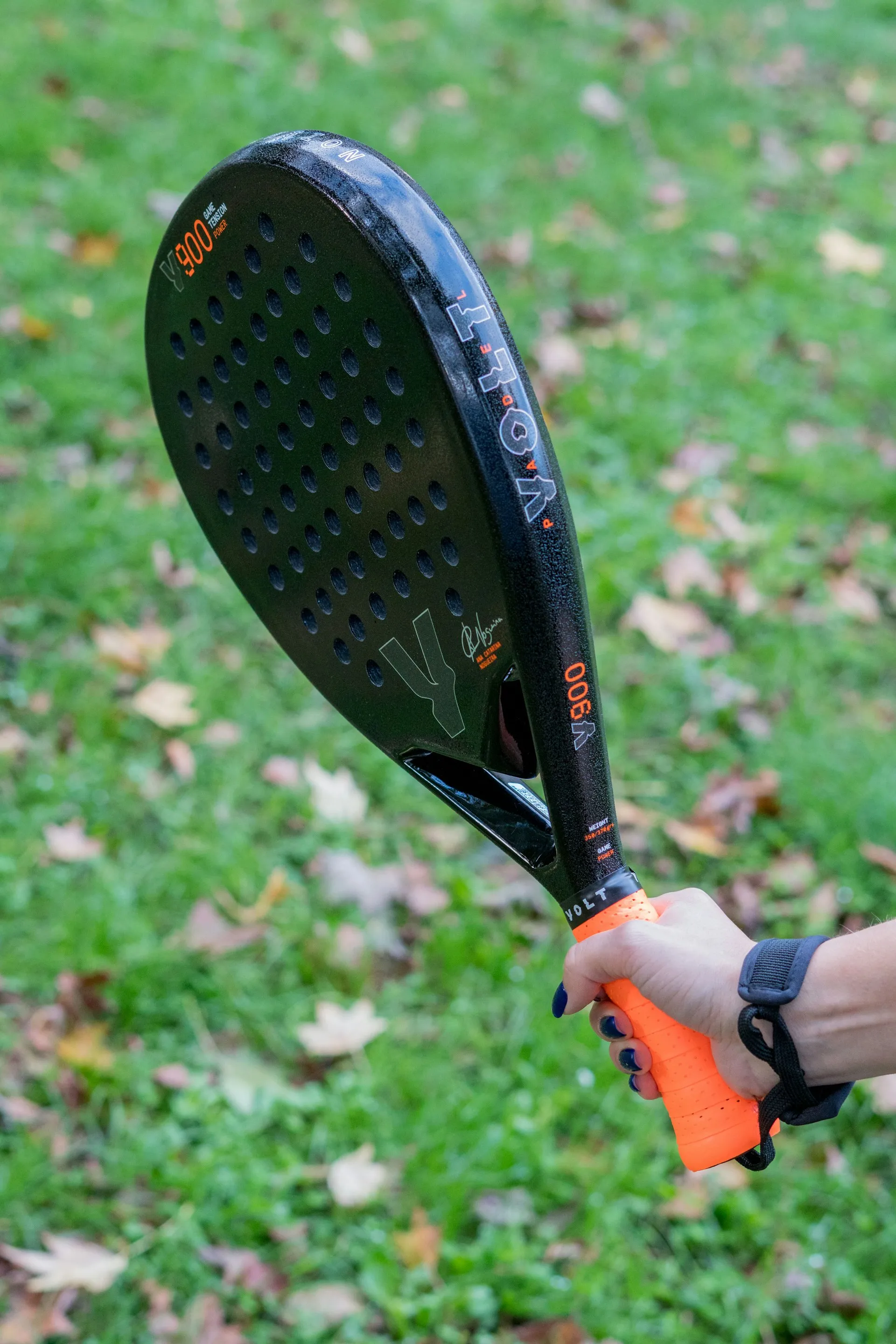
Unlike tennis rackets, a padel racket (pala) has no strings. The hitting surface is solid, made of composite materials, with holes to reduce air resistance. According to FIP rules, the racket must meet strict specifications:
Parameter
Limit
Length
up to 45.5 cm
Width
up to 26 cm
Thickness
up to 38 mm
Wrist strap
mandatory
Surface
flat, with holes
How to Choose
Consider five key factors when selecting a racket:
1. Shape
The shape determines the balance between control and power:
Shape
Balance
Control
Power
Best for
Round (redonda)
Low
★★★★★
★★☆☆☆
Beginners, control players
Teardrop (lágrima)
Medium
★★★★☆
★★★☆☆
Intermediate, all-rounders
Diamond (diamante)
High
★★☆☆☆
★★★★★
Advanced, attacking players
Round — the most popular shape. The centre of gravity is closer to the handle, providing maximum control and forgiveness for off-centre hits. Ideal for learning grip technique.
Teardrop — a compromise between control and power. A larger sweet spot makes this shape versatile.
Diamond — the centre of gravity is shifted towards the head, delivering maximum power on smashes and aggressive shots. Requires good technique and physical fitness.
2. Core Material
EVA (foam): soft core, more control, better vibration absorption. Better for beginners.
FOAM: stiffer, provides more power and rebound. For intermediate and advanced players.
Hybrid: a combination of EVA and FOAM in different zones of the racket.
3. Face Material
Fibreglass: softer feel, more control. Recommended for beginners.
Carbon fibre: stiffer feel, more power. For advanced players.
Combined: one side carbon, the other fibreglass.
4. Weight
Category
Weight
Recommendation
Light
340–355 g
Women, beginners, juniors
Medium
355–370 g
All-round option
Heavy
370–390 g
Men, attacking players
A heavier racket delivers more power but fatigues the arm faster and increases the risk of injuries.
5. Balance
Low (towards handle) — control, manoeuvrability
Medium — versatility
High (towards head) — power, shot strength
Interactive Racket Finder
Not sure which racket to pick? Use our step-by-step wizard:
Find Your Racket
What is your playing level?
What is your playing style?
What is your budget?
Recommended rackets for you
Recommendations by Level
Beginner
[EXPERT OPINION] For beginners, the optimal racket has these characteristics:
Shape: round
Core: soft EVA
Face: fibreglass
Weight: 350–365 g
Balance: low
Budget: €50–100
A round shape and soft core forgive mistakes and help you learn the basics faster.
Intermediate
Shape: teardrop
Core: medium EVA or hybrid
Face: carbon / fibreglass
Weight: 360–375 g
Budget: €100–200
Advanced
Shape: teardrop or diamond (depending on playing style)
Core: FOAM or stiff EVA
Face: carbon
Weight: 365–385 g
Budget: €150–300+
Care and Replacement
When to Replace
When cracks or frame deformation appear
When the core “dies” (loses its bounce) — usually after 6–12 months of regular play
Your first padel racket should help you learn, not fight against you. Choosing the right beginner racket means prioritising control, comfort, and a forgiving sweet spot over power and brand prestige.
What Makes a Good Beginner Racket
Before looking at specific models, understand the four characteristics that matter most for a first racket:
Shape: Round
Round rackets have the sweet spot in the centre and the weight distributed towards the handle (low balance). This gives maximum control and forgiveness on off-centre hits — exactly what beginners need.
Shape
Sweet spot
Balance
Best for
Round
Large, centred
Low (towards handle)
Beginners, defensive players
Teardrop
Medium, slightly high
Medium
Intermediate, all-round players
Diamond
Small, high
High (towards head)
Advanced, attacking players
Start with round. Move to teardrop after 6–12 months of regular play once your technique is consistent. Diamond shapes are for experienced players with refined technique.
Core: Soft EVA
The core material determines how the racket feels on impact. For beginners, soft EVA is the best choice:
Core type
Feel
Control
Power
Comfort
Durability
EVA Soft
Soft, absorbing
High
Medium
High
High
EVA Medium
Balanced
Medium
Good
Medium
High
EVA Hard
Stiff, responsive
Low
Maximum
Low
Very high
FOAM
Very soft
High
Low
Very high
Low
Soft EVA absorbs vibrations (reducing injury risk), offers a large sweet spot, and provides enough power for learning. FOAM is an alternative if you have elbow issues, but it wears out faster. Avoid hard EVA as a beginner — the stiff feel amplifies off-centre vibrations.
Weight: Under 375 g
Lighter rackets reduce strain on the elbow, wrist, and shoulder. Beginners should aim for 350–375 g — the lighter end of this range is preferable. Manufacturer weight ranges are nominal (e.g. “360–375 g”); the actual racket can often be at the lighter end. Rackets above 375 g combined with imperfect technique significantly increase injury risk.
Surface: Fibreglass
Fibreglass faces offer a softer, more forgiving feel than carbon fibre. Most beginner rackets use fibreglass or a fibreglass-carbon hybrid. Pure carbon faces are stiffer and better suited to advanced players.
Budget Rackets (€40–80)
These rackets offer genuine quality at accessible prices. Any of them is a solid first racket.
Adidas Drive Blue 2026 — ~€66
Shape: Round | Weight: 360–375 g | Core: EVA Soft Performance | Surface: Fibreglass
Structural Reinforcement technology for durability
Designed specifically for complete beginners
Excellent price-to-quality ratio
Babolat Contact 2025 — ~€50–70
Shape: Round | Weight: 340 ±10 g | Core: EVA Soft | Surface: Fibreglass
The lightest option on this list — ideal if you want minimum arm strain
Carbon + fibreglass hybrid frame for durability
Head-light balance for quick reactions at the net
Nox X-Hero Blue 2026 — ~€60–70
Shape: Round | Weight: 360–375 g | Core: HR3 White EVA (medium-soft) | Surface: 3K Fibreglass
Carbon fibre frame for solid feel
Clean, simple design from one of padel’s most respected brands
Nox X-One 2025 — ~€65
Shape: Round | Weight: 360–375 g | Core: HR3 EVA | Surface: 3K Fibreglass
Very similar to the X-Hero with proven track record
Carbon frame, excellent entry-level option
Best budget pick: Adidas Drive Blue 2026 (best all-round value) or Babolat Contact (lightest weight).
Mid-Range Rackets (€80–150)
These offer better materials and construction while remaining beginner-appropriate. A good choice if you plan to play regularly.
Teardrop shape offers slightly more power than round while maintaining a large sweet spot
Dual-density core for balanced feel
A step up for beginners ready to transition
Lok Easy Flow Gen 2 2026 — ~€180
Shape: Round | Weight: ~360–370 g | Core: EVA (medium-soft) | Surface: Flex carbon fibre
Largest sweet spot in this price range
Carbon fibre construction for responsive feel
Round shape keeps it beginner-friendly despite premium materials
Best premium pick: Lok Easy Flow Gen 2 (if you want round shape with premium build) or Bullpadel Ionic Light (if you are ready for teardrop).
Common Beginner Mistakes
Buying a diamond-shaped racket
The most common mistake. Diamond shapes have a small sweet spot high on the face and a head-heavy balance. They require precise technique to use effectively. Roughly 80% of points in padel are won through control, placement, and consistency — not power.
Choosing too heavy a racket
Many players (especially men) instinctively pick the heaviest available. A heavy racket with imperfect technique multiplies the force on your elbow and wrist, increasing injury risk. Stay under 375 g — the lighter, the better for learning.
Prioritising power over control
Power comes from technique, not from your racket. A control-oriented racket helps you build good habits faster. The power will come naturally as your technique develops.
Buying based on price or design
An expensive racket is not a better beginner racket. Models above €200 are typically designed for advanced players. A €60–120 racket with the right characteristics (round, soft EVA, under 375 g) will serve a beginner better than a €300 pro model.
Copying professional players
Professionals use stiff, heavy, diamond-shaped rackets because they have years of refined technique. Their equipment choices are optimised for professional play, not for learning.
Skipping the demo
Every player is different. What works for one person may not work for another. Most clubs offer demo rackets — test before you buy. A coach can also assess your playing style and give a personalised recommendation.
Compare All Rackets
Filter by shape and click column headers to sort:
Filter by shape:
Brand
Model
Shape
Weight
Control
Power
Price
Adidas
Drive Blue 2026
round
360-375 g
★★★★★
★★☆☆☆
€66
Babolat
Contact 2025
round
330-350 g
★★★★★
★★☆☆☆
€60
Nox
X-Hero Blue 2026
round
360-375 g
★★★★☆
★★★☆☆
€65
Nox
X-One 2025
round
360-375 g
★★★★☆
★★★☆☆
€65
Bullpadel
Indiga CTR 2026
round
360-370 g
★★★★★
★★☆☆☆
€90
Head
Extreme EVO 2026
round
355-365 g
★★★★☆
★★★☆☆
€90
Nox
ML10 Pro Cup Silver 2025
round
360-375 g
★★★★★
★★★☆☆
€125
Nox
Equation Soft Advanced 2026
round
360-375 g
★★★★☆
★★★☆☆
€130
Bullpadel
Ionic Light 2026
teardrop
360-370 g
★★★★☆
★★★☆☆
€150
Lok
Easy Flow Gen 2 2026
round
360-370 g
★★★★★
★★★☆☆
€180
Head
Delta Motion 2026
teardrop
360-375 g
★★★☆☆
★★★★☆
€120
Adidas
Metalbone CTRL 2026
round
360-375 g
★★★★★
★★★☆☆
€200
Babolat
Viper Air 2026
diamond
365-380 g
★★☆☆☆
★★★★★
€250
Bullpadel
Hack Elite 2026
diamond
370-385 g
★★☆☆☆
★★★★★
€280
Nox
AT10 Genius 2026
teardrop
365-380 g
★★★☆☆
★★★★☆
€220
Quick Reference
What to look for
Recommended
Avoid
Shape
Round
Diamond
Core
EVA Soft or FOAM
EVA Hard
Weight
350–375 g
380+ g
Surface
Fibreglass or hybrid
Pure carbon
Balance
Low (head-light)
High (head-heavy)
Budget
€60–150
Overspending on pro models
When to Upgrade
Consider moving to a more advanced racket when:
You have played regularly for 6–12 months
Your technique is consistent enough that off-centre hits are rare
You feel limited by the racket’s power, not its control
A coach confirms you are ready for a different shape or balance
There is no rush. Many intermediate players continue using round rackets successfully. The shape is a preference, not a progression requirement.
A padel ball looks similar to a tennis ball but has lower pressure, resulting in a lower, more controlled bounce. This is one of the reasons why padel differs from tennis in rally dynamics.
A padel ball is a yellow, spherical ball with a felt covering. According to FIP standards, it must meet these specifications:
Parameter
Value
Diameter
6.35–6.77 cm
Weight
56–59.4 g
Bounce
135–145 cm (when dropped from 2.54 m onto a hard surface)
Internal pressure
4.6–5.2 kg/cm²
Colour
Yellow or white
By comparison, a tennis ball has a pressure of 5.5–6.4 kg/cm² and a higher bounce. The reduced pressure makes padel balls slower and more predictable — ideal for play in the enclosed space of a court.
How to Choose
Approved Balls
Only FIP-approved balls are used for official tournaments. Major brands include:
Head (Padel Pro, Padel Pro S) — official ball of Premier Padel
Bullpadel (Premium Pro) — popular in Spain
Wilson (Padel Rush, X3) — good value for money
Babolat (Padel+) — consistent pressure
What to Look For
Pressure. New balls from a can have optimal pressure. Balls without a can (in bags) may have already lost some pressure.
Felt covering. Should be even, with no bald spots.
Can. A sealed can preserves pressure. A hiss when opening indicates integrity.
Altitude. At courts located at high altitude, the ball bounces higher. Some manufacturers produce special “high-altitude” balls.
Types and Classification
By Pressure
Pressurised: balls with internal pressure. Supplied in sealed cans of 3. Optimal play for the first 2–4 hours.
Pressureless: the ball gets its elasticity from wall thickness. Retains characteristics longer but feels less comfortable. Suitable for training.
By Speed
Fast: for slow surfaces and cold weather
Standard (Regular): for most conditions
Slow (Padel+): for fast surfaces and hot weather
Recommendations by Level
Beginner: any standard balls. No need to pay extra for tournament-grade — the difference is imperceptible at entry level.
Intermediate: canned balls from reputable brands. Change balls every 2–3 matches.
Advanced: tournament balls (Head Padel Pro, Bullpadel Premium Pro). A fresh can for every match.
Care and Replacement
When to Change Balls
Padel balls lose pressure faster than tennis balls due to their initially lower pressure:
Tournaments: a fresh can for every match
Recreational play: every 2–4 matches (6–12 hours)
Training: balls can be used until the felt wears off
Signs of a Worn Ball
Low bounce (below knee height when dropped from an outstretched arm)
A “dead” feel on impact
Worn felt
The ball doesn’t produce the characteristic “ping” when squeezed
Storage
Unopened cans keep for up to 2 years
Opened balls can be placed in a pressuriser to extend their life
Do not store in heat or frost
Frequently Asked Questions
Can you play padel with tennis balls?
Technically yes, but it’s not recommended. Tennis balls bounce too high and fast for the enclosed court, disrupting rally dynamics.
How many balls do you need for a match?
The standard is 3 balls (one can). For longer sessions, it’s better to have 2 cans.
The right shoes are the foundation of safety and performance on a padel court. Specialised padel shoes provide grip on the surface, ankle support, and cushioning during sharp lateral movements.
A racket, balls, and shoes form the core of your padel kit. But it is the accessories that make the game comfortable, protect your gear, and help you stay focused on court.
An overgrip is a thin wrap applied over the base grip of your racket handle. It is one of the most important — and most affordable — accessories in padel.
Why You Need an Overgrip
Provides a secure grip, especially when your hands sweat
Increases comfort and reduces vibration
Allows slight adjustment of handle thickness
Easy to replace without changing the base grip
Types of Overgrips
Type
Characteristics
When to Use
Dry
Absorbs moisture, textured surface
Hot weather, heavy perspiration
Tacky
Sticky surface, firm contact
Cool weather, dry hands
Perforated
Ventilation holes
All-round option
Replacement Frequency
Replace your overgrip every 2–4 weeks with regular play (2–3 times a week). If the overgrip feels slippery or has lost its texture, it is time to swap it out — even if less time has passed.
[EXPERT OPINION] Popular brands include Wilson Pro Overgrip, Babolat VS Original, and Bullpadel. Any mid-range overgrip will serve a beginner well — the differences become noticeable at a more advanced level.
Racket Frame Protectors
A frame protector is protective tape applied to the rim of the racket. In padel, the court is enclosed by walls, and the racket frequently contacts the glass during wall shots — this is perfectly normal.
Why They Are Essential
Shields the frame from chips and cracks caused by wall contact
Extends racket lifespan by 30–50%
Costs a fraction of a new racket
Easily replaced when worn
Types of Protectors
Standard — thin transparent or coloured tape for the top section of the rim
[EXPERT OPINION] For beginners, at least a standard protector is a must. New players hit the walls more often, and without a protector the racket deteriorates quickly.
Vibration Dampeners
A vibration dampener is a small device fitted to the racket to reduce vibration on impact. They are less common in padel than in tennis but still have their following.
Pros and Cons
Pros
Cons
Reduces vibration on off-centre hits
May alter the feel of the shot
Helps with elbow or wrist issues
Minimal effect on soft-core EVA rackets
Inexpensive accessory
Not all models are compatible with padel rackets
[EXPERT OPINION] Most padel rackets with an EVA core already offer good vibration absorption. A dampener makes sense if you use a stiff racket with a FOAM core or if you experience discomfort in your arm.
Bags and Backpacks
A dedicated padel bag is not a luxury — it is a matter of convenience. A standard backpack is not designed for the shape of a padel racket and lacks the necessary compartments.
What to Look For
Capacity — room for 2–3 rackets (main plus spare)
Shoe compartment — a separate, ventilated pocket for your shoes
Thermal insulation — protects your racket from overheating (especially important in summer)
Accessory pockets — for overgrips, protectors, balls, a towel
Zip quality — cheap zips break quickly with regular use
Types of Bags
Type
Capacity
Best For
Backpack
1–2 rackets
Casual players, cycling or walking to court
Racket bag (paletero)
2–4 rackets
Regular players
Large bag
4–6 rackets
Advanced players, coaches
Comfort Accessories
Wristbands
Wristbands absorb sweat and prevent it from reaching the handle. They are particularly useful in hot weather or during intensive training sessions. Choose cotton or moisture-wicking synthetic options.
Headbands and Caps
These keep sweat and sun out of your eyes. On outdoor courts, a cap or visor is practically essential. Look for models with ventilation.
Sports Sunglasses
For outdoor play in sunny conditions, sports sunglasses are invaluable. Look for:
A secure fit (they must not slip during movement)
Polarised lenses (to reduce glare from the glass walls)
Impact-resistant lenses
Accessory Overview Table
Accessory
Purpose
Price Range
Necessity
Overgrip
Secure grip, comfort
€2–5 (pack of 3)
Essential
Frame protector
Protects rim from impacts
€3–8
Essential
Vibration dampener
Reduces vibration
€3–7
Optional
Padel bag
Transports your gear
€30–80
Recommended
Wristbands
Absorbs sweat
€5–10 (pair)
Recommended
Headband / cap
Sun and sweat protection
€10–20
Recommended (outdoor)
Sports sunglasses
Eye protection outdoors
€20–60
Optional (outdoor)
What a Beginner Needs
[EXPERT OPINION] The minimum starter accessory kit for a new player:
Overgrips (pack of 3) — ~€3–5
Frame protector — ~€5
Wristbands (pair) — ~€5–10
Backpack or bag — ~€30–50
Total starting budget: €40–70 — a modest investment that noticeably improves comfort and protects your racket.
Add other accessories as needed: a vibration dampener if you feel discomfort in your arm, sports sunglasses if you often play on outdoor courts.
Technology is transforming how padel is played, tracked, and improved. From booking courts to AI video analysis and smart sensors, the padel tech ecosystem has grown rapidly alongside the sport itself.
Court Booking
Playtomic
The dominant platform with 4.7 million players, 6,000+ clubs across 66 countries, and 18,000+ courts. Playtomic processes over €346 million in transactions annually.
Key features:
Book courts and split payments with friends
Join Open Matches — public games filtered by level and location
Dynamic rating system (0–7 scale) that adjusts after each match
Match statistics: wins, losses, and playing history
Playtomic offers a Premium tier that removes booking fees, adds priority notifications, and provides expanded statistics. Available on iOS, Android, and web.
MATCHi
A veteran platform (10+ years) with 2,600+ venues in 30 countries, primarily strong in Scandinavia and Northern Europe. Covers padel, tennis, badminton, and other racket sports. Features include court filtering by sport and surface type, inviting friends, memberships, and leagues.
Padel Mates
Focused on community with smart match suggestions based on skill level and preferred club. Features include map discovery, in-app chat, and tournament creation. PRO subscription available ($6/month). Partnered with Rocket Padel across UK and Denmark clubs.
Video Analysis and AI Cameras
AI-powered court cameras are one of the biggest technology trends in padel. These systems record matches, generate automatic highlights, and provide detailed performance statistics.
Clutch
AI camera system installed on the court. Automatically selects highlights, tracks shot statistics, analyses court coverage, and assigns a dynamic player level. Offers live streaming to YouTube. Clubs typically charge €5–10 per match for access. Two tiers: Camera Court (recording + streaming, €49/month) and AI Court (highlights + stats, €199/month).
Padelytics
AI video analysis that works with standard court cameras. Tracks distance and speed, generates heatmaps, analyses attack/defence/transition phases, measures partner synchronisation, and provides personalised coaching tips. Insights are delivered to a mobile app within minutes of finishing a match.
GameCam (GAMETRAQ)
4K AI camera system producing 30-second highlights, distance tracking, ball possession percentages, error analysis, and zone heatmaps. Clubs report ROI of €600–750 per month per court. Software license: €600/year after the first year.
PlaySight SmartCourt
Multi-angle camera installation (1–4 per court) offering instant replay, automatic highlights, SmartScore statistics, on-screen drawing tools, and slow-motion. Partnered with Padel Haus (30+ courts, 35 cameras). Cost for players: approximately €5 per match.
Smart Sensors
PadelPlay Sensor
An emerging technology: a 12-gram sensor that attaches to the racket handle and classifies shots in real time using a 6-axis accelerometer and gyroscope.
The sensor has 8 hours of battery life, IP54 protection for outdoor use, and fits approximately 85% of racket models. Funded through Kickstarter (€21,000+ raised) and named Startup of the Year at the Padel World Summit.
Wearable Tech
Padelio (Apple Watch)
The leading padel wearable app for Apple Watch. Uses machine learning to recognise shot types (lob, volley, bandeja, vibora, smash) and whether they are forehand or backhand. Tracks calories and heart rate. Features AI analysis of strengths and weaknesses, plus shareable statistics stickers for social media.
Smartwatch Support
Device
Padel support
Apple Watch
No native “Padel” mode — use Tennis or Other. Third-party apps: Padelio, PADEL’EM, Padel Stats AI
Garmin
Padel sport mode available in newer models (Vivoactive 6+), plus third-party Connect IQ apps
Fitbit
No padel support despite community requests since 2015
PADEL’EM
Tracks match scores through a smartwatch (Apple Watch WatchOS 10.6+ / WearOS 2+), records points and errors in real time, and generates performance graphs. Syncs fitness data (calories, heart rate, steps, distance) with Apple Health. Free.
Scoring and Tournament Apps
PadelMix
Free app for organising Americano and Mexicano tournaments. Automatically generates rounds, rotates pairs, handles odd player counts, and provides live result sharing. Available on iOS and Android.
Padel Stats AI
Records match statistics through Apple Watch: winning points, unforced errors, winning serves, return errors, double faults. The Pro version adds shot-type breakdowns (volley, smash, vibora). Shareable via QR code.
Rankedin
Platform for tournament management including brackets, scoring, official player rankings (integrated with national federations), and real-time score updates. The companion app Padelin provides tournament search and player statistics.
Training Apps
The Padel School
300+ video lessons from beginner to advanced with a personalised training roadmap, interactive challenges, video feedback from coaches, and Q&A sessions. Subscription: £15/month or £144/year.
Training Padel
300+ exercises with animations and video demonstrations, session builder, favourites, progress calendar, and ready-made training programmes. Subscription-based.
GOWOD
Mobility and stretching app covering 50+ sports including padel. Personalised protocols based on an initial assessment, pre-game and post-game routines (8–12 minutes). Reports +18% mobility improvement over 60 days. Price: $10/month. The exercise library (300+ exercises) is free.
Choosing the Right Tech
Goal
Recommended
Find partners and book courts
Playtomic (largest network)
Analyse your matches on video
Clutch or Padelytics (if installed at your club)
Track shots and fitness
Padelio (Apple Watch) or PADEL’EM
Organise social tournaments
PadelMix (free)
Improve technique with drills
The Padel School or Training Padel
Track detailed match stats
Padel Stats AI
Most of these tools are free or low-cost. Start with Playtomic for finding games, then add tracking and analysis tools as your interest in improvement grows.