Padel Shoes
The right shoes are the foundation of safety and performance on a padel court. Specialised padel shoes provide grip on the surface, ankle support, and cushioning during sharp lateral movements.
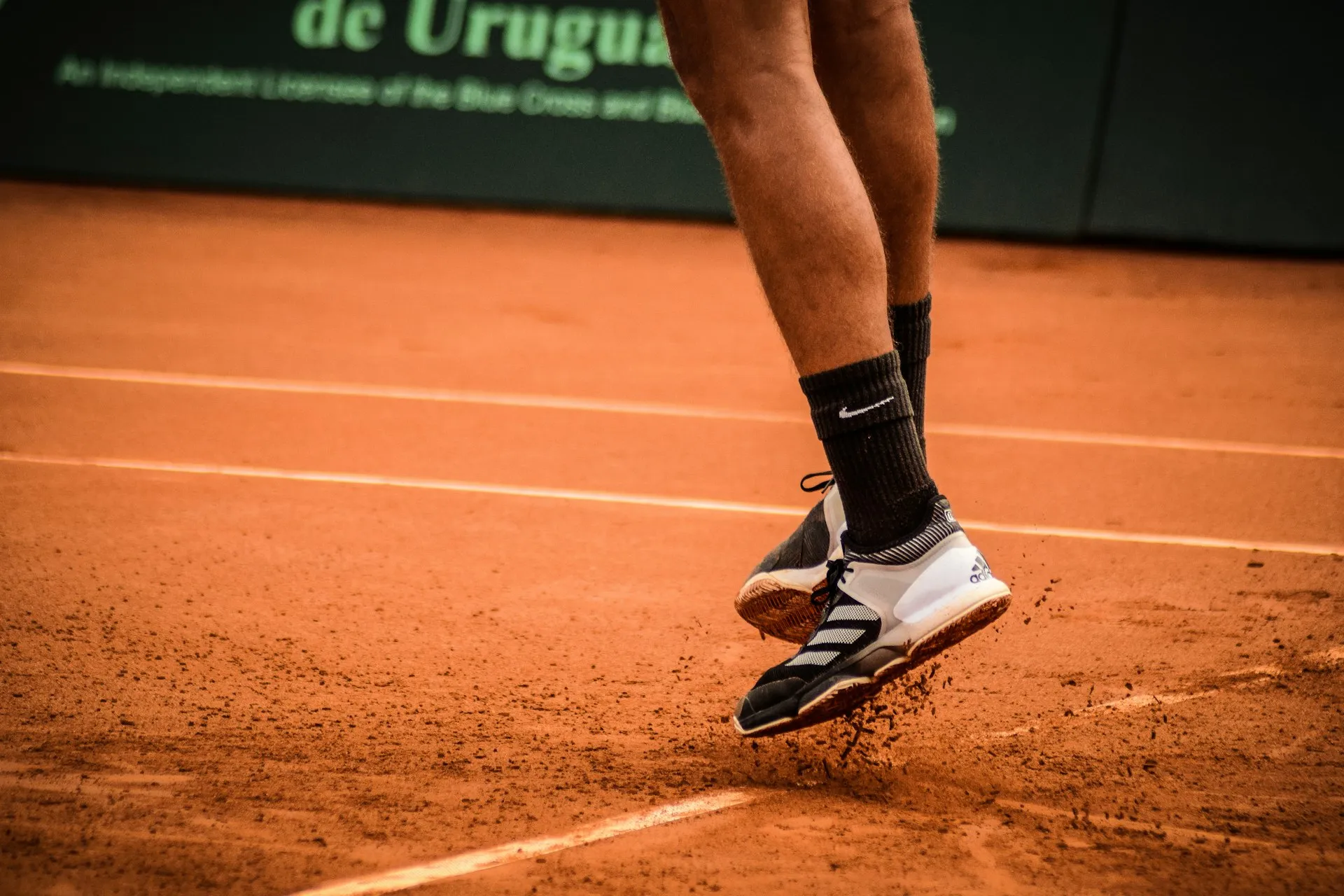
Description
Padel shoes are designed specifically for play on courts with artificial surfaces. Unlike running or everyday trainers, they are optimised for:
- Lateral movement — 70–80% of padel movement is lateral
- Sharp stops and starts
- Grip on sandy surfaces
- Cushioning during jumps
How to Choose
1. Outsole
The outsole is the most important criterion. There are three main types:
| Outsole Type | Pattern | Surface | Features |
|---|---|---|---|
| Herringbone | Zigzag | Artificial grass | Best grip, versatile |
| Omni (dots) | Small studs | Artificial grass with sand | Good slide, good balance |
| Mixed | Combination | Any | Compromise |
[EXPERT OPINION] For most players, a herringbone outsole is optimal — it provides reliable grip on any surface type.
2. Ankle Support
Padel requires constant lateral movement and split-steps. Shoes must provide:
- Reinforced side walls
- A rigid heel counter
- A snug but not constricting fit
3. Cushioning
Good cushioning reduces joint stress and helps prevent common injuries:
- Heel: the primary cushioning zone, absorbing impact on landing
- Forefoot: important for push-off and sharp starts
- Technologies: Gel (ASICS), Adiprene (Adidas), Fresh Foam (New Balance)
4. Weight
- Light (280–320 g) — agility, but less support
- Medium (320–360 g) — optimal balance
- Heavy (360–400 g) — maximum support, but slower
5. Ventilation
Courts get hot. Shoes with mesh panels provide airflow and reduce sweating.
Recommendations by Level
Beginner
- Specialised padel shoes are not essential for your first 3–5 matches
- Tennis shoes with a herringbone outsole are acceptable
- Not suitable: running shoes, plimsolls, basketball shoes — they aren’t designed for lateral loads
- Budget: €50–80
Intermediate
- Dedicated padel shoes with good cushioning
- Brands: Asics, Babolat, Bullpadel, Nox, Wilson
- Budget: €80–130
Advanced
- Top-tier models with maximum support and cushioning
- For intensive play (3–5 times a week) — 2 pairs in rotation
- Budget: €100–180+
Types and Classification
By Surface Type
- For artificial grass with sand (standard) — omni or herringbone
- For concrete — herringbone only with reinforced tread
- All-round — herringbone suits all surface types
By Season
- Summer — mesh upper, maximum ventilation
- Winter / indoor courts — denser upper, warmer
Care and Replacement
When to Replace
- Worn-out tread (no visible pattern) — dangerous! No grip
- Deformed side walls — no support
- Collapsed cushioning — discomfort and joint strain
- On average: every 4–8 months when playing 2–3 times a week
Care
- Air out after every match
- Don’t dry on a radiator — causes deformation
- Shake out sand after playing (it clogs the tread)
- Use only on court — don’t walk on tarmac
If this article was useful — help us write the next one.
☕ Support on Ko-fi