Spanish Court Phrases for Padel
Padel was born in Mexico and flourished in Spain, making Spanish the sport’s lingua franca. Knowing key Spanish commands and phrases will help you communicate confidently on court, connect with partners from different countries, and follow professional broadcasts with deeper understanding.
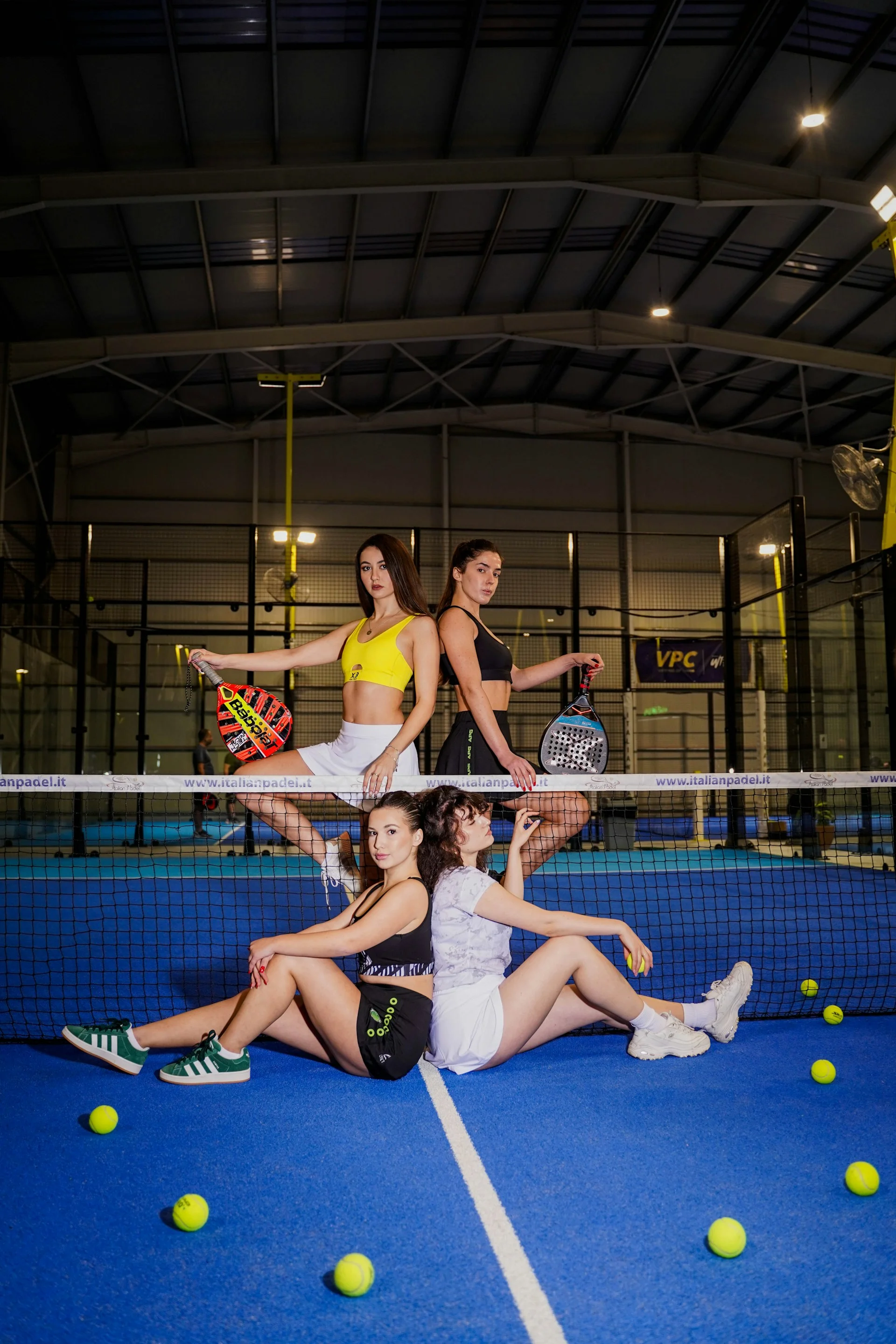
Photo: erjola qerimi / Unsplash
Photo: erjola qerimi / Unsplash / Unsplash LicenseWhy Learn Spanish Phrases
Even if you play padel far from Spain, Spanish terminology permeates the sport at every level. Professional commentators use Spanish shot names. Coaches trained in Spain or Argentina often give instructions in Spanish. At international tournaments, Spanish calls ring out on every court.
Moreover, many padel terms have no precise equivalents in other languages. The word bandeja (bahn-DEH-hah) describes a very specific shot that cannot be adequately conveyed as “tray shot” — the meaning is lost in translation. Knowing the original terminology makes your communication more precise.
Partner Communication
Communication between partners is the foundation of successful padel play. In a doubles sport, a split second can determine the outcome of a rally, so commands must be short, loud, and unambiguous. Spanish commands are perfectly suited for this: they are concise and intuitive.
- ¡Tuya! (TOO-yah) — “Yours!” The most common call on court. Shout it when the ball is heading into your partner’s zone and you are not going to play it. Clear ball assignment prevents collisions and missed shots.
- ¡Mía! (MEE-yah) — “Mine!” The opposite call: you are taking this ball. Especially important when the ball is flying between you and your partner.
- ¡Déjala! (deh-HAH-lah) — “Leave it!” Do not play this ball — it will go out. Requires good trajectory reading and trust between partners.
- ¡Sube! (SOO-beh) — “Come up!” A command for your partner to move forward to the net. Net control is a key tactical position in padel, and a well-timed approach often decides the rally.
- ¡Atrás! (ah-TRAHS) — “Back!” Move away from the net toward the back wall. Used when opponents are preparing a lob or deep shot.
- ¡Cambia! (KAHM-byah) — “Switch!” A call to swap court positions: the player on the right moves to the left side and vice versa. Switching sides is a common tactic for creating unusual situations.
- ¡Tuya, tuya! (TOO-yah, TOO-yah) — repeated for emphasis. When the situation is urgent, doubling the call helps your partner react faster.
- ¡Yo! (YOH) — “Me!” A brief alternative to “¡Mía!” One syllable — maximum communication speed.
Scoring and Play
The scoring system in padel is identical to tennis, but in Spanish the score sounds different. Understanding these words is essential when you play without an umpire and call the score yourselves.
- Saque (SAH-keh) — serve. The first shot in each rally, performed underhand.
- Iguales (ee-GWAH-les) — “Equal,” the equivalent of deuce (40-40). In Spanish padel clubs, you will hear this word dozens of times per match.
- Ventaja (ben-TAH-hah) — advantage. The point after iguales gives one pair ventaja.
- Juego (HWEH-goh) — game. “Juego para nosotros” — “Game for us.”
- Set (SET) — set. Used unchanged, just as in tennis.
- Cambio (KAHM-byoh) — change of ends. Occurs after every odd game.
- Punto (POON-toh) — point. “Primer punto” (pree-MEHR POON-toh) — first point.
- Falta (FAHL-tah) — a fault on the serve. “Doble falta” (DOH-bleh FAHL-tah) — double fault.
- Let (LET) — a serve replay when the ball clips the net. Borrowed from English.
Shot Names
Many padel shots have only Spanish names, which have become firmly established in international terminology. Knowing these words is essential for understanding tactical discussions and coaching instructions.
- Bandeja (bahn-DEH-hah) — “tray.” A controlled overhead shot executed when approaching the net. One of padel’s signature strokes with no tennis equivalent. Learn more about basic strokes.
- Vibora (VEE-boh-rah) — “viper.” An aggressive variant of the bandeja with sharp sidespin. After bouncing off the glass, the ball veers sideways, making the opponent’s return difficult.
- Globo (GLOH-boh) — lob, a high shot over the opponents toward the back wall. The primary tool for wresting net control away from the opposing pair.
- Remate (reh-MAH-teh) — smash, a powerful finishing overhead shot. “Remate por tres” (reh-MAH-teh pohr TREHS) — a smash where the ball exits the court over the back wall.
- Chiquita (chee-KEE-tah) — “little one.” A soft, low shot aimed at the opponents’ feet near the net. Used to create an opportunity to approach the net.
- Bajada (bah-HAH-dah) — a shot played on the descent after the ball bounces off the back wall.
- Volea (boh-LEH-ah) — volley, a shot hit before the ball bounces on the ground.
- Rulo (ROO-loh) — a shot with topspin and sidespin that causes the ball to “stick” to the wall after bouncing.
Encouragement and Emotion
Padel is an emotional sport, and supporting your partner plays a huge role in team dynamics. Spanish phrases of encouragement bring energy and create a positive atmosphere on court.
- ¡Vamos! (VAH-mohs) — “Let’s go!” / “Come on!” The universal call you will hear on every padel court in the world. Used both for self-motivation and to support your partner.
- ¡Buena! (BWEH-nah) — “Nice shot!” The standard praise after a good stroke.
- ¡Grande! (GRAHN-deh) — “Great!” / “Huge!” A more emotional form of praise.
- ¡Bien jugado! (byehn hoo-GAH-doh) — “Well played!” An appreciation of a tactically smart rally, not necessarily a powerful shot.
- ¡Qué punto! (keh POON-toh) — “What a point!” An exclamation after a particularly beautiful or intense rally.
- ¡Eso es! (EH-soh EHS) — “That’s it!” / “Exactly!” Approval of the right decision or shot.
- ¡Venga! (BEHN-gah) — “Come on!” / “Go for it!” An equivalent of “¡Vamos!” widely used in Spain.
Court and Equipment
Court-related terminology is frequently used when discussing tactics and in coaching instructions. Knowing these words will help you navigate Spanish-language training materials.
- Pista (PEES-tah) — court. In Spain, the word “pista” is used rather than “cancha” (more common in Latin America).
- Red (REHD) — the net dividing the court.
- Pared (pah-REHD) — wall. “Pared de fondo” (pah-REHD deh FOHN-doh) — back wall.
- Cristal (krees-TAHL) — glass. The back walls and part of the side walls are made of glass.
- Malla (MAH-yah) / Rejilla (reh-HEE-yah) — metallic mesh. The upper portion of the side walls and part of the court structure.
- Pala (PAH-lah) — padel racket. Do not confuse it with the tennis “raqueta” (rah-KEH-tah).
- Pelota (peh-LOH-tah) — ball.
- Grip (GREEP) — racket grip/wrap. Borrowed from English.
- Overgrip (OH-vehr-greep) — additional wrap applied over the base grip.
Learn more about court structure.
Tips for Using Spanish Phrases
A few practical recommendations for making effective use of Spanish phrases on court:
- Start with partner commands. “¡Tuya!”, “¡Mía!”, and “¡Déjala!” — three phrases that will immediately improve your doubles game.
- Call loudly and clearly. The court is noisy: ball impacts, footsteps, opponents’ calls. A quiet command is a useless command.
- Do not worry about your accent. Spanish players will appreciate your effort to speak their language, even with imperfect pronunciation.
- Watch professional matches. Premier Padel broadcasts are an excellent way to get accustomed to how commands sound in real gameplay.
- Practice with your partner. Agree to use Spanish commands during training sessions — after a few practices, they will become second nature.
If this article was useful — help us write the next one.
☕ Support on Ko-fi