In brief: Padel is a doubles racket sport played on an enclosed court measuring 10 by 20 meters with glass and metal mesh walls. The rules are governed by the International Padel Federation (FIP) and cover court specifications, ball and racket requirements, service, rally play, and scoring. This article provides a structured overview of all the main sections of the official regulations.
Photo: José Alejandro Cuffia / UnsplashPhoto: José Alejandro Cuffia / Unsplash / Unsplash License
The Court
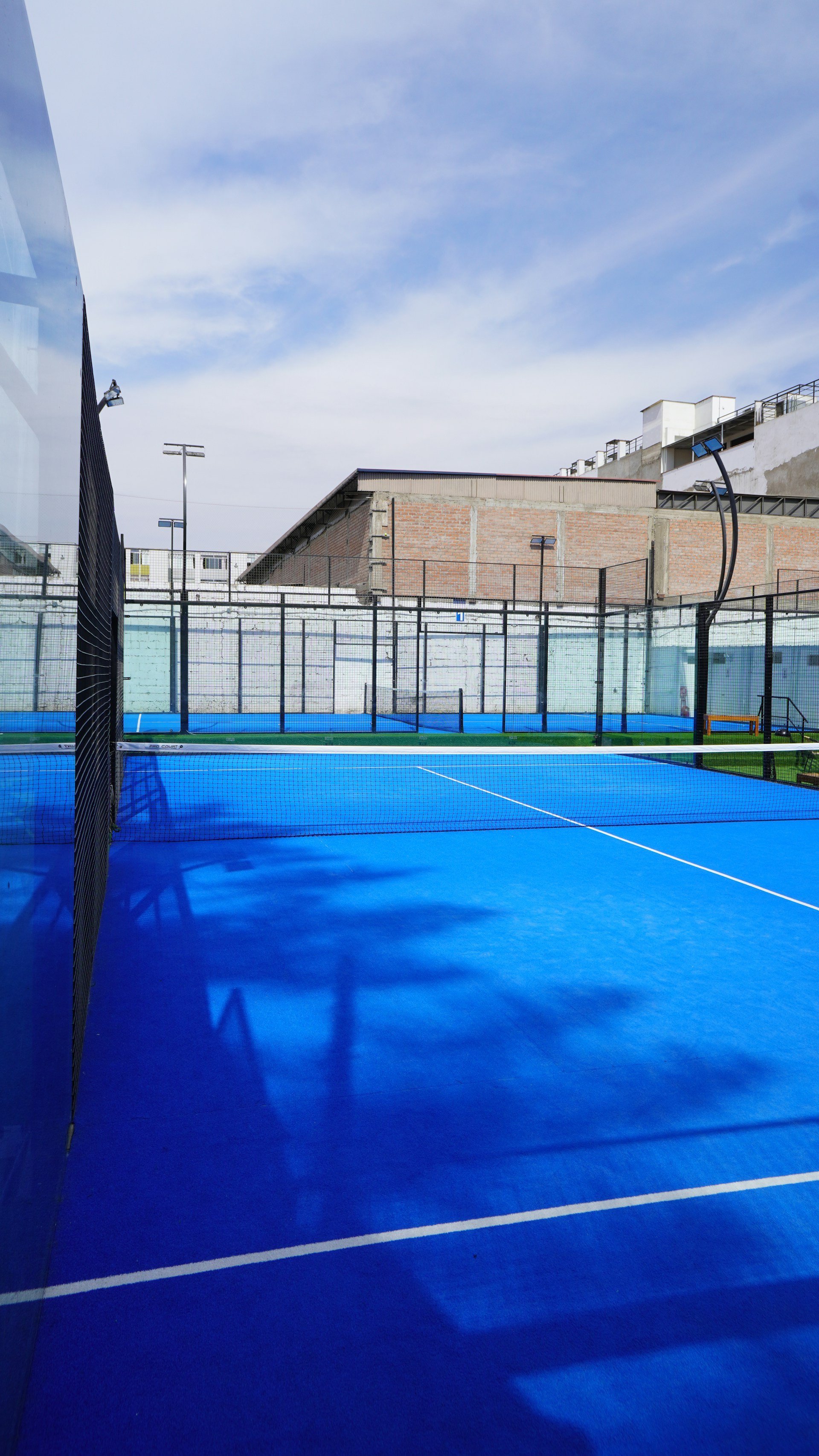
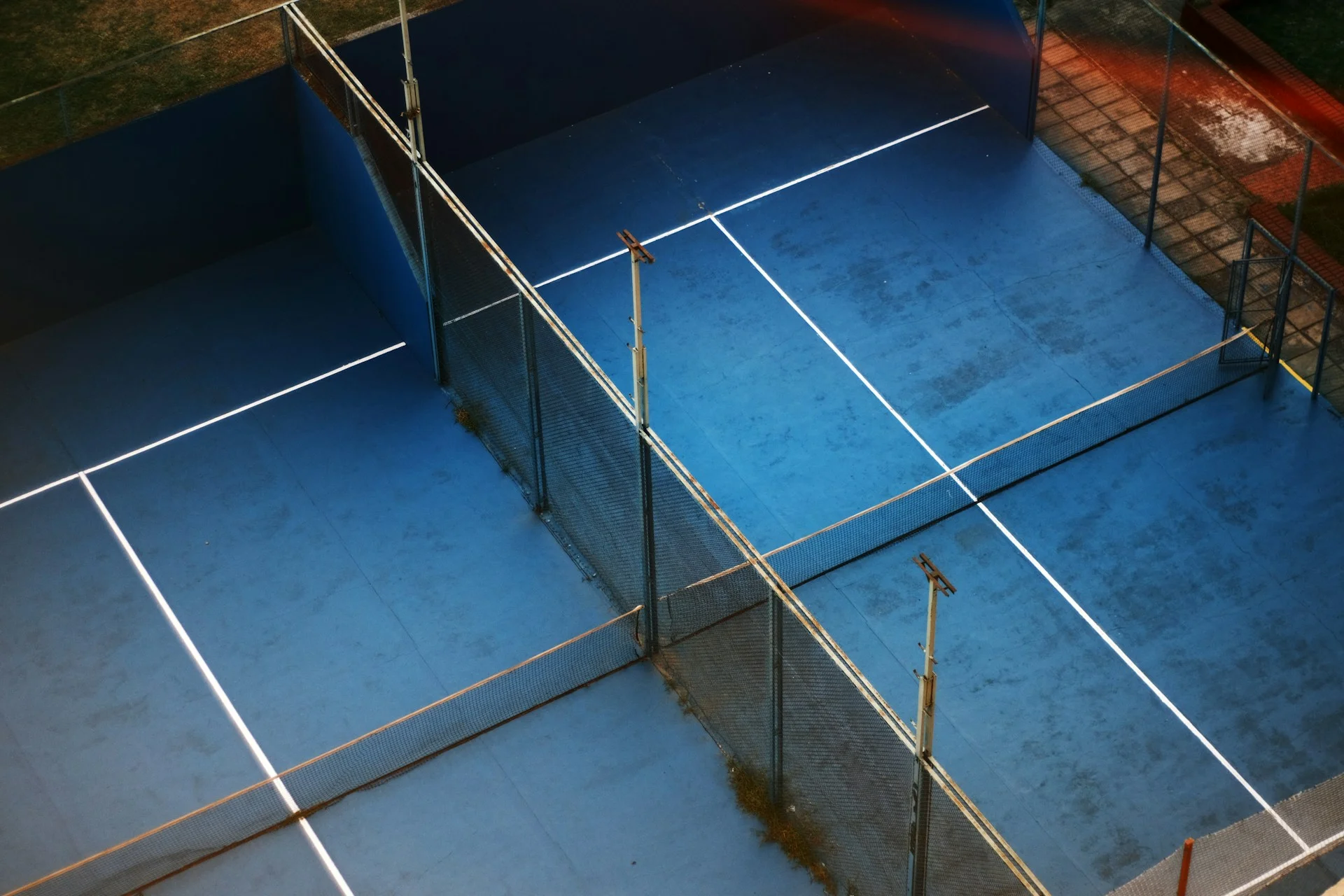
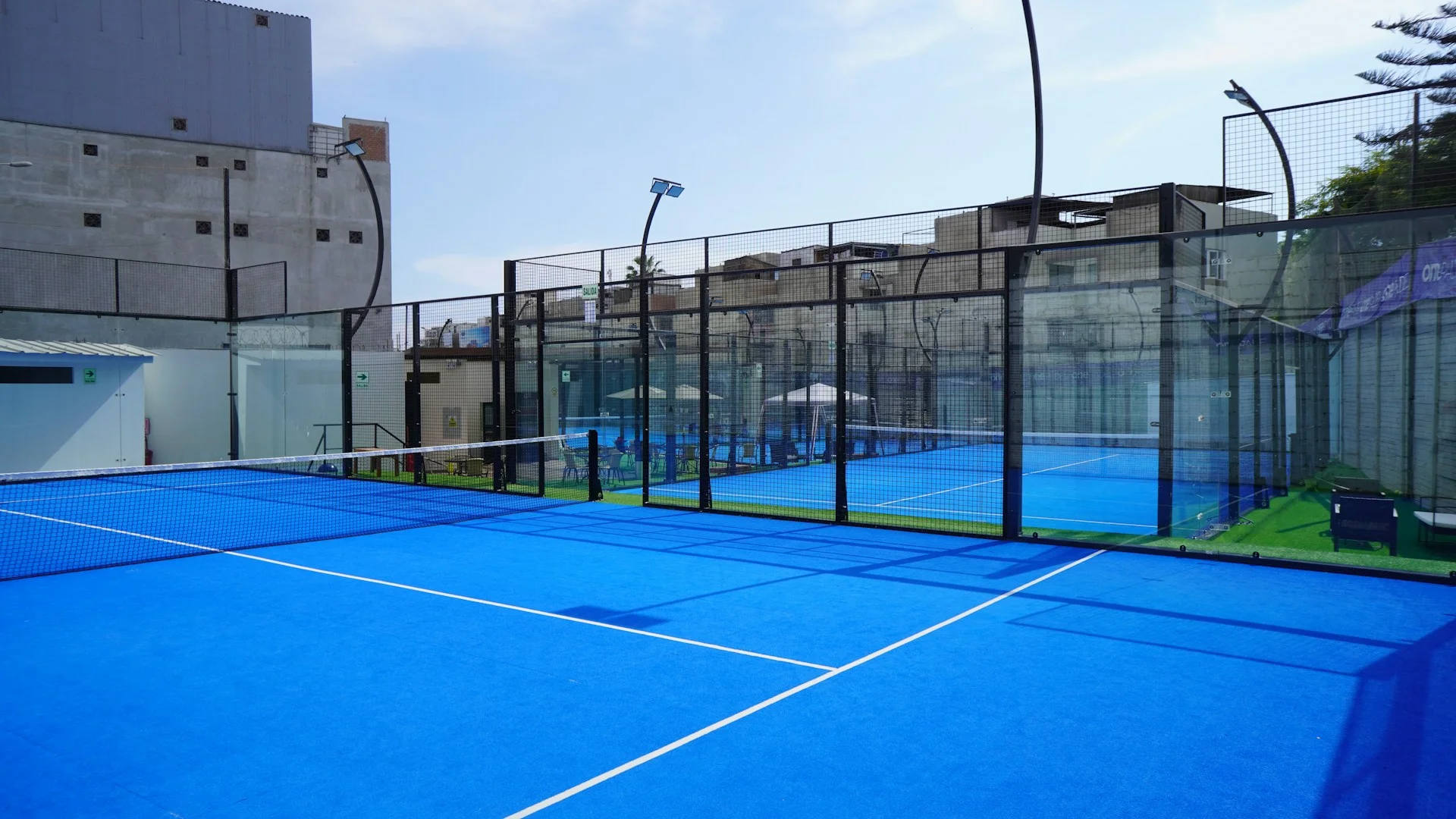
A padel court is a rectangle 10 m wide and 20 m long, divided by a net at the center. The net height is 88 cm at the center and 92 cm at the posts. The court is enclosed by walls: back walls are 4 meters high (the lower 3 meters made of glass, the upper meter of metal mesh), and side walls vary in height. The floor surface may be artificial grass, concrete, or another approved material.
On either side of the net, service boxes are formed by the center service line and the service line located 6.95 m from the net. All court lines are 5 cm wide.
FIP regulates the exact specifications of the ball for official competition:
Diameter: 6.35 to 6.77 cm
Weight: 56 to 59.4 g
Bounce height: 135 to 145 cm when dropped from a height of 2.54 m onto a hard surface
Pressure: 4.6 to 5.2 kg/cm² at sea level
Since 2026, the ball is no longer restricted to yellow or white — any color is acceptable provided it contrasts with the court surface. Only FIP-approved balls may be used at official tournaments. Balls are replaced at the referee’s discretion or per tournament regulations — typically after a set number of games.
The Racket
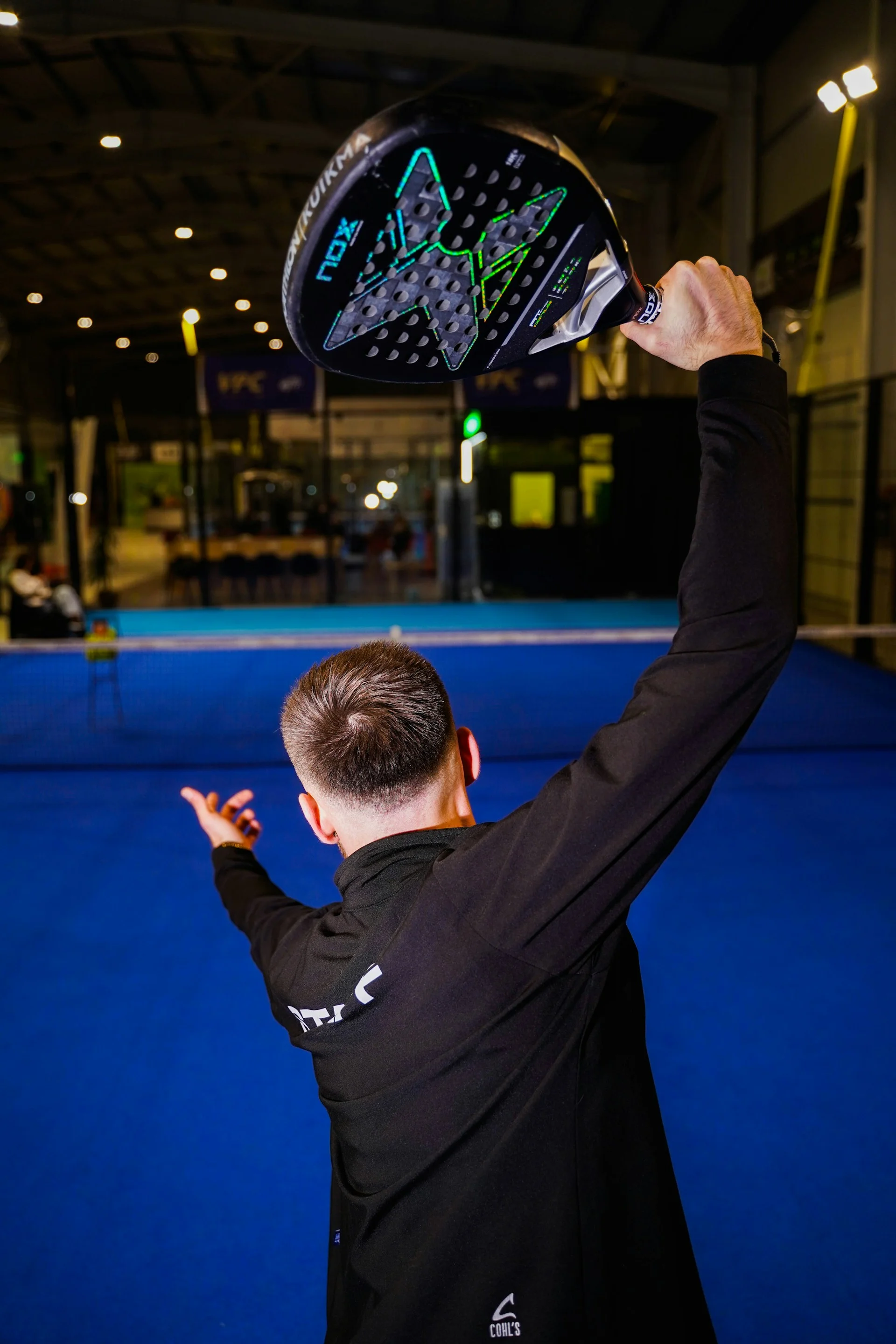
A padel racket differs significantly from a tennis racket. Key FIP requirements:
Maximum length: 45.5 cm (including the handle)
Maximum width: 26 cm
Maximum thickness: 38 mm
Hitting surface: perforated (holes 9–13 mm in diameter), no strings
Wrist strap: mandatory during play
The racket may be made from various materials — carbon fiber, fiberglass, EVA foam, or other composites. Playing without a wrist strap is a rule violation and may result in a warning.
Players
Padel is exclusively a doubles sport. There are always four players on court — two per team. Singles padel is not part of official FIP competition.
Before the match, each team determines the serving order and the players’ positions on the right and left sides of the court. The serving order is maintained throughout the set but may be changed at the start of a new set. Switching sides (right/left position) is only permitted between sets, provided the team notifies the umpire in advance.
For more on what padel is and how it works, see What Is Padel?.
The Serve
The serve is executed from behind the service line diagonally into the opponent’s service box. Key rules:
The ball must bounce on the floor before the server strikes it
The strike must be made at waist level or below
Both of the server’s feet must remain behind the service line (and its imaginary extension toward the side walls)
The ball must land in the correct service box and bounce on the floor before touching any wall
Each point begins from the right-hand side (from the server’s perspective)
Two attempts are allowed — if the first serve is a fault, the server may serve again
If the ball clips the net on a serve but lands in the correct service box, a let is called and the serve is replayed.
For a complete breakdown of serving rules, see Serving Rules.
Rally Play
After the serve, the ball is in play until a point is won or a let is called. Core principles:
The ball must cross the net and bounce on the opponent’s floor at most once before being returned
After bouncing on the floor, the ball may touch the walls, and players can return it after a wall bounce
The ball may only be struck with the racket; any contact with the body results in loss of point
The ball may leave the court over the top of the wall or through an open section of the enclosure; in this case, a player may run outside the court to retrieve and return the ball, provided it has not bounced on the ground twice
The use of walls is one of the defining tactical features of padel. For more details, see Wall Play Rules.
Scoring
The scoring system in padel is identical to tennis:
Points in a game: 0 (love) — 15 — 30 — 40 — game
At 40-all — deuce; a two-point advantage is required to win the game
A set is won by the first team to reach 6 games with a margin of at least 2
At 6-6 — a tiebreak to 7 points (with a 2-point margin)
A match is played as best of 3 sets
Since 2026, professional tournaments use the Star Point system: at 40-all, up to two advantage cycles are played. If the game remains undecided, a single Star Point rally determines the winner. This replaced the earlier “golden point” (immediate sudden death at deuce). See Rule Changes 2026 for details.
For a detailed breakdown of the scoring system, see Scoring System.
Loss of Point
A team loses the point in the following situations:
The ball bounces twice on the floor on their side of the court
The ball hits a player — if the ball strikes any part of a player’s body before bouncing on the floor
The ball strikes the player’s own side — if after being hit, the ball first contacts the floor, wall, or net on the hitter’s side rather than crossing the net
Touching the net — if a player, their racket, or clothing touches the net or net posts during a rally
Volleying before the ball crosses the net — if a player strikes the ball before it has fully crossed to their side
Double hit — if the ball strikes the racket twice
Service fault — double fault (two consecutive serve faults)
The ball hits the metal mesh fence on the hitter’s side before crossing the net
Walls and Bounces
Walls are an integral part of the playing area in padel. Key rules:
The ball remains in play after bouncing on the floor and then touching the back or side wall
A player may return the ball after any number of wall contacts, provided the ball has bounced on the floor only once
If the ball exits the court over the top of the wall after being struck — play continues as long as the ball has not bounced on the outside surface twice
A ball that hits the opponent’s wall directly (without first bouncing on the floor) means loss of point for the striking team
FIP sets standards for sportsmanlike behavior from all participants:
Sportsmanship: verbal abuse, obscene language, deliberate damage to equipment, and aggressive behavior are grounds for a warning, penalty point, or disqualification
Time-outs and breaks: a break between sets is permitted (up to 120 seconds), and changeovers occur every two odd games (up to 90 seconds); exceeding the time limit results in a warning
Warm-up: reduced from 5 minutes to 3 minutes (from 2026)
Eating and drinking: prohibited between points (only allowed during changeovers, from 2026)
Coaching: at most tournaments, on-court coaching during a match is prohibited, except in specifically designated formats
Medical time-out: one medical break per match is allowed, lasting up to 3 minutes
Safety cord: if the racket’s safety cord breaks or the racket leaves the player’s hand during a rally, the pair immediately loses the point (from 2026)
Rule Updates
Please Note
The rules of padel are maintained and updated by the International Padel Federation (FIP). Regulations may be revised annually. Always refer to the latest version of the rules on the FIP website before participating in official competitions or preparing for officiating certification.
In brief: The padel serve must be executed underhand after the ball bounces on the ground. The ball must be struck at or below waist level, and the serve is directed diagonally into the opponent’s service box. The server has two attempts; a double fault results in a lost point.
The serve is the only shot in padel that is entirely under the server’s control. Unlike tennis, where the serve can be a powerful attacking weapon, padel requires an exclusively underhand serve. This rule makes the game more accessible to beginners and shifts the emphasis from power to accuracy and tactical ball placement.
Serving rules are governed by the International Padel Federation (FIP) and are uniform across all official competitions.
Serve Execution Technique
A padel serve is executed as follows:
Ball bounce. The server must first drop (release) the ball and let it bounce on the court surface. Serving the ball directly out of the hand without a bounce is not permitted.
Underhand strike. At the moment of contact between the racket and the ball, the ball must be at or below the server’s waist level. An overhead strike, as in tennis, constitutes a violation.
At least one foot on the ground. At the moment of contact, the server must have at least one foot on the court surface (jumping is not allowed).
Server Position
The server must stand behind the service line, between the center line and the side wall (glass) on their side of the court. Stepping on or beyond the service line before the racket contacts the ball constitutes a foot fault.
Specifically:
The server’s feet must not touch or cross the service line before striking the ball.
The server must not step outside the imaginary extensions of the center line and the side wall.
Serve Direction
The serve is executed diagonally – just like in tennis. The ball must land in the service box located on the opposite side of the court, diagonally from the server.
Serve positions: server (1) on the right, partner (2) at the net, receivers (3, 4) on the opposite side
The diagram shows a typical serving formation: player 1 (server) is in the right back zone behind the service line, their partner (2) takes a position at the net on the left. The receivers (3, 4) position themselves in the back of their half of the court.
First and Second Serve
The server has two attempts to execute a valid serve:
First serve. If the ball does not land in the service box or another violation occurs, the server is entitled to a second attempt.
Second serve. If the second serve is also faulty, it is a double fault, and the point is awarded to the receiving team.
In practice, padel players rarely take as aggressive a risk on the first serve as tennis players do, since the underhand serve limits the potential for a powerful shot.
Net Serve (Let)
If the ball clips the net during a serve but still lands in the correct service box, a let is called (replay). The serve is replayed without penalty, and the attempt number remains the same: if the let occurred on the first serve, the server performs the first serve again.
If the ball clips the net and does not land in the service box, it counts as a regular serve fault.
Ball Behavior After Bouncing in the Service Box
After the ball correctly lands in the service box, special rules apply:
Side glass wall. If the ball hits the side glass wall after bouncing in the service box, the serve is valid. The receiver continues the rally.
Back glass wall. If the ball strikes the back glass wall after bouncing in the service box, the serve is valid and the receiver continues the rally. Only if the ball hits the metallic fence (malla/rejilla) after the bounce is the serve a fault.
Metal fence (malla / rejilla). If the ball hits the metal fence after bouncing in the service box before the receiver plays it, the serve is a fault.
Foot Fault
A foot fault is called when the server:
Touches or crosses the service line with a foot (or any body part) before the racket contacts the ball.
Steps outside the permitted serving area (between the center line and the side wall).
Moves excessively during the serve. The server may take small steps but must not run or jump while executing the serve.
A foot fault is treated as a regular serve fault. If it occurs on the first serve, the server performs the second serve; if on the second, a double fault is recorded.
Serving Order
The serving order in padel is strictly regulated:
Teams serve alternately. One team serves each game, the other team serves the next game.
Players within a team alternate. In the first game that a team serves, one player delivers the serve; in the next game that the same team serves, their partner takes over.
The order is fixed for the set. The chosen serving order is maintained until the end of the set. At the start of a new set, the team may change the serving order within the pair.
Common Beginner Mistakes
Striking the ball above waist level (a habit carried over from tennis).
Tossing the ball upward instead of letting it bounce on the ground.
Stepping on or beyond the service line.
Serving into the wrong box (not diagonally).
Attempting an overly powerful serve at the expense of accuracy.
In brief: In padel, the ball can bounce off walls and remain in play, but only under one mandatory condition – it must touch the floor first. Walls are an integral part of the court and make padel a unique racquet sport where the space behind you is not the end of a rally, but a tactical opportunity.
Photo: Bruno Vaccaro Vercellino / UnsplashPhoto: Bruno Vaccaro Vercellino / Unsplash / Unsplash License
The Fundamental Rule: Floor First, Then Wall
The core principle of wall play in padel is straightforward: the ball must bounce on the floor before hitting any wall. When the ball arrives on your side of the court, it must touch the playing surface first, and only then may it deflect off the back or side wall. The player has every right to play the ball after it rebounds off a wall – the rally continues.
If the ball strikes a wall before touching the floor, the point is lost. This rule applies to the receiving side: an incoming ball must land on the floor first.
An important clarification: on volleys and smashes, the ball crosses the net, bounces on the opponent’s side, and then hits their wall – this is a perfectly normal part of the rally. The “floor first” rule concerns the receiving player’s side.
Types of Walls on the Court
A padel court is enclosed by walls of different types, each with its own characteristics:
Back glass wall (cristal de fondo). A glass wall standing 3 metres high along the back line of the court. This is the primary wall that the ball bounces off most frequently. Glass provides a predictable, even rebound.
Side walls. A combined structure: the lower portion is made of glass (typically 3 metres), and the upper portion is metallic mesh (malla/rejilla) extending up to 4 metres total. In the section closer to the net, the side wall may be entirely metallic fence.
Metallic mesh (malla). Wire mesh fencing in the upper part of the walls and along the sides closer to the net. The rebound off the mesh is less predictable and absorbs more of the ball’s energy.
Front wall. There is no front wall as such – its role is played by the net that divides the court into two halves.
Legal Wall Rebounds
After the ball has bounced on the floor, it may strike the following surfaces and the rally will continue:
Back glass wall. The most common scenario. The ball lands on the floor and flies into the back wall, rebounds back into the court – the player returns it.
Side wall. The ball lands and travels into the side glass or mesh, rebounds – the rally continues.
Corner (rincón). The ball strikes the corner where the back wall meets the side wall. These rebounds are the most unpredictable and are considered one of the trickiest elements of padel.
Double wall rebound. The ball may hit the back wall and then the side wall in succession (or vice versa) – the rally remains live as long as the ball does not bounce on the floor a second time.
Ball Leaving the Court
A padel court is an enclosed structure, yet the ball can still leave it:
Ball flies over the back wall (above 4 m). If your shot sends the ball over the back wall and out of the court, the point goes to your opponents. The ball must stay inside the court.
Ball exits through side openings. The side walls (usually in the area closest to the net) have openings and doors for court access. If the ball exits through these side openings after bouncing on the floor, it can be played! The player is allowed to leave the court through the door and return the ball back through the opening or over the wall.
Salida por la Puerta – Exiting Through the Door
One of the most spectacular elements of padel is the salida por la puerta – a play in which a player runs out through the side door to retrieve a ball that has left the court.
The rules for this play are:
The ball must first bounce on the floor on your side of the court.
The ball exits through a side opening or over the side fence (in the area with lower fencing).
The player runs out through the door, chases the ball, and sends it back onto the court – through the side opening or lobbed over the wall.
The returned ball must cross the net and land on the opponent’s side.
The ball cannot be returned over the top of the back wall – only through the side openings or over the side fencing.
At professional tournaments, the salida por la puerta is a regular occurrence and never fails to electrify the crowd.
Corner Play (Rincón)
The corners of the court – where the back wall meets the side wall – create a particular challenge:
A ball striking the exact junction of two walls changes direction unpredictably.
The rebound trajectory depends on the angle at which the ball arrived and which wall it contacted first.
Hitting into the corner (jugar al rincón) is an effective tactical weapon, as the receiver struggles to read the rebound direction.
For beginners, corner balls are among the most difficult situations. It is advisable not to stand too close to the walls and to leave yourself room to react.
What You Cannot Do with Walls
Certain actions involving walls result in the loss of a point:
Hitting the ball off your own wall to send it over the net. You cannot strike the ball with your racket against a wall on your own side so that it crosses over to the opponent’s side. This is not a legal shot – the point is lost.
Ball hitting the wall before the floor (on reception). If an incoming ball touches the wall on your side before bouncing on the floor, the point is awarded to your opponents.
Ball leaving the court over the back wall. If your shot sends the ball above the back wall, you lose the point.
Glass vs Metallic Mesh Rebounds
The wall material significantly affects the ball’s behaviour:
Glass provides a smooth, predictable rebound, similar to a floor bounce. The ball retains most of its speed and spin.
Metallic mesh (malla) absorbs the ball’s energy. The rebound off the mesh is considerably weaker and less predictable – the ball may “stick” to the fence or bounce at an unexpected angle. Ball spin is almost entirely lost on contact with the mesh.
Understanding the difference between glass and mesh rebounds is an important skill that comes with practice.
Common Beginner Mistakes
Rushing towards the ball instead of waiting for the wall rebound. Newcomers often try to intercept the ball before it contacts the wall, even though waiting for the rebound is more advantageous.
Standing too close to the back wall. This leaves no room for a backswing after the ball bounces off the glass. The optimal position is roughly one metre from the back wall.
Ignoring the difference between glass and mesh. Expecting the same rebound from both materials and failing to adjust in time.
Panicking on corner balls. Instead of turning and tracking the ball, players swing blindly towards the wall.
Forgetting about salida por la puerta. Not leaving the court when the ball exits through a side opening, even though the rally is still live.
Hitting the ball against their own wall. Reflexively sending the ball into the nearest wall without realising this is an illegal shot.
The scoring system in padel is nearly identical to tennis: points, games, sets, and tiebreaks follow the same principles. The key difference is the Star Point system (introduced in 2026) used in professional tournaments to decide games at deuce.
Photo: Mario Gogh / UnsplashPhoto: Mario Gogh / Unsplash / Unsplash License
Match Structure
A padel match is played as a best of three sets. Each set consists of games, and each game consists of individual rallies that earn points. This three-tier structure — points, games, sets — forms the foundation of the scoring system.
Points Within a Game
Point scoring in padel is borrowed from tennis and follows this scale:
Rallies Won
Score
0
0 (love)
1
15
2
30
3
40
4
Game
The pair that wins the fourth point while leading in the score wins the game. For example, at 40–30 the next point won by the serving pair ends the game.
How to Announce the Score
The score is always announced with the serving pair’s score first, followed by the receiving pair’s score. If the serving pair leads 30–15, the umpire (or the server themselves in the absence of an umpire) announces: “thirty–fifteen.” When the score is tied, the call is “fifteen all,” “thirty all,” and so on.
Deuce and Advantage
When the score in a game reaches 40–40, the situation is called deuce. What happens next depends on the tournament format.
Traditional Format (with Advantage)
In the traditional format, at deuce a pair must win two consecutive points to take the game:
Advantage: The pair that wins a rally at deuce earns “advantage” (ad-in if it is the serving pair, ad-out if it is the receiving pair).
Game: If the pair with advantage wins the next rally, they take the game.
Back to Deuce: If the pair with advantage loses the next rally, the score returns to deuce.
In theory, a game at deuce can continue indefinitely until one pair wins two rallies in a row.
Star Point (from 2026)
Since 2026, professional padel (Premier Padel, CUPRA FIP Tour, FIP Promises) uses the Star Point system — a three-stage format that replaced the previous Golden Point rule:
First advantage: At deuce, a rally is played. The winning pair gains advantage. If they win the next rally, they take the game. If they lose, the score returns to deuce.
Second advantage: Another advantage rally is played. Again, winning the next rally secures the game, losing returns to deuce.
Star Point: If after two full advantage cycles the game is still not decided, a single decisive Star Point rally determines the winner.
On the Star Point, the receiving pair chooses which side of the court to receive from, but players are not allowed to switch positions for that deciding rally. In mixed doubles, the receiver must be the same sex as the server.
The Star Point system was introduced to:
Prevent excessively long games while preserving the advantage format
Make match duration more predictable
Create maximum tension at key moments
History: Golden Point (2020–2025)
Before 2026, professional padel used the Golden Point (Punto de Oro) — a single deciding rally immediately at 40–40, with no advantages. The Star Point system is a compromise between the Golden Point and the traditional advantage format.
Try It: Score Calculator
Practice tracking a match score with both the Star Point and traditional Advantage formats:
Format:
Set 1
Set 2
Set 3
Points
Pair A
0
0
0
0
Pair B
0
0
0
0
Games and Sets
How to Win a Set
To win a set, a pair must win 6 games with a lead of at least 2 games. A set can therefore end at 6–0, 6–1, 6–2, 6–3, or 6–4.
At 5–5, play continues. If one pair wins the next game (6–5), the other pair must win to stay alive. At 6–5 there are two possible outcomes: 7–5 (the leading pair wins the set) or 6–6 (tiebreak).
Tiebreak (at 6–6)
When the set score reaches 6–6, a tiebreak is played — a special shortened game:
The pair that first reaches 7 points with a lead of at least 2 points wins the tiebreak.
Points are counted with regular numbers: 1, 2, 3, 4, 5, 6, 7…
At 6–6 in the tiebreak, rallies continue until one pair leads by 2 points (for example, 8–6, 9–7, 10–8).
The serve alternates every 2 points (after the first serve).
Sides are changed after every 6 points played.
The pair that wins the tiebreak takes the set at 7–6.
How to Win a Match
A match is played as a best of three sets. The pair that first wins two sets takes the match. Possible results are 2–0 (a straight-sets win) or 2–1 (with one set lost).
Changeover
Pairs switch sides of the court after every odd-numbered game: after the 1st, 3rd, 5th, 7th, and so on. This rule ensures fair conditions, since sides of the court may differ in terms of sunlight, wind, and other factors. A changeover also takes place during the tiebreak — after every 6 points played.
Scoring Example Walkthrough
Let us walk through the start of a match between Pair A and Pair B step by step.
First Game (Pair A serving):
Rally
Won by
Score (A : B)
1
Pair A
15–0
2
Pair B
15–15
3
Pair A
30–15
4
Pair A
40–15
5
Pair B
40–30
6
Pair A
Game
Games score: 1–0 (Pair A leads). After the odd-numbered game — changeover.
Second Game (Pair B serving):
Rally
Won by
Score (B : A)
1
Pair A
0–15
2
Pair A
0–30
3
Pair B
15–30
4
Pair B
30–30
5
Pair A
30–40
6
Pair B
40–40 (deuce)
7 (Advantage)
Pair A
Advantage A
8
Pair B
40:40 (deuce)
9 (Advantage)
Pair B
Advantage B
10
Pair A
40:40 (deuce)
11 (Star Point)
Pair A
Game
Games score: 2–0 (Pair A leads). No changeover (even-numbered game).
In this example, the second game reached deuce twice. After two advantage cycles failed to decide the game, a Star Point was played. The receiving Pair A chose the side of the court and won the decisive rally, making a break — winning a game on the opponent’s serve.
Comparison with Tennis
The scoring systems in padel and tennis are nearly identical: the same points (love, 15, 30, 40), games to 6, sets to two wins, tiebreak at 6–6. The key differences are:
Star Point — in padel, deuce can lead to a maximum of two advantage cycles followed by a single deciding rally (Star Point), whereas in tennis the advantage system continues indefinitely.
Side selection — at the Star Point, the receiving pair chooses the side to receive on, adding a tactical element.
Match format — in professional padel, matches are always best of three sets, with no five-set formats.
Question: Who announces the score when there is no umpire?
Answer: The server is responsible for clearly announcing the score before each serve, starting with their own pair’s score.
Question: What happens when there is a dispute about the score?
Answer: If the players cannot agree on the score, they must go back to the last undisputed score and continue play from there.
Question: Is the Star Point used in all tournaments?
Answer: The Star Point is the standard in professional tournaments (Premier Padel, CUPRA FIP Tour) since 2026. Amateur matches and some national federations may still use the traditional advantage format or the older Golden Point rule.
The International Padel Federation (FIP) introduced several significant rule changes effective January 1, 2026. The headline change is the new Star Point scoring system, but the update also covers warm-up duration, service regulations, ball specifications, and player conduct.
Star Point: The New Scoring System
The Star Point is the most significant rule change of 2026, replacing the Golden Point (Punto de Oro) that was used in professional padel since 2020.
How It Works
The Star Point system activates when a game reaches deuce (40–40):
First advantage cycle: One pair wins the deuce rally and gains advantage. If they win the next rally, they take the game. If they lose, the score returns to deuce.
Second advantage cycle: Another advantage rally is played. Again, winning secures the game; losing returns to deuce.
Star Point: If after two full advantage cycles the game remains undecided, a single decisive Star Point rally determines the winner.
Star Point Rules
The receiving pair chooses which side of the court to receive from
Players are not allowed to switch positions for the Star Point rally
In mixed doubles, the receiver must be the same sex as the server
Why the Change?
Aspect
Golden Point (2020–2025)
Star Point (2026+)
At deuce
Immediate sudden death
Up to two advantage cycles first
Advantages
None
Two full cycles allowed
Philosophy
Maximum speed
Balance between rhythm and tension
Criticism
Too random, punished serving pair
Preserves advantage format
The Star Point is a compromise: it prevents indefinitely long deuce games (as in the traditional format) while giving players more chances than the immediate sudden death of the Golden Point.
Where It Applies
The Star Point system is used across all FIP-governed competitions:
Premier Padel (from the Riyadh Season P1)
CUPRA FIP Tour (from FIP Bronze Melbourne Padel Open)
FIP Promises
FIP Beyond (amateur circuit)
Warm-Up and Pace of Play
Shorter Warm-Up
Pre-match warm-up time has been reduced from 5 minutes to 3 minutes. Warm-up time following interruptions (rain, lighting issues) has also been shortened.
Eating and Drinking
Eating and drinking between points is now prohibited. Players may only eat and drink during changeovers and set breaks. This change aims to maintain the pace of play and prevent deliberate time-wasting.
Service Changes
Imaginary Line Extension
A clarification has been introduced for the service: an imaginary line extends the service line toward the side walls. The ball must not cross the service line, nor its imaginary extension, before impact. This provides a clearer definition of the legal service position.
Ball Specifications
Color Flexibility
The ball is no longer restricted to yellow or white. Any color is now acceptable, provided it provides sufficient contrast with the court surface. This change opens the door for colored balls that may improve visibility on certain surfaces or during televised matches.
Safety Rules
Outdoor Safety Zone
The minimum outdoor safety zone around the court has been increased from 2 meters to 3 meters, providing more space for players retrieving balls outside the court.
Racket Loss
If the safety cord breaks or the racket leaves the player’s hand during a rally, the pair immediately loses the point. Previously, this was handled less strictly; the 2026 rule makes the penalty automatic and immediate.
Tournament Organization
Daily match limit: Pairs cannot be required to play more than two matches per category daily without consent
Heat break: A mandatory 5-minute break between sets is now required during extreme heat conditions
Continental Tour Finals: Only the top 16 players per category qualify; competitors must participate in a minimum of five tournaments annually