Wall Play Rules in Padel
In brief: In padel, the ball can bounce off walls and remain in play, but only under one mandatory condition – it must touch the floor first. Walls are an integral part of the court and make padel a unique racquet sport where the space behind you is not the end of a rally, but a tactical opportunity.
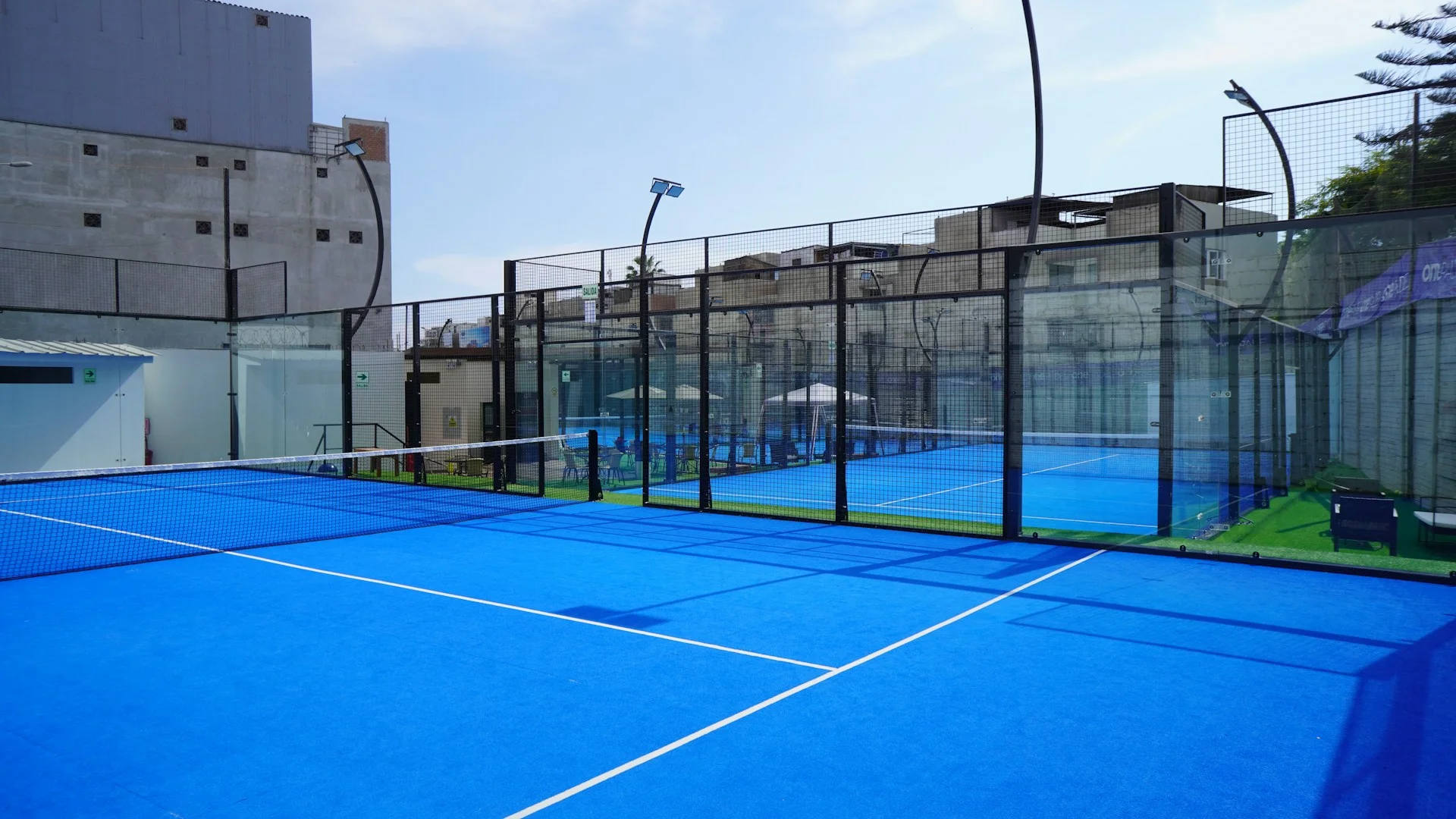
Photo: Bruno Vaccaro Vercellino / Unsplash
Photo: Bruno Vaccaro Vercellino / Unsplash / Unsplash LicenseThe Fundamental Rule: Floor First, Then Wall
The core principle of wall play in padel is straightforward: the ball must bounce on the floor before hitting any wall. When the ball arrives on your side of the court, it must touch the playing surface first, and only then may it deflect off the back or side wall. The player has every right to play the ball after it rebounds off a wall – the rally continues.
If the ball strikes a wall before touching the floor, the point is lost. This rule applies to the receiving side: an incoming ball must land on the floor first.
An important clarification: on volleys and smashes, the ball crosses the net, bounces on the opponent’s side, and then hits their wall – this is a perfectly normal part of the rally. The “floor first” rule concerns the receiving player’s side.
Types of Walls on the Court
A padel court is enclosed by walls of different types, each with its own characteristics:
- Back glass wall (cristal de fondo). A glass wall standing 3 metres high along the back line of the court. This is the primary wall that the ball bounces off most frequently. Glass provides a predictable, even rebound.
- Side walls. A combined structure: the lower portion is made of glass (typically 3 metres), and the upper portion is metallic mesh (malla/rejilla) extending up to 4 metres total. In the section closer to the net, the side wall may be entirely metallic fence.
- Metallic mesh (malla). Wire mesh fencing in the upper part of the walls and along the sides closer to the net. The rebound off the mesh is less predictable and absorbs more of the ball’s energy.
- Front wall. There is no front wall as such – its role is played by the net that divides the court into two halves.
Legal Wall Rebounds
After the ball has bounced on the floor, it may strike the following surfaces and the rally will continue:
- Back glass wall. The most common scenario. The ball lands on the floor and flies into the back wall, rebounds back into the court – the player returns it.
- Side wall. The ball lands and travels into the side glass or mesh, rebounds – the rally continues.
- Corner (rincón). The ball strikes the corner where the back wall meets the side wall. These rebounds are the most unpredictable and are considered one of the trickiest elements of padel.
- Double wall rebound. The ball may hit the back wall and then the side wall in succession (or vice versa) – the rally remains live as long as the ball does not bounce on the floor a second time.
Ball Leaving the Court
A padel court is an enclosed structure, yet the ball can still leave it:
- Ball flies over the back wall (above 4 m). If your shot sends the ball over the back wall and out of the court, the point goes to your opponents. The ball must stay inside the court.
- Ball exits through side openings. The side walls (usually in the area closest to the net) have openings and doors for court access. If the ball exits through these side openings after bouncing on the floor, it can be played! The player is allowed to leave the court through the door and return the ball back through the opening or over the wall.
Salida por la Puerta – Exiting Through the Door
One of the most spectacular elements of padel is the salida por la puerta – a play in which a player runs out through the side door to retrieve a ball that has left the court.
The rules for this play are:
- The ball must first bounce on the floor on your side of the court.
- The ball exits through a side opening or over the side fence (in the area with lower fencing).
- The player runs out through the door, chases the ball, and sends it back onto the court – through the side opening or lobbed over the wall.
- The returned ball must cross the net and land on the opponent’s side.
- The ball cannot be returned over the top of the back wall – only through the side openings or over the side fencing.
At professional tournaments, the salida por la puerta is a regular occurrence and never fails to electrify the crowd.
Corner Play (Rincón)
The corners of the court – where the back wall meets the side wall – create a particular challenge:
- A ball striking the exact junction of two walls changes direction unpredictably.
- The rebound trajectory depends on the angle at which the ball arrived and which wall it contacted first.
- Hitting into the corner (jugar al rincón) is an effective tactical weapon, as the receiver struggles to read the rebound direction.
- For beginners, corner balls are among the most difficult situations. It is advisable not to stand too close to the walls and to leave yourself room to react.
What You Cannot Do with Walls
Certain actions involving walls result in the loss of a point:
- Hitting the ball off your own wall to send it over the net. You cannot strike the ball with your racket against a wall on your own side so that it crosses over to the opponent’s side. This is not a legal shot – the point is lost.
- Ball hitting the wall before the floor (on reception). If an incoming ball touches the wall on your side before bouncing on the floor, the point is awarded to your opponents.
- Ball leaving the court over the back wall. If your shot sends the ball above the back wall, you lose the point.
Glass vs Metallic Mesh Rebounds
The wall material significantly affects the ball’s behaviour:
- Glass provides a smooth, predictable rebound, similar to a floor bounce. The ball retains most of its speed and spin.
- Metallic mesh (malla) absorbs the ball’s energy. The rebound off the mesh is considerably weaker and less predictable – the ball may “stick” to the fence or bounce at an unexpected angle. Ball spin is almost entirely lost on contact with the mesh.
Understanding the difference between glass and mesh rebounds is an important skill that comes with practice.
Common Beginner Mistakes
- Rushing towards the ball instead of waiting for the wall rebound. Newcomers often try to intercept the ball before it contacts the wall, even though waiting for the rebound is more advantageous.
- Standing too close to the back wall. This leaves no room for a backswing after the ball bounces off the glass. The optimal position is roughly one metre from the back wall.
- Ignoring the difference between glass and mesh. Expecting the same rebound from both materials and failing to adjust in time.
- Panicking on corner balls. Instead of turning and tracking the ball, players swing blindly towards the wall.
- Forgetting about salida por la puerta. Not leaving the court when the ball exits through a side opening, even though the rally is still live.
- Hitting the ball against their own wall. Reflexively sending the ball into the nearest wall without realising this is an illegal shot.
If this article was useful — help us write the next one.
☕ Support on Ko-fi