Doubles Communication and Teamwork
Padel is first and foremost a team sport. Even the most technically skilled player will lose to a pair that moves as a unit and communicates on court. Communication between partners is not merely a useful skill – it is the foundation of successful play.
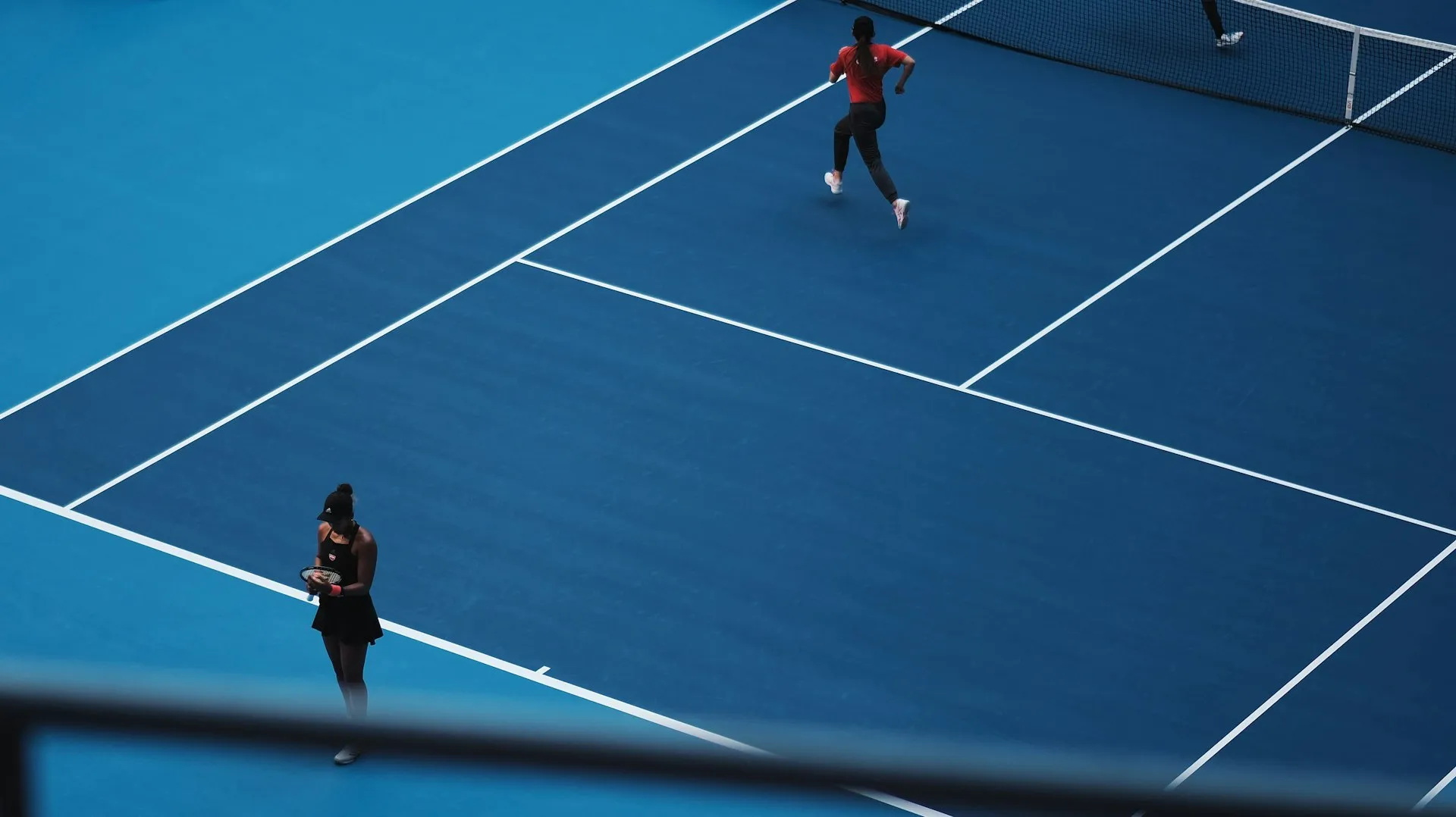
Why Communication Matters
Padel is the only major racket sport in which doubles is the primary and virtually the only format at all professional tournaments. Unlike tennis, where singles exists alongside doubles, in padel you almost always play as a pair (singles padel exists but remains a niche format). This means that coordination with your partner affects results just as much as individual technique.
At the professional level, pairs who have played together for a long time consistently defeat more technically gifted opponents through superior teamwork. [EXPERT OPINION] Coaches estimate that up to 40% of points at the amateur level are lost due to poor communication – collisions, missed balls down the middle, and uncoordinated movement.
Good communication addresses three key challenges:
- Ball allocation. Who plays the ball when it comes down the middle?
- Positional coordination. Both partners move in sync, covering the entire court.
- Emotional support. A positive atmosphere helps maintain focus and confidence.
Verbal Signals
Voice communication is the backbone of on-court coordination. Calls should be short, clear, and loud enough for your partner to hear even in a noisy environment.
| Call (EN) | Call (ES) | Meaning |
|---|---|---|
| “Mine!” | “Mía!” | I am taking this ball |
| “Yours!” | “Tuya!” | You take this ball |
| “Switch!” | “Cambio!” | Swap sides (after a lob or passing shot) |
| “Lob!” | “Globo!” | Warning: opponent is playing a lob |
| “Back!” | “Atrás!” | Move to the back of the court |
| “Net!” / “Up!” | “Red!” | Move forward to the net |
| “Middle!” | “Centro!” | Ball is coming down the centre – decide who plays it |
| “Leave it!” | “Deja!” | Do not touch the ball (it is going out) |
[EXPERT OPINION] Many padel players use Spanish calls regardless of their native language. Spanish is the international “language of padel,” and knowing these terms is valuable.
Non-Verbal Signals
Beyond voice calls, experienced pairs use hand signals, especially before serves and returns. The most common technique involves hand signals behind the back by the player positioned at the net.
- Open palm – “I will hold my position after the serve, covering my zone.”
- Closed fist – “I will poach (cross-intercept) and move to the other side.”
- Finger pointing left or right – “I am moving in the indicated direction.”
- Open hand with fingers spread, rocking side to side – “I will decide based on the opponent’s return.”
These signals allow partners to coordinate tactics without opponents overhearing. They are used most actively in competitive play, but even in recreational matches they provide a clear advantage.
Synchronized Movement
One of the key principles of doubles play in padel is the “invisible rope” rule: both partners move as a single unit, as if connected by a rope approximately 3-4 metres long.
What this means in practice:
- Forward together. When one partner moves up to the net, the other must also advance. Both players take up the net position simultaneously.
- Back together. If the opponent executes a good lob and one of you is forced to retreat, the other drops back as well, maintaining the line.
- Sideways together. When one partner shifts toward a side wall to play a ball, the other slides in the same direction, covering the space that opens up in the centre.
Breaking this principle creates “holes” – undefended zones on the court that opponents will gladly target. The classic mistake: one player at the net, the other at the back wall. In that configuration, a huge gap opens between them, making it easy for opponents to attack.
The Psychology of Partnership
Technical communication is only half the story. The emotional dimension of partnership is equally important, and at the amateur level it is often the deciding factor.
Positive reinforcement is the primary tool. After every good rally by your partner, show your approval: a fist bump, a “vamos!”, a high five. This is not just politeness – positive emotions increase confidence and reduce anxiety.
The “no blame” rule is considered an unwritten standard in padel. Even if your partner makes a costly mistake, the response should be supportive: “No worries, next one!” or “All good, let’s keep going.” Eye-rolling, sighing, and reproaches destroy team spirit faster than any technical error.
Tactical discussions are best conducted during calm moments: at changeovers, before the start of a set, or during a break. Analysing mistakes in the middle of a rally creates distraction and tension.
[EXPERT OPINION] The best pairs in the world are not simply those who play well together, but those who genuinely support each other. Watch any World Padel Tour match: after every rally, partners exchange gestures and words, regardless of the outcome.
5 Common Doubles Communication Mistakes
Not calling the ball. The most widespread error: both partners silently reach for the ball – or, conversely, both wait for the other to take it. Solution: always call “mine!” or “yours!”, especially on balls down the middle.
Breaking formation. One player rushes to the net while the other stays at the back wall. A huge gap opens between them. Solution: move together, remembering the invisible rope principle.
Silence after a partner’s error. No reaction is worse than criticism: the partner feels isolated. Solution: after every mistake, offer brief support – “Come on!”, “Next one is ours!”
Discussing tactics mid-rally. Shouting “Why did you hit it like that?!” during play does not help – it hinders. Solution: tactical conversations belong in pauses only.
Ignoring non-verbal signals. Your partner shows a fist behind their back before the serve, and you are not looking. Solution: develop the habit of checking your partner’s signals before every serve.
All our knowledge is free. Creating it is not.
☕ Support on Ko-fi