The Mental Game and Psychology in Padel
Technique and fitness make up 50% of success in padel. The other 50% is the mind. Managing nerves, maintaining focus, and bouncing back from errors separates good players from great ones.
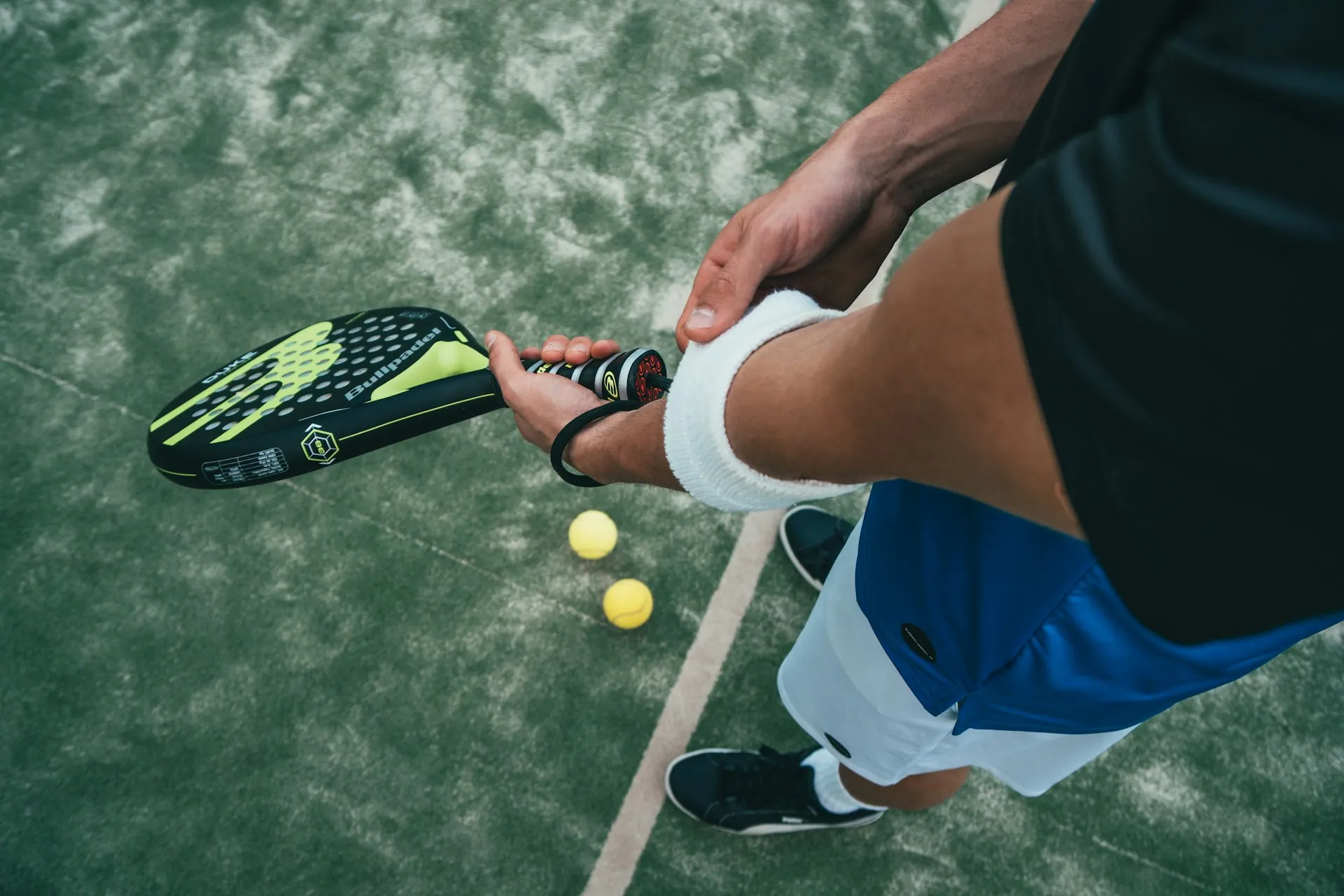
Photo credit
Photo by Oliver Sjöström on Unsplash
Pre-Match Preparation
Breathing and Visualisation
- 2 minutes of mindful breathing to lower heart rate and focus on the present
- 3 minutes of visualisation: picture yourself playing with confidence — fluid movement, precise shots, the joy of winning points
- Visualisation builds neural pathways that improve real performance (neuroplasticity)
An Anchor for Your Mindset
Create a ritual that switches you into “competition mode”: a song, a keyword, or a gesture. Use it before every match.
[UNVERIFIED] A 2024 study (European Journal of Sport Science) found that 30 minutes of cognitive load before a match significantly impaired shot accuracy. The takeaway: arrive on court mentally fresh.
Managing Nerves on Key Points
Techniques
- Controlled breathing: a slow exhale before serving or returning lowers heart rate
- Physical ritual: tapping the racket on the floor, adjusting your cap — an anchor that returns you to the present
- Trigger phrase: “One point at a time” — repeat it internally to hold focus
- Process over outcome: concentrate on what you control (positioning, shot selection) rather than the score
[EXPERT OPINION] Process-oriented players perform consistently. Outcome-oriented players often crack under pressure.
The “Next Point” Mentality
The Reset Rule
After an error:
- One deep breath
- Physical reset — adjust your cap, wipe the racket grip
- Focus on the next point — the previous one no longer exists
Positive Self-Talk
- “On to the next one”
- “I can do this”
- “An error is information, not a verdict”
According to Peter Consuegra (PadelMarket): “An error observed without judgement becomes valuable information. After the match, mentally review your most frequent mistakes, understand their causes, and turn them into goals for the next training session.”
Body Language and Confidence
- Confident posture raises the energy of the entire pair — especially critical in doubles
- A look, a nod, a pointing finger say as much as words
- If your partner knows you have their back, they play with more confidence
- An aggressive stance and readiness tell the opponent: “I am not giving up”
- Read your opponents’ body language: are they preparing a lob, a drive, or a fake?
Patience as a Weapon
- Slowing the pace leads to more opponent errors
- When pushed back, lob with purpose and “let the rally breathe”
- You do not need to win the point from the baseline — sometimes the best move is to survive and wait for the error
- High, deep lobs buy time to regroup
Common Mental Traps
“I must win this point.” Putting pressure on yourself increases the chance of an error. One point = one point.
The error spiral. One error → anger → another error → more anger. Break the chain with a reset.
Fear of leading. Ahead in the score → fear of losing the advantage → cautious play → loss of initiative.
Negative communication. Criticising your partner hurts both players’ performance. Support = better results.
Fixation on the score. Down 1–5? Play every point as though it were 0–0.
Drills for Mental Resilience
Breathing between rallies. Three slow exhales before every serve or return. Train it until it is automatic.
Training match with restrictions. Negative emotions are banned — no fist-pumping in frustration, no sighs, no dropped shoulders. A penalty point for violations.
Visualisation. 5 minutes before training: close your eyes and replay rallies in your head. Picture the successful execution of each shot.
The light is on for free. But someone has to clean the lantern.
☕ Support on Ko-fi