When to Approach the Net in Padel
The pair controlling the net dominates the rally. But approaching the net at the wrong moment is a mistake that costs points. Learn to pick the right moment.
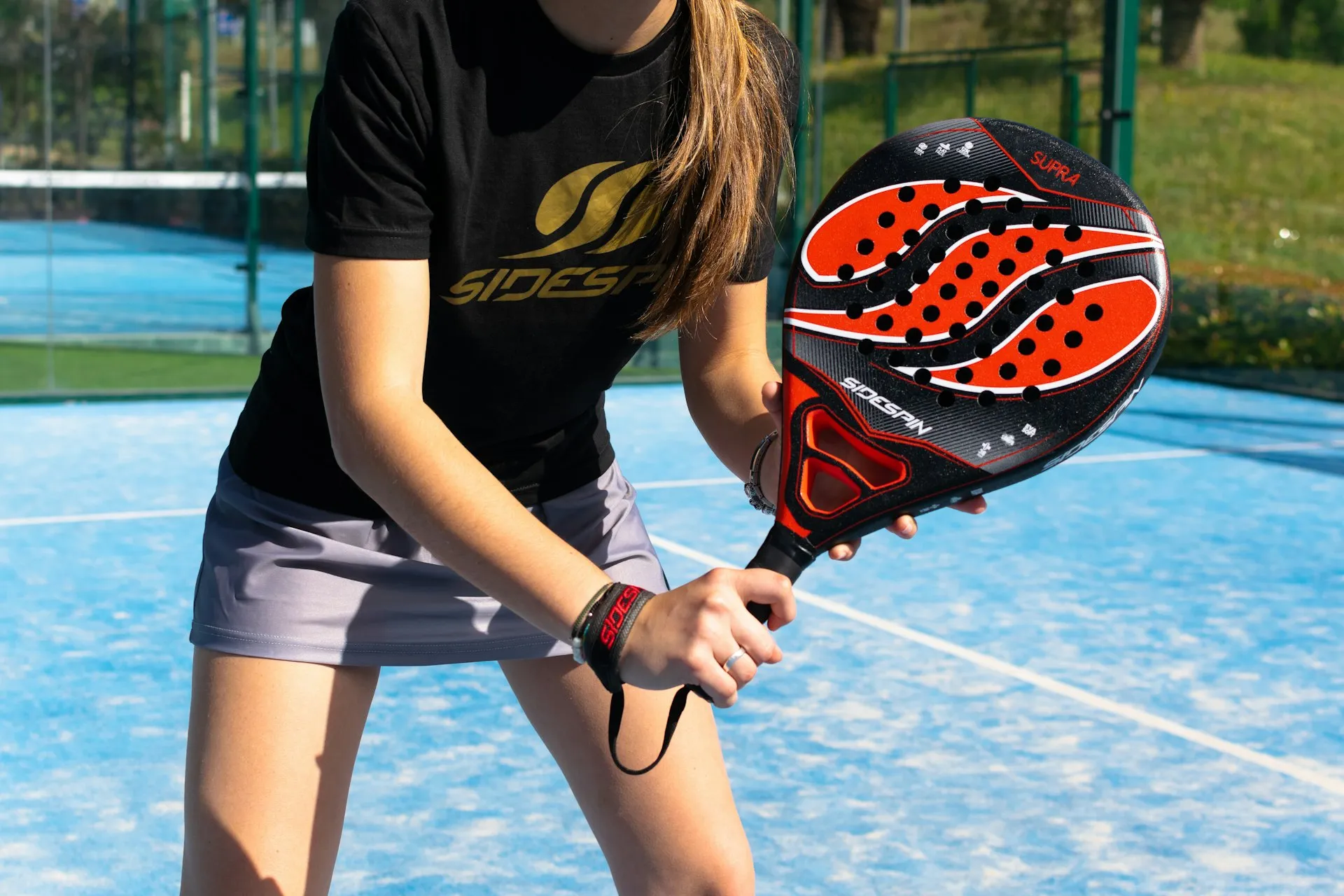
Photo credit
Photo by SideSpin Padel on Unsplash
The Principle: Net = Attack
In padel, the pair at the net holds the advantage. From the net position you control the angles, cover the diagonals, and close rallies with volleys. But you should only move forward after a quality shot.
Key rule: “Be patient at the back and play a good enough shot that gives you time to move forward.”
Signals to Approach
1. After a Good Chiquita
The chiquita drops at the opponents’ feet, forcing a weak volley. Move forward immediately after the shot.
2. After a Deep Lob
The lob must clear the opponent’s head, giving you time to take position.
3. After the Serve (for the Server)
A good server runs to the net immediately after serving.
4. After a Good Return
If the return does not touch the wall, the ball reaches the opponent more quickly, giving you time to advance.
Approach Technique
The Split Step
The split step is a small hop landing with feet apart. It is performed at the exact moment the opponent strikes the ball.
- Too early → you fall onto your heels and lose reactivity
- Too late → you are late to the ball’s trajectory
- In padel the split step is lighter, quicker, and higher than in tennis
- Land on the balls of the feet, knees bent
Moving as a Pair
The golden rule: both partners move together.
- Together to the net → together back on a lob
- If one stays back → a huge diagonal gap opens in the centre of the court
- Synchronisation is the key difference between strong and weak pairs
When NOT to Approach
| Situation | Why stay back |
|---|---|
| Lob did not clear the opponent’s head | The opponent will hit the ball before you take position |
| Return touched the back wall | The ball bounced comfortably for the opponent — they will attack |
| Partner stayed back | A diagonal gap opens — the opponent will target it |
| You are off balance | Running without control = a poor position for the volley |
Common Mistakes
Approaching after a bad shot. If your ball did not trouble the opponent, stay where you are.
Sprinting instead of controlling. A sprint to the net instead of a controlled advance. You should be ready for the volley, not out of breath.
Too close to the net. Standing right at the net makes you easy to lob.
One goes, the other stays. Your partner must move with you. Communication before and during the rally is essential.
Trying to cover the whole court. Each player covers their half. Trust your partner.
Drills
Chiquita + transition. Hit a chiquita, immediately move forward, ready for the volley. 10 rallies.
Defence/attack rotation. Deep defence → lob → move to the net → finishing volley.
Split-step drill. Partner hits balls from the baseline; you are at the net performing a split step before every volley. 20 balls.
Synchronised movement. 2 vs 2, focus on sync: the coach calls “forward” or “back” and both partners move simultaneously.
All our knowledge is free. Creating it is not.
☕ Support on Ko-fi