Advanced Shots: Rulo, Gancho, Kick Smash
Beyond the bandeja and the vibora lie the shots that elevate a game to elite level: the rulo, the gancho, and the kick smash. Each solves a specific tactical problem.
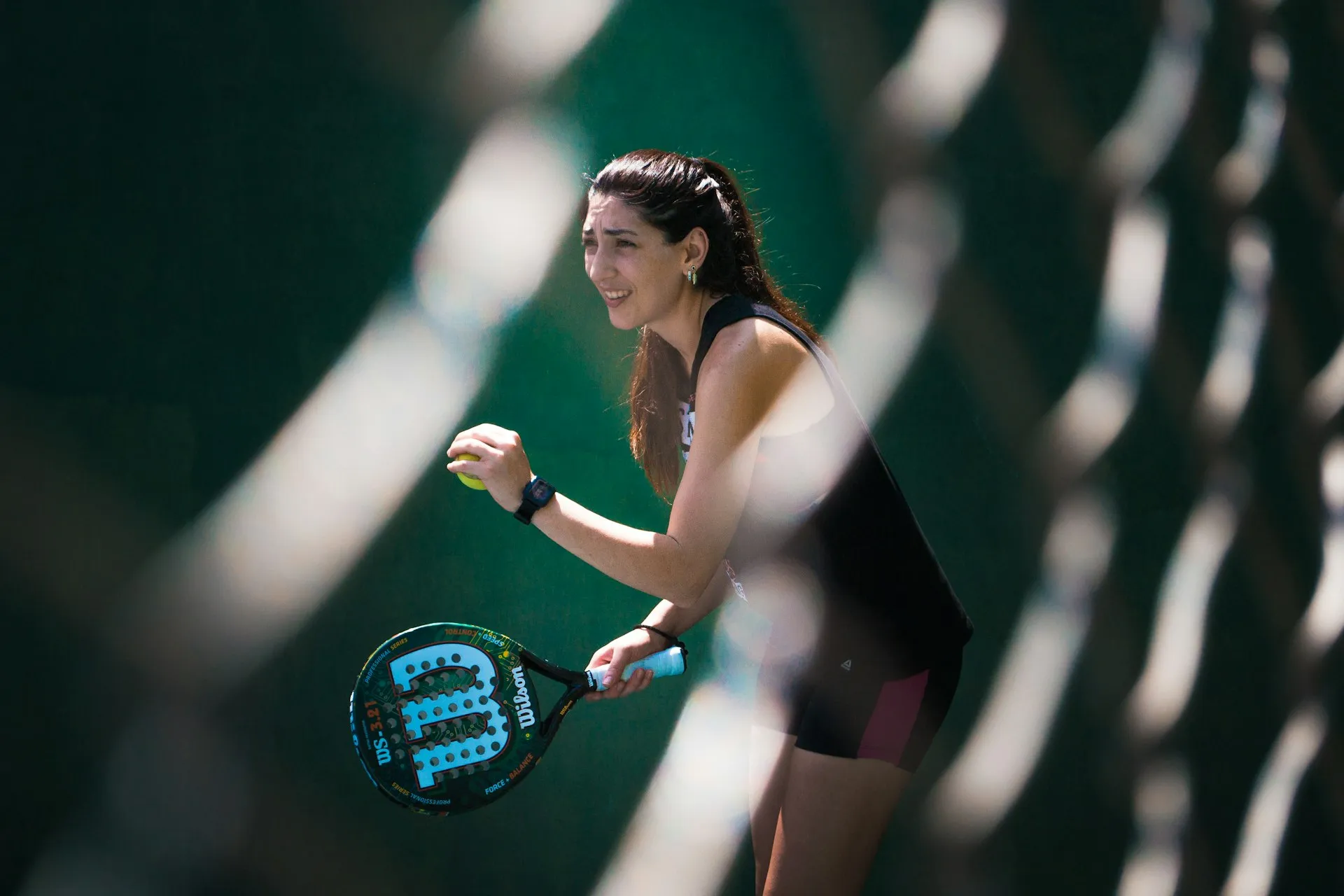
Photo credit
Photo by Gabriel Martin on Unsplash
Rulo
What It Is
A soft overhead with topspin and sidespin aimed at the opponent’s side glass. From the Spanish “rulo” = “roll.”
The King of the Rulo: Franco Stupaczuk (Stupa) — the acknowledged master of this shot.
When to Use
- The ball is behind your body — no clean smash available
- You need to regain the attacking position at the net
- NOT for winning the point outright — for creating problems for the opponent
Technique
- Contact point: lower than the smash; above the left shoulder (for right-handers)
- Wrist action: relaxed wrist, a “wrist slice” across the outside of the ball
- Speed: intentionally soft — the feeling of a “gentle push,” not a hit
- Result: the ball rebounds off the side wall on an unpredictable trajectory
The Main Mistake
Hitting too hard. The rulo is about spin, not power.
Gancho (“The Hook”)
What It Is
An overhead hook shot used when a lob flies over the non-dominant shoulder (left for right-handers) and there is no time to turn for a smash or bandeja.
When to Use
- A lob sails over your left shoulder
- No time to turn
- The ball is behind you — the gancho lets you stay at the net
Technique
- The loop: the racket travels from the ready position through a backward loop to the contact point above the head
- MISTAKE: lifting the racket straight through the front of the body = a badminton-style shot (weak and predictable)
- Contact: high, behind the head or above the non-dominant shoulder
- The wrist is the last link: for directional control
Strategic Value
- Allows you to stay at the net after a lob instead of retreating
- Goal: direct the ball into the side glass for a difficult rebound
- When executed well, it turns defence into attack
Kick Smash
What It Is
A topspin smash in which the ball changes direction after bouncing off the floor and back wall, kicking upward. The ultimate version — X3 (por tres): the ball exits the court over the 3-metre side wall.
Technique
- Grip: continental
- Contact: above the head or slightly behind; the further back, the more topspin
- Wrist snap: relaxed wrist, “rolling” up the back of the ball from low to high
- Footwork: step back quickly behind the ball, stable base
The X3 Trajectory
- The ball bounces roughly 1 m before the service line
- Rebounds off the back wall about 2.5 m from the rear corner
- With good topspin the ball “kicks” up and exits over the 3-metre side wall
The Key Principle
The kick smash is about topspin, not power. A common misconception: brute force will do the job. In reality, the kick smash demands finesse, timing, and spin.
Comparison Table
| Shot | Purpose | Speed | Spin | When |
|---|---|---|---|---|
| Rulo | Control and position | Soft | Side + topspin | Ball behind the body |
| Gancho | Hold the net | Medium | Depends on situation | Lob over weak shoulder |
| Kick Smash | Win the point (X3) | Medium–hard | Topspin | High lob with time |
Common Mistakes
- Attempting before mastering the basics. Learn the bandeja and vibora before moving to advanced shots.
- Power instead of spin. All three shots demand finesse. Brute force = loss of control.
- Gancho without the loop. Lifting the racket straight up = badminton shot.
- Wrong contact point. The rulo and gancho are struck behind the head, not in front.
Drills
Rulo at the wall. Toss the ball and hit a rulo into the side glass. Observe the rebound. 20 repetitions.
Gancho from a toss. Partner tosses the ball over your left shoulder; you execute the gancho. 15 repetitions.
Kick smash to target. Place a cone ~1 m before the service line. Hit kick smashes aiming for that zone. 10 out of 15 = good.
Match rotation. 2 vs 2, the attacking pair alternates rulo, gancho, and kick smash. Goal: confident switching.
If this article was useful — help us write the next one.
☕ Support on Ko-fi