Backhand Technique in Padel
The backhand is the weakest shot for most padel players. Statistically, the backhand volley produces 17.6% of unforced errors — more than any other shot. But it can be improved.
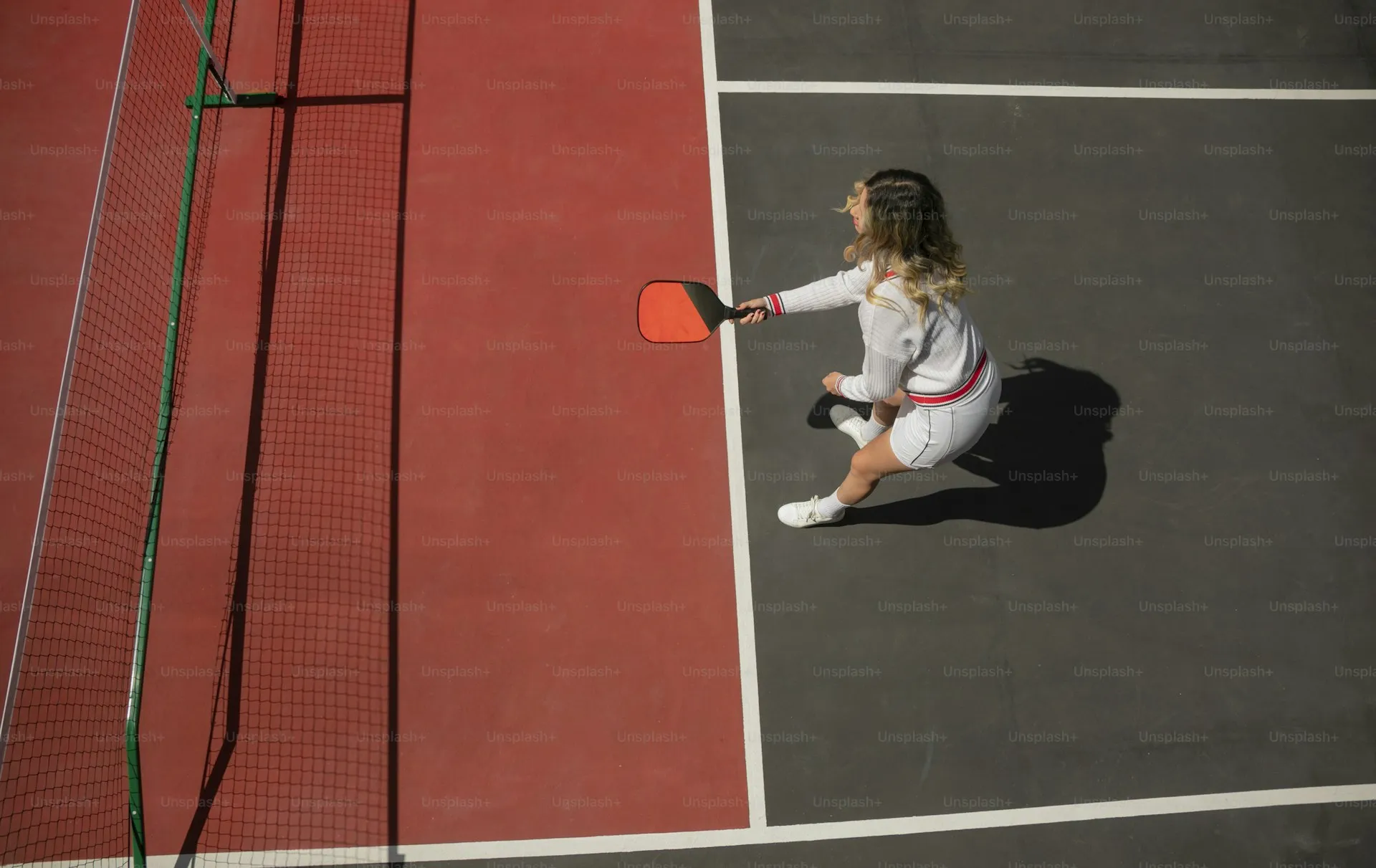
Photo credit
Photo by Pablo Merchán Montes on Unsplash
Why the Backhand Matters
In padel, most balls travel through the centre of the court. If you play the right side, the backhand is your primary shot. Even on the left side, you need the backhand for defence and wall play.
Losing pairs commit more unforced errors on the backhand than any other shot (PMC, 2024).
Flat Backhand
When to Use
Ball below waist level — hit it flat.
Technique
- Rotate your body — turn your shoulders and take the racket back
- Bend knees and elbow — the elbow bend gives wrist flexibility
- Lead with the elbow — the motion starts from the elbow, not the wrist
- Contact point — slightly in front of the rear hip (right hip for right-handers)
- Follow-through — the racket continues forward after contact
The Main Mistake
Hitting with the arm alone, without body rotation. The body = power and control.
Slice Backhand
When to Use
Ball above waist level — use slice. A cross-court slice against the side glass produces low, skidding rebounds.
Technique
- Grip — towards an Eastern backhand grip
- High preparation — the racket starts above the ball
- Open racket face — slightly open for the undercut
- High-to-low swing — think “sweep the crumbs off the table,” NOT “chop a log”
- Brush under the ball — the racket passes under the ball, creating backspin
Backhand Volley
Technique
- Continental grip — allows instant switching between forehand and backhand volleys
- Short preparation — minimal backswing, focus on the contact point
- Racket angle ~45° — knuckles slightly upward
- Step forward — the front foot steps towards the ball on contact
- Relaxed wrist — for angle control
Common Mistakes
No body rotation. Hitting with the arm only, without the shoulders, costs power and control.
Wrist bends on contact. The wrist must stay stable. Always.
Wrong contact point. Too far in front or too close to the body. Optimal: slightly ahead of the hip.
Not using the non-dominant hand. The left hand (for right-handers) should assist in the body turn and preparation.
Hitting early out of discomfort. Beginners strike the ball too early because they feel uneasy — this robs the shot of power.
Drills
Cross-court backhands. Both partners hit backhands only, diagonally. Goal: 10 consecutive balls without an error.
Alternating at the wall. Standing 3 metres from the wall, alternate forehand and backhand. 5 minutes non-stop.
Backhand only. Partner feeds all balls to the backhand. 3 sets of 15 balls, focusing on technique.
Rapid-fire volleys. Partner feeds balls alternately to the forehand and backhand at the net. Goal: smooth switching.
Backhand off the back wall. Partner hits balls into the back wall; you play the backhand after the rebound. 10 balls.
If this article was useful — help us write the next one.
☕ Support on Ko-fi