Padel Racket Grips
Your grip determines the quality of every shot in padel. Choosing the right grip for each situation is the foundation of consistent and versatile play.
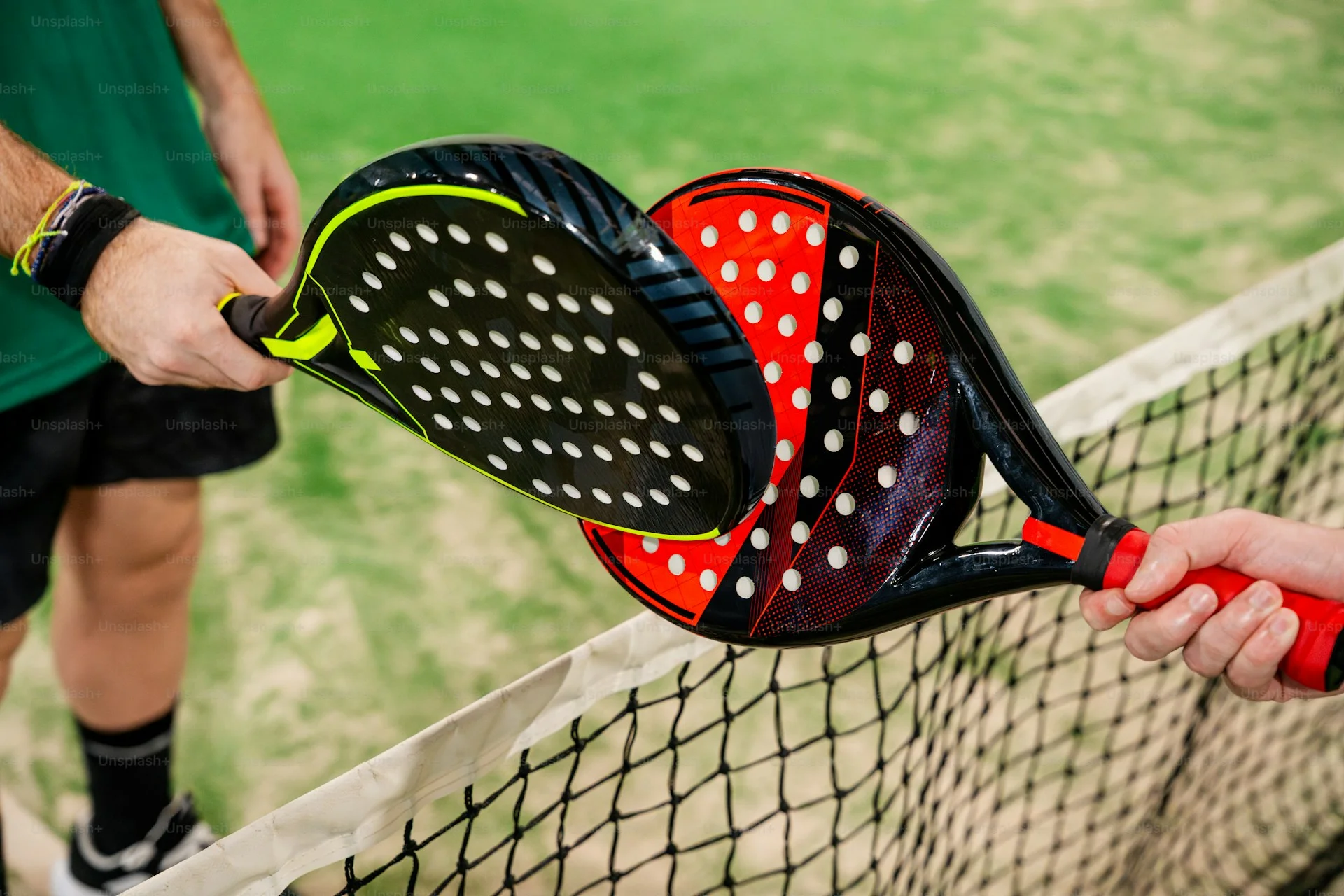
Photo: A. C. / Unsplash
Photo: A. C. / Unsplash / Unsplash LicenseWhy Your Grip Matters
Your grip is the connection point between you and the racket. How you hold the racket determines the angle of the hitting surface, your degree of ball control, and the range of shots available to you. An incorrect grip limits your technical capabilities and can lead to wrist injuries.
In padel, unlike tennis, transitions between shots happen faster due to the compact court. This makes a versatile grip especially valuable — it allows you to react to the ball without unnecessary racket adjustments. Most professional players use the continental grip as their default and only switch to others for specific shots.
Main Grips
Continental Grip
The continental grip is the most important and versatile grip in padel. It is used for the vast majority of shots: volleys, bandeja, vibora, smash, and serve.
How to find the continental grip:
There are two simple methods:
- The hammer method. Hold the racket as if you were hammering a nail. The edge of the racket should face downward, with your palm on the top bevel of the handle.
- The handshake method. Reach out to the racket standing vertically on its edge and “shake hands” with it. This natural hand position is the continental grip.
With the continental grip, the base knuckle of your index finger (the V-shaped area between thumb and index finger) sits on the top bevel of the handle. The racket rests in your fingers, not clenched deep in your palm.
[EXPERT OPINION] If you are just starting to play padel, master the continental grip first. It will cover 70–80% of game situations, and in the beginning, you can get by using it alone.
Used for:
- Forehand and backhand volleys
- Bandeja — defensive overhead shot
- Vibora — attacking overhead with slice
- Smash — finishing overhead shot
- Serve
Eastern Forehand Grip
The eastern forehand grip is used for forehand groundstrokes — drives and forehands from the baseline. It provides a flatter racket face, which delivers more power on shots from the back of the court.
How to find the eastern forehand grip:
From the continental grip, rotate the racket a quarter turn clockwise (for right-handers). The base knuckle of your index finger shifts to the right bevel of the handle. Your palm ends up nearly parallel to the racket’s hitting surface.
Used for:
- Forehand drive
- Forehand groundstrokes with maximum power
- Attacking shots from the back of the court
Semi-Western Grip
The semi-western grip is an advanced grip for players seeking to add more spin to their arsenal. The racket is rotated even further than the eastern grip, and the hitting surface tilts more significantly.
How to find the semi-western grip:
From the eastern grip, make another quarter turn. The base knuckle of your index finger moves to the bottom bevel of the handle. Your wrist will be in a more closed position.
Used for:
- Heavy topspin shots
- Passing shots with a high ball
- Defensive baseline shots requiring a high trajectory
[EXPERT OPINION] The semi-western grip requires significantly more wrist mobility. Beginners are advised to first master the continental and eastern grips confidently before experimenting with the semi-western.
Grip Changes During Rallies
In real match play, you will need to change grips between shots. This is one of the most challenging skills for beginners, but it becomes automatic with practice.
Principles of grip changes:
- Relaxed hand between shots. Slightly loosen your grip between shots — this allows faster grip changes. Many professionals “roll” the racket in their fingers between rallies.
- Non-dominant hand assists. Keep your non-dominant hand on the throat or frame of the racket — it helps control rotation and stabilizes the racket during grip changes.
- Do not change grip for volleys. At the net, stay in the continental grip. There simply is not enough time for grip changes during fast net exchanges.
- Only change grip when retreating. Switching to the eastern or semi-western grip is justified for baseline shots when you have more time to prepare.
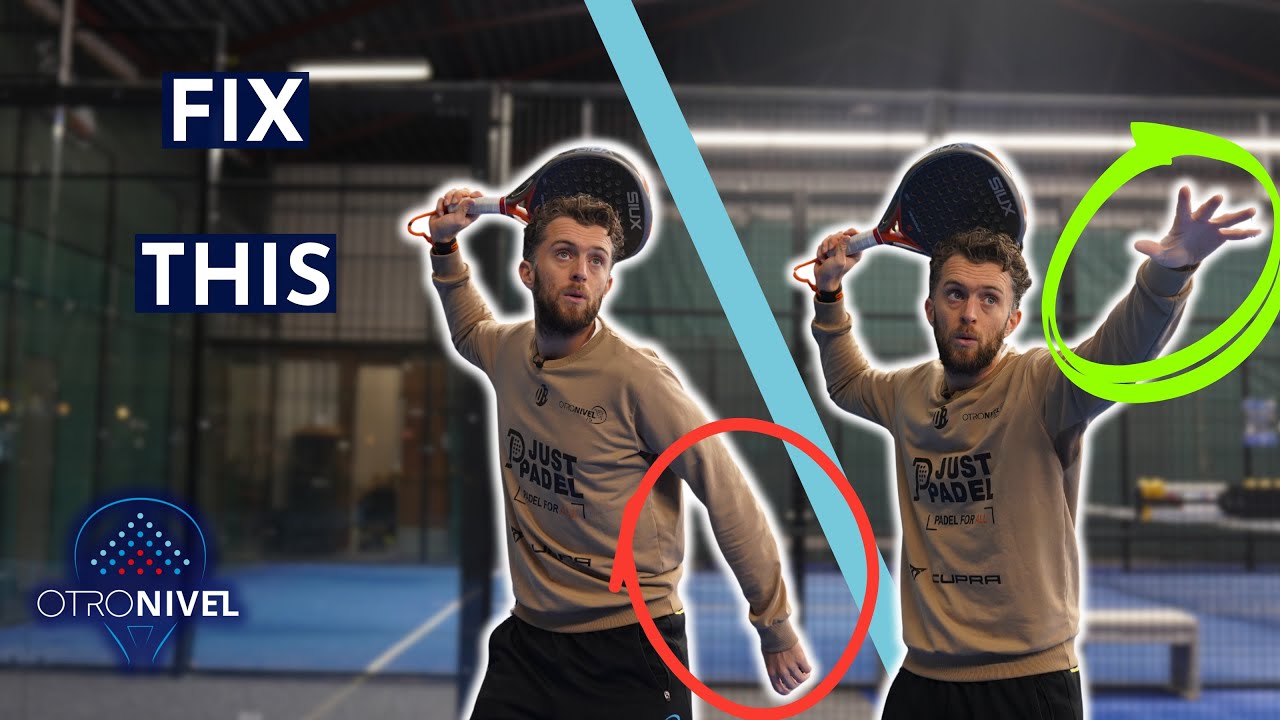
Video Tutorial
Common Mistakes
- Gripping the racket too tightly. Hold the racket firmly but not white-knuckled. Pressure scale: 4–5 out of 10 between shots, 7–8 at the moment of contact.
- Tennis grip for volleys. Players coming from tennis often use the eastern grip for volleys. In padel, this prevents effective backhand volleys without a grip change.
- Palm grip. The racket should rest in your fingers, not be clenched in your fist. A finger grip provides better control and feel.
- Ignoring the backhand. Many beginners use the same grip for forehand and backhand. The continental grip works well for both sides, but the eastern grip is forehand-only.
Exercises
- The hammer. Hold the racket with a continental grip and “hammer nails” into the wall, making light contact with the racket’s edge. This builds muscle memory for the correct hand position.
- Wall rally count. Stand 2 meters from a wall and volley the ball, counting consecutive hits. Goal: 50 shots without losing the ball. Use only the continental grip.
- Grip change on the move. Move along the back wall, alternating between forehand (eastern grip) and backhand (continental). A partner feeds balls alternately to each side.
- Pressure control. Bounce the ball on the ground with your racket, consciously varying grip pressure: soft, medium, firm. Feel the difference in control.
If this article was useful — help us write the next one.
☕ Support on Ko-fi