Types of Padel Serves
The serve in padel is not a weapon for instant point-winning but a tactical tool that sets the tone for the rally. Mastering different serve types allows you to control the opening of every point and create awkward situations for the opponent.
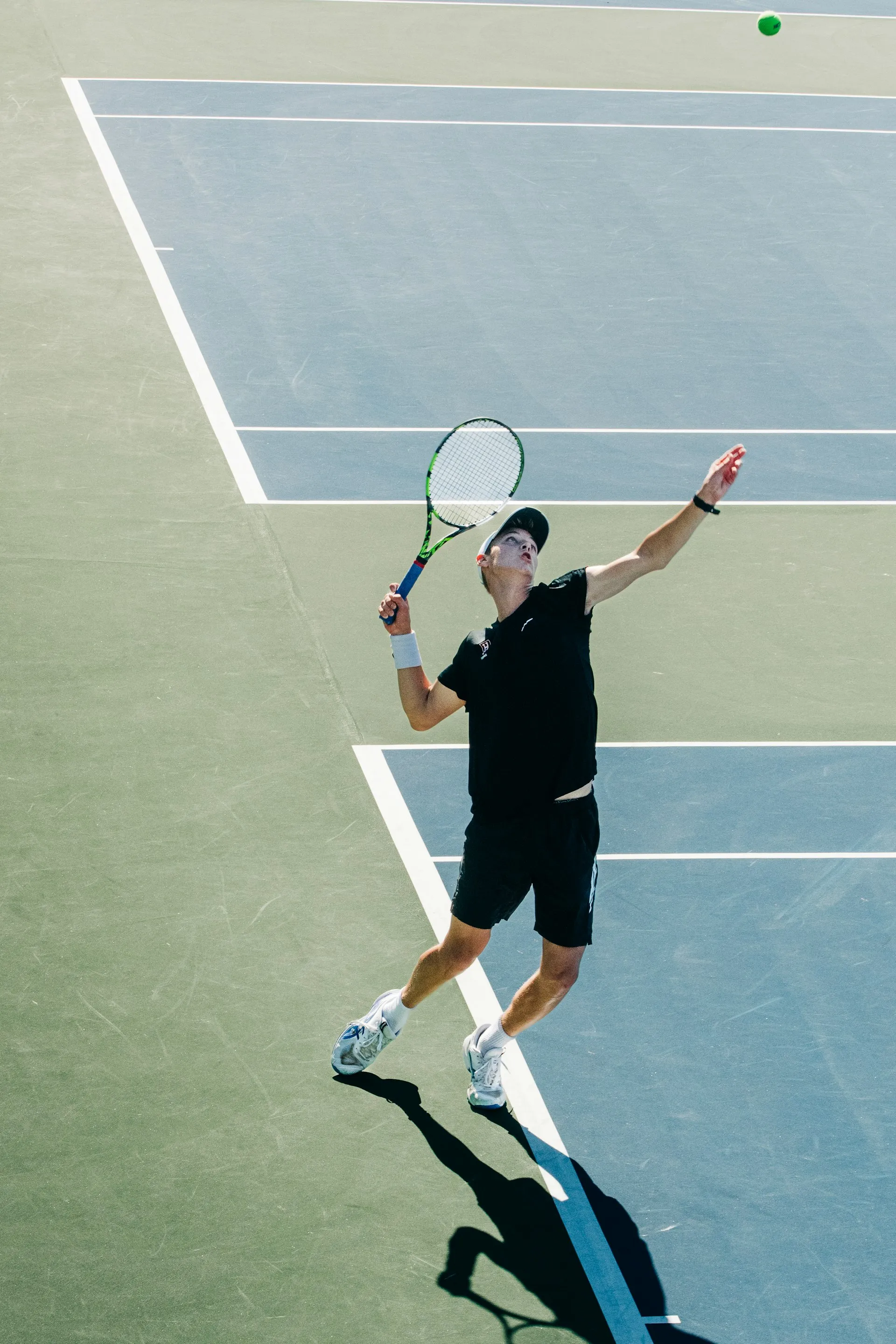
Photo: OANA BUZATU / Unsplash / Unsplash License
The Role of the Serve in Padel
In tennis, the serve can be a finishing blow — an ace that wins the point outright. In padel, the situation is fundamentally different. According to the rules, the ball must be struck after bouncing off the floor at or below waist height, and the walls behind the receiver allow them to return even a powerful ball. The padel serve is therefore a tactical starter, not a weapon.
A good serve accomplishes three things:
- Creates discomfort. Direction, spin, and depth force the opponent into a weak return
- Buys time for the net approach. After the serve, both players on the serving team should take up a net position
- Sets the rhythm. An aggressive or deceptive serve puts the opponent on the defensive from the very first shot
Flat Serve
The flat serve is the simplest option and a good starting point for learning serve technique.
Technique:
- Grip: continental
- The ball is dropped at waist level and bounces off the floor
- The racket meets the ball with a straight forward motion, with minimal spin
- Contact point — slightly in front of the body, at waist level or below
- Follow-through — the racket moves forward in the direction of the shot
When to use:
- As a second serve when reliability is the priority
- Against opponents who read spin well
- When the goal is to get the ball in play quickly and move to the net
Characteristics: the ball travels on a predictable trajectory with a straightforward bounce that is comfortable for the receiver. For this reason, the flat serve is rarely used as a primary option at intermediate and advanced levels.
Slice Serve
The slice serve is the dominant serve type in professional padel. [UNVERIFIED] By various estimates, up to 70% of serves at the professional level are hit with slice.
Technique:
- Grip: continental
- The racket moves under the ball from left to right (for a right-hander), “cutting” across it
- Spin: sidespin + underspin
- Contact: open racket face; the racket slides across the ball
- Follow-through: the racket finishes moving sideways and downward
When to use:
- As the primary serve in most situations
- Aimed towards the side glass — after the bounce the ball drifts into the wall, creating a difficult return
- Effective when serving to the centre and at the body — the spin makes it harder to read the direction
Characteristics: the ball veers sideways after the bounce, often into the glass. The receiver is forced to play from an awkward position or to take the ball after the wall rebound, giving the serving team extra time to reach the net.
Kick Serve / Topspin Serve
The kick serve is a more aggressive option that creates a high bounce and pressures the receiver.
Technique:
- Grip: continental
- The racket moves from low to high and forward, “brushing up” on the ball
- Spin: topspin
- Contact: closed racket face; wrist action drives the upward motion
- Follow-through: the racket finishes moving up and forward
When to use:
- Against shorter opponents — a high bounce above shoulder level creates discomfort
- When serving to the second box (ad side) against a right-hander — the ball drifts into the backhand
- For variety after a series of slices — the change of spin disrupts the receiver’s timing
Characteristics: requires good technique and wrist work. The ball travels more slowly than a slice but “kicks” off the bounce. The receiver finds it difficult to produce an aggressive return because the ball arrives at an uncomfortable height.
Body Serve
The body serve is not a separate spin type but a tactical direction. The ball is aimed directly at the receiver’s body, into the zone between the forehand and backhand.
Technique:
- Any spin type: slice, flat, kick
- Target: the ball arrives at the receiver’s hip or stomach area
- Direction: straight at the body, preventing the opponent from committing to a shot
- Especially effective with slice: the ball “sneaks” under the arms
When to use:
- Against opponents with slow decision-making
- When the opponent is positioned far from the centre — a body serve from the middle causes hesitation
- As a tactical variation, alternating with serves to the glass and down the line
Characteristics: the receiver cannot decide quickly enough whether to play forehand or backhand, resulting in a weak or late return. The body serve is particularly effective at crucial moments (break point, set point).
Serve Comparison Table
| Characteristic | Flat | Slice | Kick (Topspin) | Body |
|---|---|---|---|---|
| Spin | Minimal | Sidespin + underspin | Topspin | Any |
| Speed | High | Medium | Medium-low | Depends on type |
| Execution difficulty | Low | Medium | High | Medium |
| Bounce height | Medium | Low | High | Depends on type |
| Usage (pro level) | ~10% | ~60–70% | ~10–15% | ~10–15% |
| Best situation | Second serve | Primary serve | Into backhand | Crucial moments |
Serving Tactics
Serving Zones
The receiver’s court is divided into three target zones:
- T-zone (centre) — ball aimed at the centre line, limiting the angle of return
- Glass zone — ball aimed at the side glass, creating a difficult rebound (best with slice)
- Body zone — ball aimed at the body, causing indecision
Serving Patterns
[EXPERT OPINION] Effective serving is built on unpredictability. Recommended combinations:
- 3 slices to the glass → 1 flat down the centre — the opponent gets used to the slice and is caught off guard by the straight ball
- Kick into the backhand → slice to the glass — the change of spin disrupts timing
- 2 serves to the glass → body serve — after two “escapes” towards the wall, the body serve catches the receiver off guard
Linking the Serve to the Net Approach
After the serve, your task is to reach the net alongside your partner as quickly as possible. A good serve is one that gives you time for 3–4 steps forward before the opponent’s return.
Video Tutorial

Common Mistakes
Serving too hard. In padel, serve speed matters less than placement and spin. A powerful flat serve will bounce off the wall and come back to the opponent at a comfortable height.
Foot fault. Both of the server’s feet must be behind the service line, with at least one foot on the ground at the moment of contact. Stepping on the line means a lost serve.
Predictable pattern. Serving to the same zone with the same spin is a gift to the opponent. Vary both type and direction.
No net approach. A serve without a subsequent move forward loses half its effectiveness. Serve and go to the net.
Neglecting the second serve. The first serve can be aggressive, but the second must be reliable. A double fault is a free point for the opponent.
Ball toss too high. Under the FIP rules, the ball is struck after bouncing off the floor at or below waist level. A toss that is too high makes timing and control more difficult.
If this article was useful — help us write the next one.
☕ Support on Ko-fi