Smash / Remate
The smash (remate) is the most aggressive overhead shot in padel, designed to win the point outright. It includes several variations: the flat smash, X3 (ball exits via the side wall), and X4 (ball clears the 4-meter back wall).
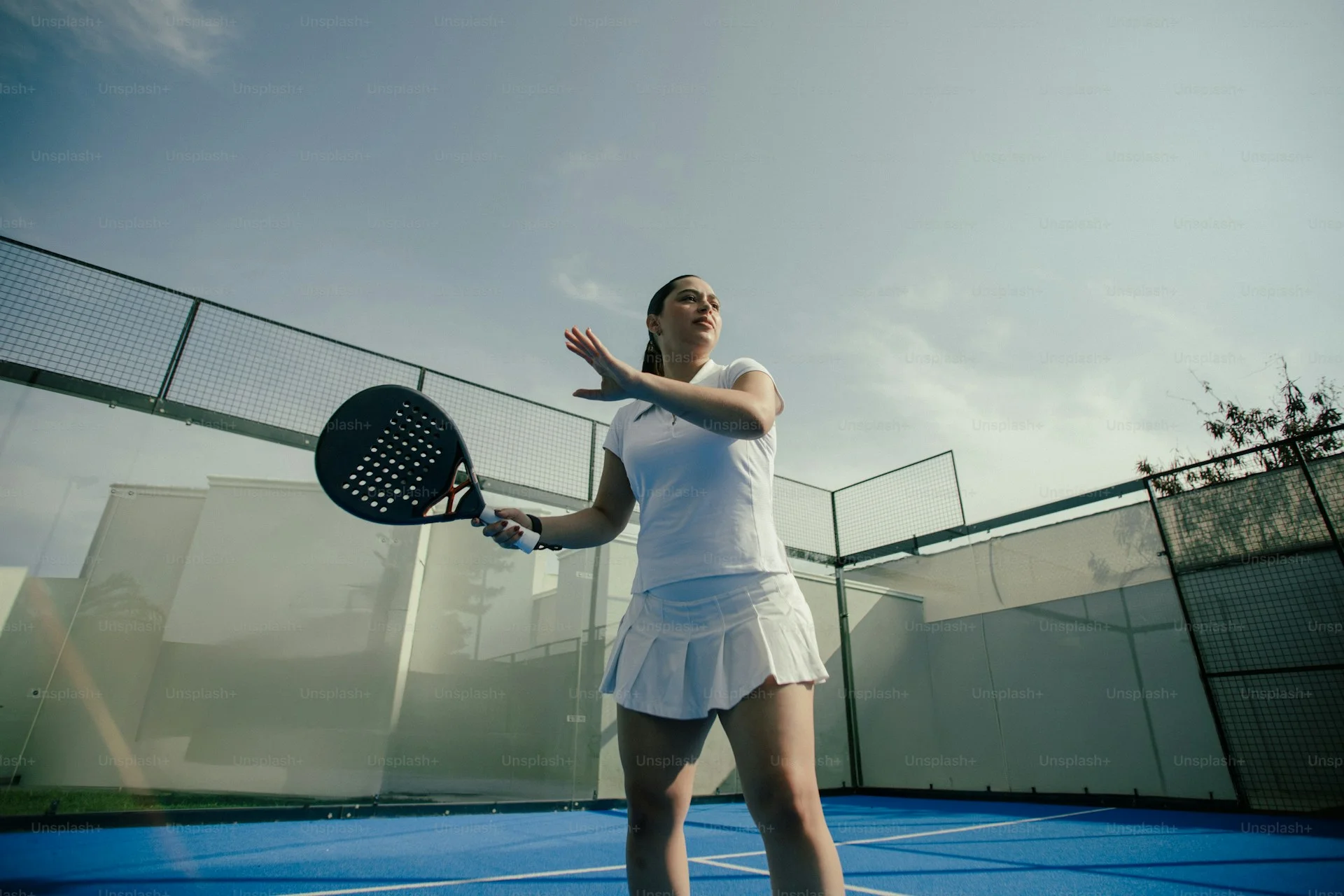
Photo: Ramses Cervantes / Unsplash
Photo: Ramses Cervantes / Unsplash / Unsplash LicenseWhen to Use
The smash is the finishing blow in padel, applied when the situation allows you to win the point with a single stroke. Unlike the bandeja and the vibora, the smash is a fully committed aggressive shot with maximum power.
Situations for the smash:
- Short lob. The opponent has played a weak lob; the ball is in the ideal hitting zone — high and close to the net.
- Optimal position. You are in the zone between the net and the service line, with the ball directly above or slightly in front of you. This is the essential condition for an effective smash.
- Opportunity to finish the point. The smash makes sense when you can realistically win the point — through a clean winner, X3, or X4.
- High contact point. The ball is at the maximum height of your reach, allowing a full overhead swing downward.
According to PadelMBA research, approximately 25.9% of points in professional padel are finished with smashes. This makes the smash the most productive finishing shot in the sport.
Technique
Grip
The smash uses a continental grip — the universal grip for all overhead shots in padel. A slightly firmer grip pressure is acceptable compared to the bandeja, as the shot requires maximum energy transfer to the ball.
For more on grips, see Padel Grips.
Footwork
Footwork during the smash is critically important — poor positioning negates all the power of the shot:
- Early turn. As soon as you identify the ball as a short lob, turn sideways to the net. For right-handers, the left shoulder leads.
- Moving to the ball. Use shuffle and crossover steps. The smash position is closer to the net than the bandeja — typically 2-4 meters from the net.
- Weight transfer. At the moment of the hit, transfer body weight from the back foot to the front foot. This adds power and directs the energy of the shot forward.
- Recovery. After the smash, be ready for a return — not all smashes win the point. Quickly return to your optimal position.
For more on movement, see Footwork in Padel.
Swing and Contact
- Full swing. Unlike the bandeja, the smash is executed with a full swing. The racket goes behind the back, the elbow is high, and the body coils like a spring.
- Non-hitting hand. Points at the ball — helps track the trajectory and maintain balance.
- Contact point. As high and as far in front of the body as possible. The higher the contact point, the steeper the angle of attack and the harder it is for opponents to return.
- Full body commitment. The entire body is engaged in the shot: hip rotation, shoulder turn, arm, and wrist. This is the kinetic chain that transfers maximum energy to the ball.
- Follow-through. The racket finishes on the opposite side of the body. A complete follow-through is the hallmark of a properly executed shot.
Smash (Remate) Trajectory
Types of Smashes
Flat Smash
The basic smash variant:
- The ball is struck from top to bottom with minimal spin
- Maximum ball speed
- Aimed into the court — goal: the ball bounces and flies toward the back wall, from where the opponent cannot return it
- Most effective on short lobs when you are positioned close to the net
X3 — Smash Through the Side Wall
An advanced variation:
- After bouncing off the floor, the ball hits the side glass and exits the court through the open section of the side wall
- The name X3 refers to the ball crossing three surfaces: floor, side glass, and out through the side passage
- Requires precise direction and good spin
- Combines power with a lateral component — essentially a powerful vibora
X4 — Smash Over the Back Wall
The most spectacular shot in padel:
- After bouncing off the floor, the ball clears the back wall (which is 4 meters high — hence the name X4)
- X4 requires heavy topspin: the ball hits the floor, topspin amplifies the bounce, and the ball gains enough height to clear the 4-meter wall
- Executed from a zone close to the net (typically 2-3 meters)
- Demands perfect timing, positioning, and technique
- A ball that clears the back wall is a winner — point won
[EXPERT OPINION] The X4 is an extremely spectacular but risky shot. Even at the professional level, it represents a relatively small percentage of total smashes. For most players, the flat smash and X3 are far more reliable and should be the training priority.
Topspin Smash
- Adding topspin to the smash amplifies the ball’s “kick” after bouncing off the floor
- After contact with the floor, the ball gains speed and height — making the return from the back wall much harder
- Topspin is the key element for the X4 but is useful in regular smashes as well
- Achieved by moving the racket from low to high and forward at the moment of contact, with emphasis on wrist action
Video Tutorial

Common Mistakes
X4 from the wrong position. Attempting an X4 from deep in the court (from the service line and beyond) almost always results in an error. The X4 requires a position close to the net — 2-3 meters. From deeper positions, it is better to play a bandeja or vibora.
Insufficient topspin. A flat smash into the back wall often gives the opponent a comfortable bounce. Topspin is the key to making the ball “accelerate” after the bounce and become unplayable.
Overhitting. Trying to hit with absolute maximum force leads to loss of control. The ball may fly out, hit the side wall without bouncing, or simply be inaccurate. Control matters more than absolute power.
Hitting a falling ball. The ideal contact point is at the peak of the ball’s trajectory or slightly after. Hitting a ball that has already dropped significantly reduces the angle of attack and effectiveness.
Ignoring opponent positioning. A smash to the center of the court when both opponents are standing in the center is often returned. Consider opponent positions: hit to open spaces or aim for X3/X4 directions.
Relaxing after the smash. Not all smashes are winners. Especially in padel, where the walls allow returns of even powerful shots. Be ready for the next ball immediately after the smash.
Smash Statistics in Professional Padel
According to PadelMBA, analyzing professional matches:
- 25.9% of points are finished with smashes — the highest percentage among all shot types
- The smash has one of the best winner-to-error ratios
- Professionals choose the smash only when the probability of success is high, preferring the bandeja or vibora in ambiguous situations
- The X4 accounts for a relatively small share of total smashes even at the professional level
Drills
Smash off hand feeds. A partner throws balls by hand to a height of 3-4 meters from a distance of 3 meters from the net. Execute smashes aiming for a specific court zone. 3 sets of 10 balls.
Topspin against the wall. Stand 3-4 meters from a wall and execute topspin smashes, observing how the ball bounces. A ball with good topspin accelerates sharply upward after the bounce.
X3 to a target. Place a target (cone or towel) near the side exit of the court. A partner feeds balls; your goal is to execute an X3 so the ball exits through the side wall near the target zone.
Smash with decision-making. A partner feeds lobs of varying depths. You make the decision: short lob equals smash, medium equals vibora, deep equals bandeja. This develops tactical thinking and shot selection.
Match-play tracking. In 2v2 match conditions, track every smash: did it finish the point? If not, what could have been done better? Maintaining a mental log improves decision-making over time.
The light is on for free. But someone has to clean the lantern.
☕ Support on Ko-fi