Vibora (Víbora)
The vibora (víbora) is an aggressive overhead shot in padel with heavy sidespin. After bouncing, the ball veers into the side glass, making the return extremely difficult for the opponent.
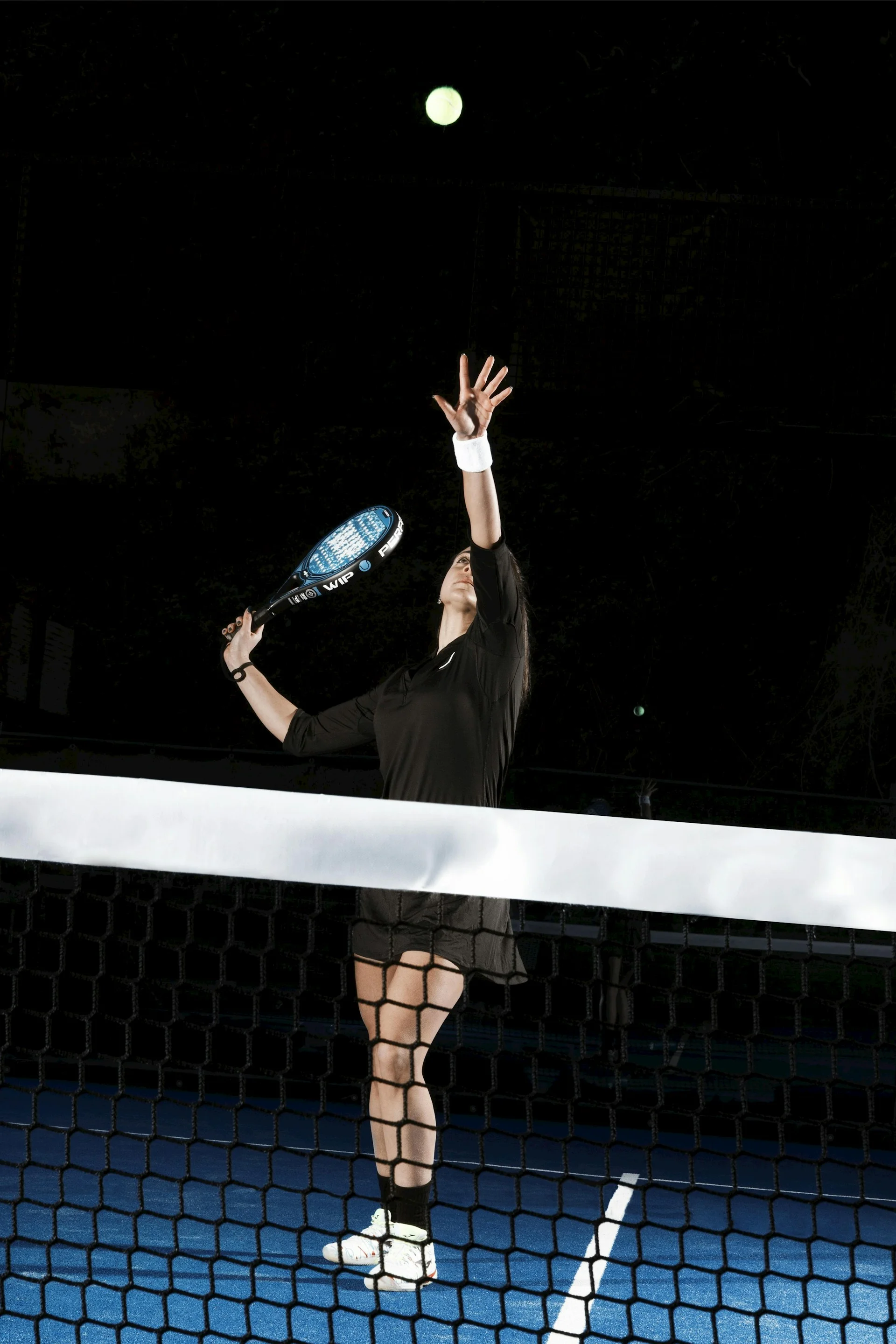
Photo: Vincenzo Morelli / Unsplash
Photo: Vincenzo Morelli / Unsplash / Unsplash LicenseWhen to Use
The vibora is an intermediate shot between the bandeja and the smash. It is more aggressive than the bandeja but safer than the smash, and it is one of the most effective tools for applying pressure on opponents.
Use the vibora in the following situations:
- Medium-height, medium-depth lob. The ball allows an overhead shot, but it is not in the ideal zone for a full smash.
- You need to apply pressure. You want to make the return difficult for the opponent without risking an error on a full smash.
- Opponent is vulnerable near the side wall. The vibora is most effective when aimed so that the ball veers into the side glass on the opponent’s side after bouncing.
- Maintaining net position. Like the bandeja, the vibora allows you to keep your net position while applying significantly more pressure.
The name “víbora” means “viper” in Spanish — the shot, like a snake, twists and changes direction after the bounce.
Technique
Grip
The vibora uses a continental grip, the same as the bandeja and other overhead shots. However, the wrist plays a far more active role in the vibora — it is the wrist snap at the moment of contact that gives the ball its characteristic sidespin.
Some advanced players shift the grip slightly toward an eastern forehand to enhance the sidespin, but this is individual and requires significant practice.
For more on grips, see Padel Grips.
Footwork
Footwork for the vibora is largely similar to the bandeja, with a few key nuances:
- Shoulder turn. Turn sideways to the net as soon as you identify the ball trajectory. For right-handers, the left shoulder faces the net.
- Movement. Travel toward the ball using shuffle or crossover steps (carioca). Avoid running backward.
- Hitting position. The ball should be slightly in front of and to the side. The vibora allows a slightly more lateral position compared to the bandeja, which facilitates generating sidespin.
- Recovery. Move forward immediately after the shot. The vibora typically puts the opponent in a difficult position — be ready for a weak return.
Swing and Contact
- Preparation. The racket rises behind the head, elbow at or slightly above shoulder height. The non-hitting hand points at the ball for balance and tracking.
- The key element — wrist snap. The fundamental difference between the vibora and bandeja is the active wrist action. At the moment of contact, the wrist snaps sharply, imparting intense sidespin to the ball.
- Contact point. Strike the ball in front of and slightly to the side of your head. The racket path is not straight top-to-bottom but includes a lateral component — this is what generates the sidespin.
- Direction. The goal is to direct the ball so that after bouncing off the floor, it veers into the side glass. For a right-hander hitting to the right side of the court, the ball moves right toward the side wall after the bounce.
Trajectory and Bounce
Vibora Trajectory
The vibora’s trajectory is fundamentally different from the bandeja:
- Flatter arc. The vibora flies lower and faster than the bandeja.
- Lateral movement after bounce. Thanks to the sidespin, the ball veers sharply to the side after hitting the floor — into the side glass.
- Difficult glass bounce. A ball hitting the side glass with heavy spin bounces unpredictably — low and in a direction that is uncomfortable for the opponent.
Video Tutorial

Common Mistakes
Power instead of spin. The most common mistake is trying to hit as hard as possible. The vibora’s effectiveness comes from the quality of the spin, not the power. A ball with good sidespin, even at moderate speed, creates far more problems for the opponent.
Wrong ball selection. The vibora does not work on every lob. If the ball is too high and deep, a bandeja or a retreat for a smash is a better option. If the ball is in the perfect striking zone, finishing with a smash is preferable.
Insufficient wrist action. Without an active wrist snap, the vibora becomes a poor bandeja — without the needed spin, the ball does not veer into the side wall.
Wrong direction. The vibora is most effective when hit to specific zones. The ball should land so that it veers into the side glass after the bounce. This requires understanding the court geometry and bounce angles.
Losing position. As with the bandeja, you must immediately recover to the net after the vibora. Lingering in the back zone negates the advantage gained from a well-executed shot.
Vibora vs Bandeja: When to Choose Which
The choice between vibora and bandeja is one of the key tactical decisions at the net:
- Bandeja — when reliable control is needed, the ball is not suitable for aggression, or the situation calls for a safe shot.
- Vibora — when there is an opportunity to apply pressure, the ball is suitable for generating spin, and you want to make life difficult for opponents.
[EXPERT OPINION] Beginners and intermediate players are advised to first master the bandeja to a consistent level before moving on to the vibora. Attempting to play viboras without a confident bandeja leads to a high number of errors.
Drills
Wrist snap on the spot. Without a ball: stand in the overhead position and repeatedly perform the wrist snap motion, simulating contact. This develops the muscle memory for the wrist movement — the key element of the vibora.
Vibora into the side glass. A partner feeds balls overhead; your goal is to execute a vibora so that the ball hits the side glass after bouncing off the floor. Start from 2-3 meters behind the net. Target: 5 out of 10 balls into the glass.
Bandeja-vibora alternation. A partner feeds lobs; you alternate between bandeja and vibora on every other ball. This develops the ability to switch between shots and choose the right option.
Vibora with zone control. Divide the court into zones: left corner, center, right corner. Practice viboras into each zone, paying attention to the angle of the bounce toward the side wall.
Match-play integration. In 2v2 match conditions, consciously look for vibora opportunities. After each rally, evaluate: Was it the right moment? Did the ball veer effectively into the glass?
The light is on for free. But someone has to clean the lantern.
☕ Support on Ko-fi