Wall Play in Padel
Walls are not obstacles — they are tools. The ability to read rebounds and use walls turns a constraint into an advantage and sets padel apart from every other racket sport.
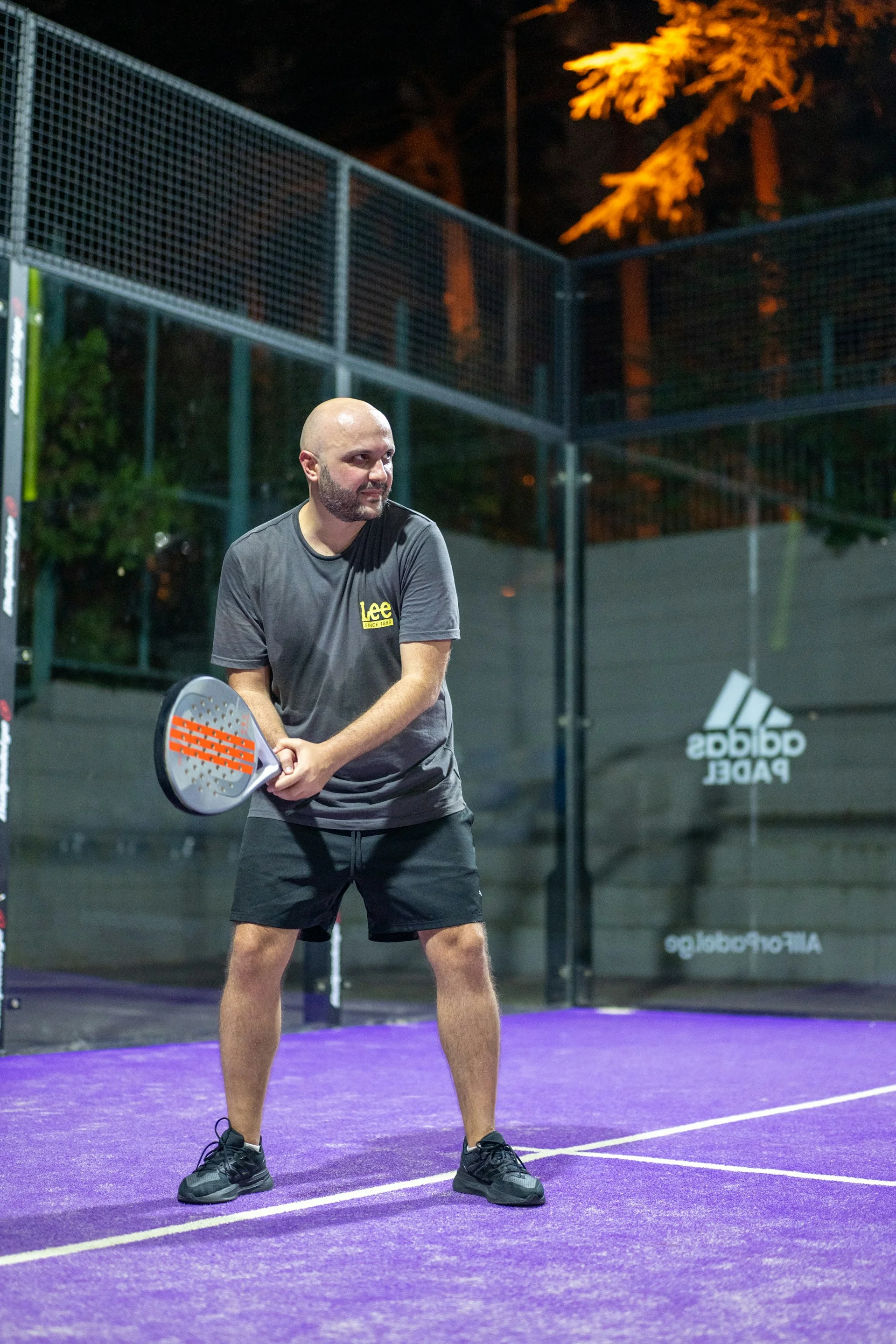
Photo: Giorgi Khatchapuridze / Unsplash
Photo: Giorgi Khatchapuridze / Unsplash / Unsplash LicenseWalls as Part of the Game
Wall play is what makes padel a unique sport. According to the wall play rules, after the ball touches the floor on your side, it can bounce off any wall and remains in play. This creates an entirely new dimension in strategy: shots that would be “dead” in tennis stay alive in padel.
For beginners, the walls often become a source of confusion. The ball flies toward the wall, and panic sets in — you cannot tell where it will bounce, when to swing, or what to do. But the key principle is simple: you have more time than you think. The ball slows down after each bounce, and the wall effectively gives you extra time to prepare for your shot.
Back Glass Rebounds
The back glass is the most common type of wall rebound. Your opponent hits a deep shot, the ball bounces off the floor, and strikes the back wall.
How the ball behaves:
- After contacting the glass, the ball loses significant speed
- The trajectory is predictable: the ball rebounds forward, back toward the center of the court
- The harder the opponent’s shot, the farther from the wall the ball rebounds
- A ball with underspin (slice) “sticks” to the wall and rebounds weakly
- A ball with topspin rebounds higher and farther
How to play it:
- Step away from the wall. The most common mistake is standing right up against the wall. Step back 1–2 meters and let the ball come to you.
- Turn sideways. Do not face the wall — turn sideways so you can see both the wall and the net.
- Wait for the rebound. Do not hit the ball before it bounces off the wall. Let physics do its work.
- Use the time. The wall has given you extra seconds — use them for shot selection and positioning.
[EXPERT OPINION] Beginners often try to hit the ball between the floor and the wall, at the moment it is still traveling toward the wall. This almost always leads to an error. The rule: if the ball is heading for the wall — let it bounce. The only exception is a ball with very weak spin that might “die” against the wall.
Side Glass Rebounds
The side glass creates more complex rebounds because the ball changes direction horizontally.
Basic principle: the angle of incidence approximately equals the angle of reflection. A ball arriving at the side wall at a 45-degree angle will rebound at roughly the same angle in the opposite direction. However, spin on the ball can significantly alter this angle:
- No spin: predictable rebound following the angle rule
- Sidespin: the ball “drifts” to one side after the rebound
- Topspin: the rebound is higher and faster
- Underspin: the ball “sits down” after contacting the wall
How to play it:
- Step away from the wall, giving the ball space to rebound.
- Track the ball with your eyes from the moment of your opponent’s shot.
- Anticipate the rebound direction based on the incoming trajectory.
- Prepare your racket early — after a side wall rebound, there is little time for preparation.
Combined Rebounds
The most challenging type is the combined rebound, where the ball contacts multiple walls in sequence. The most common combination is back wall then side wall (or vice versa).
Back wall to side wall:
The ball rebounds off the back wall, moves forward and to the side, then contacts the side wall. After the double rebound, the ball typically ends up in the center of the back court, moving slowly and at a comfortable height. This is one of the best moments for a counterattack.
Side wall to back wall:
A ball arriving at a sharp angle first contacts the side wall, then the back wall. This rebound is harder to read because the ball changes direction twice. The key is to stay calm and let the ball complete both bounces.
Practical tip: during practice, ask your partner to hit balls into the corner of the court (where the side wall meets the back wall). Watch the trajectory without attempting to hit. Simply get used to the ball’s behavior. After 15–20 minutes of this practice, you will start to intuitively sense where the ball will go.
Positioning
Correct positioning during wall play accounts for 90% of success. Here are the key rules:
- Do not press against the wall. Always leave 1–2 meters between yourself and the wall. The ball will come to you — you do not need to go to it.
- Stay behind the service line. When defending, your base position is behind the service line (approximately 1.8–2.5 m from the back wall). This gives you reaction time.
- Do not get stuck in the corner. After a wall shot, move back to the center of your half of the court.
- Use the walls for counterattacks. After a successful wall rebound, you have options: a defensive lob, a precise shot to the center, or an attacking drive. The wall gave you time — use it wisely.
After playing off the back wall, aim to position yourself 1.8–2.5 m from the back wall, or advance toward the net if the quality of your shot allows it.
Video Tutorial

Common Mistakes
- Panicking near the glass. The wall is your friend, not your enemy. The ball slows down and becomes predictable. Breathe and wait.
- Trying to hit too hard. After a wall rebound, the ball is already slow. A powerful shot is unnecessary — an accurate one is needed. A controlled deep lob or precise placement is far more effective.
- Hitting before the wall rebound. If the ball is heading for the wall, let it bounce. Do not try to intercept it.
- Standing right against the wall. You need space for your swing. Step back and let the ball come to you.
- Ignoring the walls. Some beginners try to hit every ball before it reaches the wall. This is not tennis — let the wall work for you.
- Misreading spin. A sliced ball behaves completely differently from a topspin ball. Pay attention to your opponent’s racket motion during the shot.
Exercises
- Observation without hitting. A partner hits balls at the back wall with varying power. You stand and observe the rebound without attempting to hit. Goal: learn to predict where the ball will end up. 10 minutes.
- Wall to center. A partner feeds balls into the back wall. You wait for the rebound and send the ball with a controlled shot to the center of the court. Focus on control, not power. 15 minutes.
- Side wall practice. A partner hits balls at the side wall from different angles. You practice reading the rebound and returning the shot. 10 minutes on each side.
- Corner rebounds. A partner hits balls into the corner (where the back wall meets the side wall). You wait for the combined rebound and play a defensive lob. 10 minutes.
- Wall to lob rally. Rally drill: one player hits deep, the other plays off the wall with a lob. Goal: a consistent, deep lob after every wall rebound. 15 minutes.
The light is on for free. But someone has to clean the lantern.
☕ Support on Ko-fi