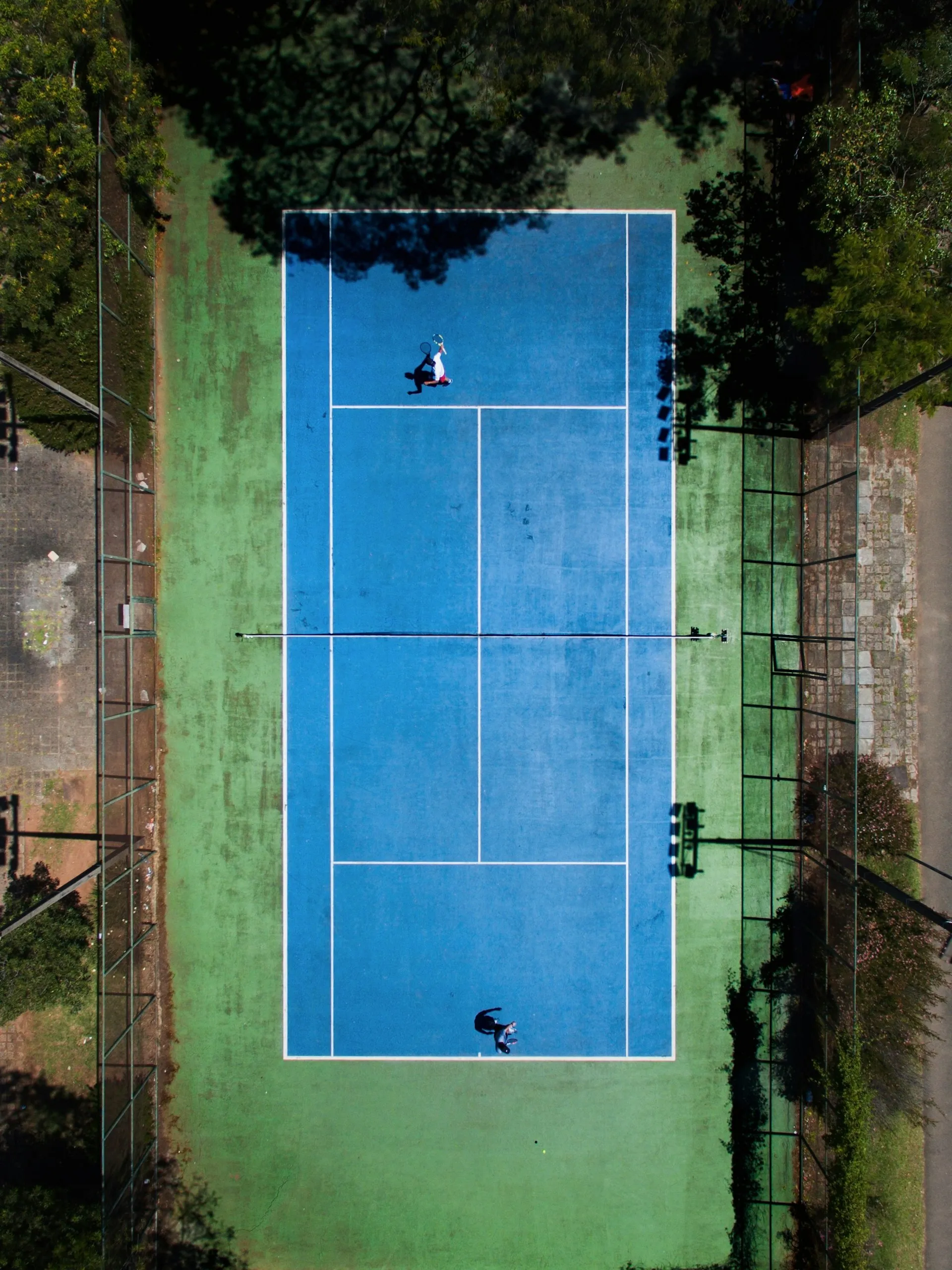
Premier Padel is the global professional padel tour organised by FIP and Qatar Sports Investments. It represents the highest level of competitive padel — the equivalent of the ATP Tour in tennis.
Premier Padel is the official global padel tour, launched in 2022 with the backing of FIP (International Padel Federation), Qatar Sports Investments (QSI), and the Professional Padel Association (PPA). The tour brings together the world’s best players and stages events on every continent.
Premier Padel was created in response to the need for a unified international professional padel structure, analogous to ATP/WTA in tennis.
Tour Structure
Tournament Categories
Premier Padel tournaments are divided into several tiers by significance:
Category
Ranking Points
Prize Money
Events per Season
Major
Maximum (2000)
Highest
4
P1
1000
High
6–8
P2
500
Medium
8–10
Challenger
250
Entry-level
12+
Major Tournaments
Majors are the flagship events of the season. Similar to tennis Grand Slams, they take place in key cities:
Italy Major (Rome)
France Major (Bordeaux/Paris)
Argentina Major (Buenos Aires)
Qatar Major (Doha)
Major tournaments attract all top-ranked pairs and carry the largest prize funds.
Ranking System
Premier Padel uses the FIP ranking system, similar to tennis rankings:
Points are awarded based on tournament results
Rankings are calculated from best results over a 52-week rolling period
Higher-category tournaments award more points
Rankings determine seedings and admission to Majors
Top Players
As of 2025, among the leaders of the men’s ranking:
Arturo Coello (Spain) — one of the youngest ranking leaders
Agustín Tapia (Argentina) — known for a brilliant, creative playing style
Alejandro Galán (Spain)
Federico Chingotto (Argentina)
[OUTDATED] Rankings are updated weekly. For the current ranking, visit premierpadel.com.
Tournament Format
Men’s and Women’s Draws
Main draw at Majors: 32 pairs
Qualifying: 16–32 pairs
All matches are doubles (2×2)
Format: best of 3 sets, with golden point at deuce
Television Broadcasts
Premier Padel is broadcast on global sports platforms:
Eurosport / Max (Europe)
ESPN (Latin America)
Sky Sports (United Kingdom)
DAZN (selected markets)
YouTube channel Premier Padel (free streams)
History of Professional Padel
Period
Tour
Features
2005–2022
World Padel Tour (WPT)
The first professional tour, based in Spain
2022–
Premier Padel
Global FIP tour, succeeded WPT
Before 2022, professional padel was represented by the World Padel Tour (WPT), which was held predominantly in Spain. In 2022, FIP created Premier Padel as a global alternative, eventually leading to the unification of both tours into a single structure.
Prize Money
Prize funds on Premier Padel have grown significantly compared to the WPT era:
Category
Approximate Prize Fund
Major
€500,000+
P1
€250,000–400,000
P2
€150,000–250,000
Challenger
€50,000–100,000
[UNVERIFIED] Prize funds continue to grow — FIP aims to bring them closer to the level of lower-tier tennis tournaments.
Frequently Asked Questions
How did Premier Padel differ from the World Padel Tour?
WPT was a private tour focused on Spain. Premier Padel is a global tour under FIP management, with tournaments on every continent, larger prize money, and a broader television audience.
How do you qualify for a Premier Padel tournament?
Through the FIP ranking system. Top-ranked pairs enter the main draw directly; others go through qualifying. For Challenger events, a national federation ranking may suffice.
Where can I watch matches?
Many matches are streamed free on the Premier Padel YouTube channel. They are also available on Eurosport, ESPN, and other platforms.
The World Padel Tour (WPT) was the professional padel circuit that served as the sport’s premier competitive platform for a decade (2013–2023). WPT laid the foundation for the professionalisation of padel and its global growth.
World Padel Tour (WPT) was a professional padel tour founded in 2013 in Madrid, backed by the Spanish brewing group Damm (through its subsidiary Setpoint Events) and the Association of Professional Padel Players (AJPP). WPT succeeded the Padel Pro Tour (PPT) and quickly became the world’s leading professional padel circuit.
For ten years, WPT set the standards for professional padel: tournament formats, ranking systems, television broadcasting, and prize funds.
History and Development
Predecessor: Padel Pro Tour (2005–2012)
Before WPT, there was the Padel Pro Tour (PPT) — the first professional tour, established in 2005 through an agreement between tournament organisers, AJPP, and the Spanish Women’s Padel Association (AFEP). Over eight years, PPT ran tournaments in 20 men’s and 8 women’s categories, primarily in Spain, before beginning international expansion in 2010.
The Rise of WPT (2013–2016)
In 2013, WPT replaced PPT following protracted legal disputes between the two circuits. The new tour attracted all top players and secured major sponsors. In 2014, the legendary pairing of Fernando Belasteguin and Juan Martin Diaz split, marking a generational shift in professional padel.
International Growth (2017–2021)
In 2017, WPT updated its competition format and expanded television coverage — broadcasts on Gol TV significantly increased viewership. By the early 2020s, the tour spanned 14 countries, had 17 global sponsors, and was broadcast in over 150 countries.
The Final Season (2023)
The last WPT season set records for international reach. The Boss Barcelona Master Final in 2023 served as the historic culmination of the tour’s ten-year journey.
Tournament Categories
WPT used a multi-tier tournament system, each tier offering different ranking points and prize money:
Category
Description
Approximate Prize Fund
Master
Top tier, elite pairs
~€120,000 per category
Open
Broad access, two sub-levels (Open 500, Open 1000)
€50,000–100,000
Challenger
Entry level for young and rising players
~€15,000–30,000
WPT prize funds were modest compared to tennis. A Master winner could earn around €10,500, while a round-of-16 participant at a Challenger received just €131. Nevertheless, WPT was the first platform where professional padel players could earn a living from their sport.
The Transition to Premier Padel
The Conflict (2022)
In 2022, FIP (International Padel Federation) together with Qatar Sports Investments (QSI) launched Premier Padel — a rival global tour. This sparked an open conflict: leading players and FIP filed a competition complaint with the European Commission, accusing Setpoint Events (operator of WPT) of violating EU antitrust law.
Throughout 2022–2023, professional padel was split between two tours, creating confusion for players and fans alike.
Unification (2023–2024)
On 24 August 2023, a historic agreement was announced: QSI acquired the World Padel Tour from the Damm group. Starting from the 2024 season, both tours were unified into a single structure — Premier Padel — under FIP governance. The World Padel Tour brand ceased to exist.
The Legacy of WPT
Over its ten years, the World Padel Tour accomplished a great deal:
Professionalisation — transformed padel from an amateur pastime into a professional sport with a regular tour, rankings, and prize money
Television reach — broadcasts in 150+ countries introduced millions of viewers to padel
Stars of the sport — WPT gave the world players like Agustin Tapia, Ale Galan, Paquito Navarro, Gemma Triay
International expansion — tournaments in 14 countries took padel beyond Spain and Argentina
Infrastructure — the ranking system, entry rules, and tournament organisation standards became the foundation for Premier Padel
Key Milestones
Year
Event
2005
Founding of Padel Pro Tour (PPT) — the first professional circuit
2013
Launch of World Padel Tour, replacing PPT
2014
Belasteguin–Diaz split, marking a generational shift
2017
Format overhaul, expanded TV broadcasting
2020
WPT continues during the pandemic with restrictions
2022
Launch of Premier Padel — a rival FIP/QSI tour
2023
QSI acquires WPT, unification announced
2024
Unified Premier Padel tour, WPT brand retired
How to Follow Padel Today
After the unification of WPT and Premier Padel, all professional padel is consolidated under Premier Padel. Here is how to stay up to date:
Premier Padel App — the official app with schedules, results, and rankings
YouTube — the Premier Padel channel streams many matches for free
Television — Eurosport / Max (Europe), ESPN (Latin America), Sky Sports (United Kingdom)
Social media — official Premier Padel accounts on Instagram, X (Twitter), TikTok
premierpadel.com — current rankings, schedules, news
[OUTDATED] Broadcasting details and platforms may change — check the official website for the latest information.
Padel tournaments come in many formats — from the classic single-elimination draw to the social “Americano”. The format determines the number of matches, duration, and spirit of the competition.
Your first tournament is a milestone for any padel player. It does not require a professional level: most competitions are open to amateurs. This guide will help you prepare and get the most out of the experience.
Do not overestimate your level. It is better to win in Category B than to lose every match in Category A. It is more enjoyable and better for your development.
Preparing for the Tournament
One Week Before
Play as normal — do not suddenly increase your workload
Work on weak spots — if your serve is inconsistent, dedicate time to it
Rest 1–2 days before the tournament
On the Day
Arrive early (at least 30 minutes before the start)
Focus on serve and return — a consistent serve gives a confident start
Communicate with your partner — agree on tactics before the match
Managing Nerves
Pre-tournament nerves are normal. What helps:
Focus on the process, not the result
Deep breathing between rallies
Positive communication with your partner
Remember: this is a game, and you are here to enjoy it
Between Matches
Light stretching
Replenish fluids and energy
Brief analysis of the previous match with your partner
Do not check other pairs’ results — stay focused on your game
Tournament Etiquette
Be on time — arriving late may lead to disqualification
Shake hands with opponents before and after each match
Line calls — give the benefit of the doubt to opponents (amateur tournaments usually have no referees)
Do not argue with opponents — if there is a dispute, refer to the organiser
Support your partner — even after their mistakes
After the Tournament
Cool down — 10–15 minutes of stretching
Review — what went well, what needs improvement
Write down takeaways — specific areas to work on in practice
Plan the next one — regular participation accelerates progress
FAQ
Can I enter without a regular partner?
Yes. Americano does not require a partner. Many clubs help match players for doubles tournaments.
How long does an amateur tournament last?
Americano: 2–3 hours. Single elimination with 8–16 pairs: 4–8 hours. League: several weeks (one match per week).
What if I lose every match?
That is normal for a first tournament. Losing to stronger opponents is the best learning experience. Analyse your mistakes and come back.