Solo Practice in Padel
• All levels
3 min read
Last updated: 13.03.2026
No partner? No problem. Solo training gives you total control over pace, repetitions, and movement patterns. No distractions, no score pressure — pure skill refinement.
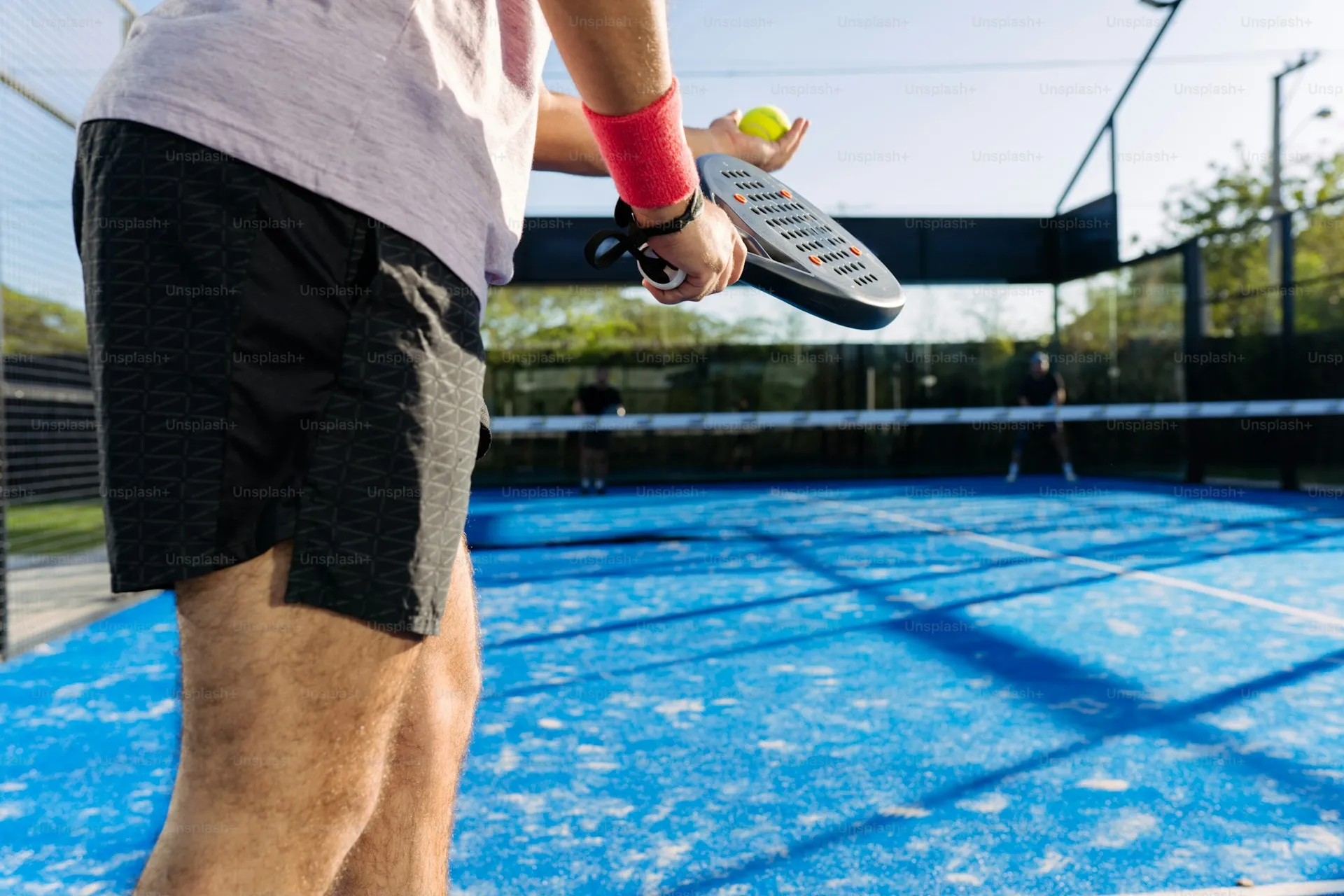
Photo credit
Photo by Andy Quezada on Unsplash
Why Train Alone
- 100% of repetitions on your side — no waiting for a partner to feed balls
- Focus on weaknesses — you choose what to work on
- No social pressure — you can experiment without fear of making mistakes
- Muscle memory — many repetitions = automatism on court
Wall Drills
Back Wall Rallies
- Stand 2–3 metres from the back wall
- Hit a controlled forehand at the wall
- Let the ball rebound, then strike again
- Maintain the rhythm for as long as possible
- Alternate between forehand and backhand
Targets on the Wall
- Mark targets with chalk or tape on the wall
- Hit at varying speeds and angles
- Gradually reduce the target size
- Add spin requirements (slice, topspin)
Serve Practice at the Wall
- Stand 3–4 metres from the wall
- Practise the serve (underhand — below waist level)
- For the slice serve: shadow swings → half-speed serves → full serves
- Hit against the back glass to observe the ball’s reaction to spin
Shadow Play
Practising movements without a ball:
- Visualise a real game, follow an imaginary ball
- Simulate shots: forehand, backhand, volley, lob
- Typical movements: approach the net → bandeja → sprint forward → side step in the corner
- Practise the split step between every shot
Physical Training
The Split Step
The most important movement in padel. A small hop before each opponent’s strike:
- Land on the balls of the feet, feet apart
- Eliminates inertia, speeds up reaction time
- Practise 50 consecutive split steps — 3 sets
Agility Ladder
- Side steps, high knees, crossover steps
- Focus on quality and form, not speed
- 10 minutes at the start of the session
General Conditioning
- Interval training: sprints (15 sec) + walking (30 sec) × 10 rounds
- Press-ups, squats, lateral lunges — 3 sets × 15
- 20–30 minutes is sufficient
Ball Machine
If available:
- 30 minutes on one shot = at least 300 repetitions
- Programme speed, direction, and interval
- Especially useful for refining the backhand and volleys
- Removes social inhibition
Rebounder Net
A portable training tool for home or the court:
- Lower section — for powerful shots (smash, vibora, bandeja)
- Upper section — for volleys
- Drill: hit into the lower net → rebound → smash into the upper net → catch → repeat
Visualisation
5 minutes before or after training:
- Close your eyes, picture yourself playing with confidence
- Replay rallies in your head: serve → return → approach the net → volley
- Visualise the successful execution of each shot
- Visualisation builds neural pathways that improve real-game performance
Sample Solo Session Structure
| Block | Time | Content |
|---|---|---|
| Warm-up | 5–10 min | Jogging, dynamic stretching, ladder |
| Shadow play | 5–10 min | Movement simulation, split step |
| Wall drills | 15–20 min | Forehand/backhand, targets, serve |
| Bandeja/smash | 10 min | Toss and hit |
| Ball machine | 15–20 min | Targeted repetitions (if available) |
| Cool-down + visualisation | 5–10 min | Stretching + mental work |
Total: 55–80 minutes
The light is on for free. But someone has to clean the lantern.
☕ Support on Ko-fiContent licensed under CC BY-SA 4.0. When copying or republishing, a link to the original article is required.